Watch: Commissioner talks to Agriland about CAP funds
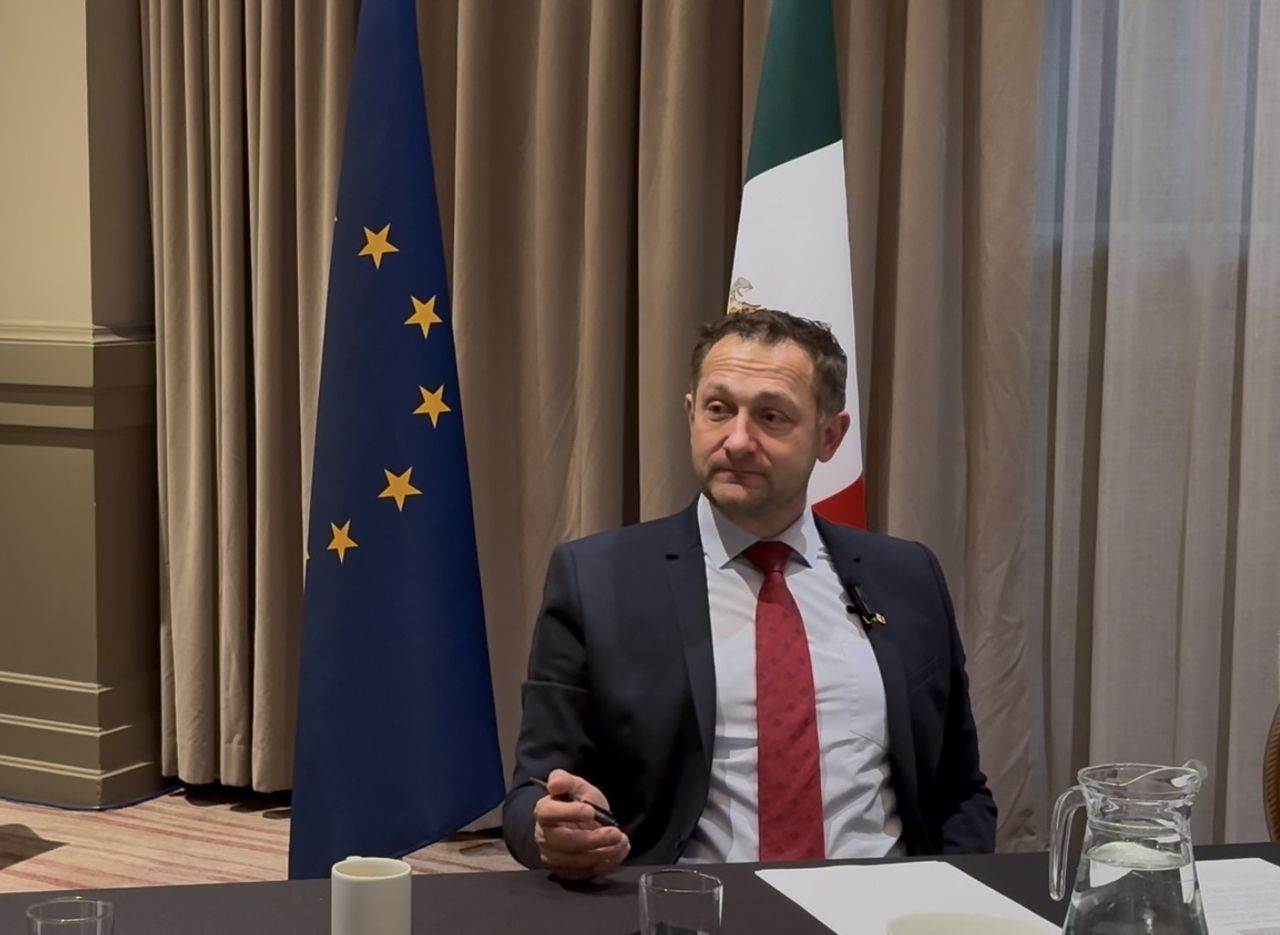
European Commissioner for Agriculture, Christophe Hansen has said that he is happy that a proposal to maintain €300 billion in funding for the next Common Agricultural Policy (CAP) looks set to be maintained but is unhappy with other aspects of the negotiating box (nego box) proposed by the Irish Presidency of the EU.
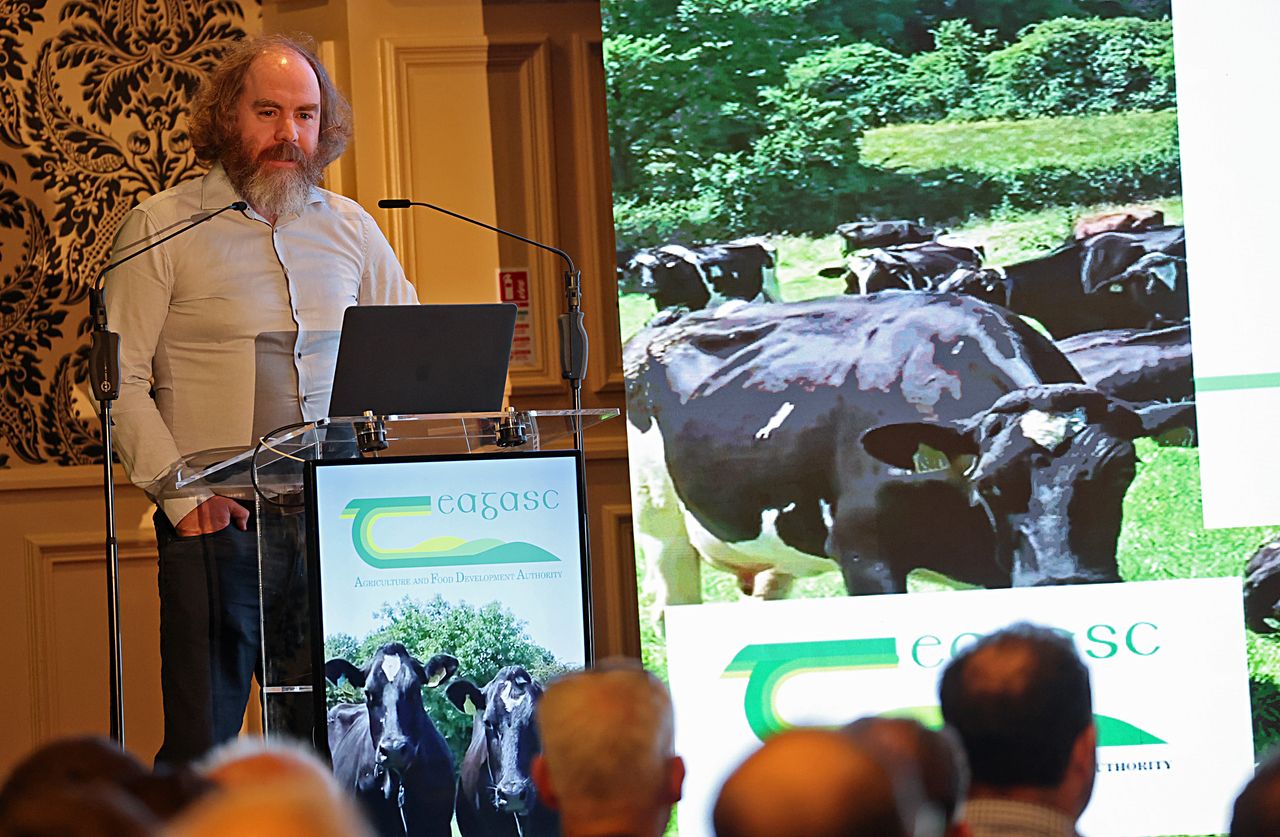
Commissioner Hansen was speaking to Agriland during an EU agri-food business trade mission to Mexico City this week.
Last month, the Irish Presidency of the EU proposed savings in the next multi-annual financial framework (MFF), which will run from 2028-2034, of 8% (€141 billion).
Ireland's proposal for the next EU Budget, in terms of CAP funding, included the rural target, adding the option of flexibility frontloading for the CAP, as well as addressing some key governance and implementation concerns.
However among the proposals now is savings in terms of a solidarity fund for disaster relief and also research and development.
Commissioner Hansen said: "It's difficult to predict. When we look at the MFF, the CAP negotiation is coming after that.
"What is currently on the table... the member states are not all happy with what is on the table.
"I'm happy that the €300 billion ringfenced for income support has not been cut but of course I'm quite unhappy to say that our unity safety net has been cut by 30%."
The commissioner explained that such funding is a priority especially when crises hit the European bloc, such as the 'fertiliser crisis'.
"There will be more crises; there will not be less crises, so to cut this instrument, this safety net, broadening the scope of it, which makes it less effective, I think it is a very bad idea in these current turbulent geopolitical times," he added.
The proposal in the MFF is not to cut funding for the EU's emergency or 'rainy day' fund for disasters and crises by about 30%.
While farmer funding is being protected, many in the commission argue that this cut to the emergency fund will hit farmers hard if there is not money there for weather-related emergencies in the future, for instance.
Commissioner Hansen welcomed funding for young farmers proposed in the next CAP but said he is concerned about "non mandatory" elements of the nego box proposed by Ireland.
"We cannot pick and choose; the member states usually say we need to maintain the 'C' of the Common Agricultural Policy. If they now put everything on a voluntary basis, this is making the 'C' very small," Hansen remarked.
CAP agreement?
The agriculture commissioner said he is confident of the budget being agreed as he wants to see it completed by the end of the year.
"We have quite a challenging year when it comes to elections next year.
"I hear some member states' agriculture ministers, but others as well, that are concerned that the two [Ursula] von der Leyen letters - the €45 billion frontloading - that it is not mandatory for the member states.
"Others are criticising that the rural spending target of €48 billion (10%), that it is not clear enough that this serves agriculture, so I think that is something where there will be discussions.
"They will not be easy discussions, but I hope we get there by the end because our farmers, of course, need the money, but what they need more is predictability.
"If they don't know what is coming, they are not going to invest and that would be the worst especially if we speak about climate change."
CAP
The CAP was launched in 1962 as a partnership between agriculture and society, and between Europe and its farmers.
It aims to:
- Support farmers and improve agricultural productivity, ensuring a stable supply of affordable food;
- Safeguard EU farmers to make a reasonable living;
- Help tackle climate change and the sustainable management of natural resources;
- Maintain rural areas and landscapes across the EU;
- Keep the rural economy alive by promoting jobs in farming, agri-food industries and associated sectors.
It is managed and funded at European level from the resources of the EU’s budget.
There are around 10 million farms in the EU and 17 million people work regularly in the sector.
The level of support for EU farmers from the overall EU budget reflects the many variables involved in ensuring continued access to high-quality food.
The CAP is financed through two funds as part of the EU budget:
- The European agricultural guarantee fund (EAGF) provides direct support and funds market measures (Pillar I);
- The European agricultural fund for rural development (EAFRD) finances rural development (Pillar II).
Payments are managed at national level by each EU country.
Under the CAP Strategic Plans, the EAGF supports EU farmers through different types of interventions taking the form of decoupled and coupled direct payments.
Decoupled payments cover the basic income support for sustainability (BISS), the complementary redistributive income support for sustainability (CRISS), the complementary income support for young farmers (CISYF) and the schemes for the climate, the environment and animal welfare.
The EU provides farmers with income support or 'direct payments' to:
- Function as a safety net and make farming more profitable;
- Guarantee food security in Europe;
- Assist them in the production of safe, healthy and affordable food;
- Reward farmers for delivering public goods not normally paid for by markets, such as taking care of the countryside and the environment.
Farmers generally receive income support based on their farm’s size in hectares.
All EU countries have to offer a basic payment, a payment for the climate, environment and animal welfare to promote sustainable farming practices (eco-schemes).
As it is compulsory for EU countries to provide these payments, they are often referred to as obligatory payments.
Eco-schemes are obligatory for EU countries to provide to farmers, but voluntary for farmers.
Additionally, EU countries can choose to offer other payments that focus on specific sectors or types of farming.
There are specific schemes designed to provide further help to small and medium-sized farms, young farmers, farmers who operate in areas of natural constraint (ANC) and/or sectors undergoing difficulties.