Dairy-beef births decline by 3% in 2026

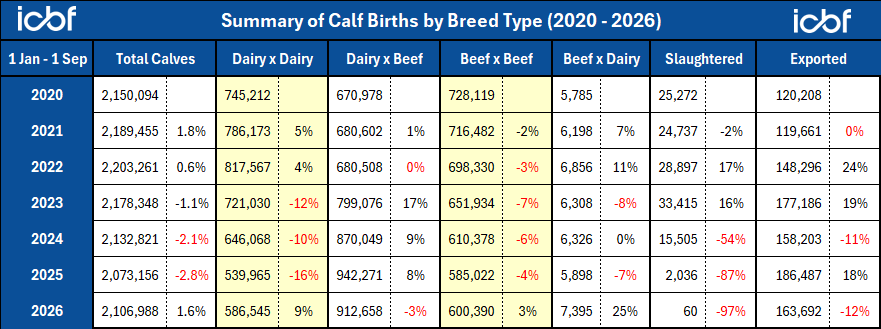
Some 912,658 head of dairy-beef calves were born between January 1 and September 1, according to Irish Cattle Breeding Federation (ICBF) figures.
That is just over 43% of all calves born in that timeframe, as the total figure stood at 2,106,988.
However, the figure is down 3% on the 942,271 dairy-beef calves which were born in the same period in 2025, which works out at 29,613 fewer dairy beef calves coming into the system.
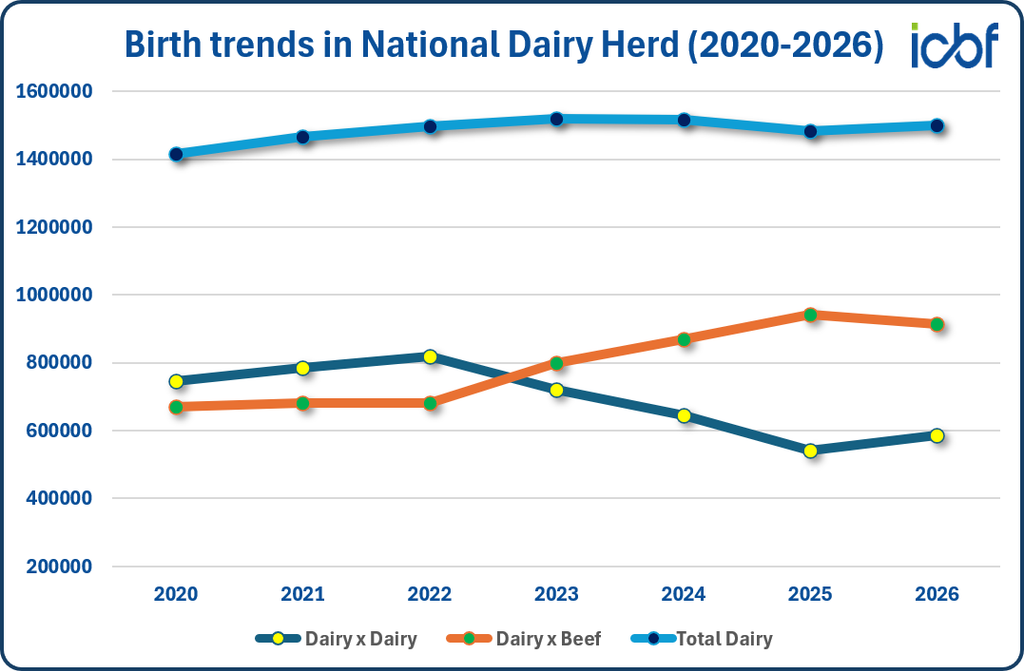
This follows the trajectory towards a shortage in dairy heifers experienced over the last number of years, as dairy farms have began to breed sufficient dairy stock once again.
In fact, dairy calves born in 2026 are up 9% on 2025 levels, with 586,545 dairy calves hitting the ground this year.
If we backtrack to 2022, this figure stood at 817,567, before falling 12% in 2023, then down a further 10% in 2024, followed by an alarming 16% reduction in 2025, equating to a 34% drop over the space of three calving seasons.
This works out at 277,602 less dairy replacements born in 2025 than in 2022.
Beef calves
Despite less dairy beef calves hitting the ground this year, an additional 15,368 beef calves were born, bringing the total to 600,390.
This is a 3% rise on the year prior, where only 585,022 beef calves were born, and the first rise seen in quite some time.
Looking back on 2020, 728,119 beef calves were born.
This figure dopped by 2% in 2021, then by 3% in 2022, an alarming 7% reduction in 2023 as well as a 6% dip in 2024, followed by a 4% reduction in 2025.
This led to an overall reduction of 20% in beef calves born, or a 143,097/head reduction.
Dairy-beef
It must be stated that more dairy-beef calves does not always mean better.
While the number in dairy-beef were rapidly expanding, the genetics began to dip.
This can mostly be traced back to dairy farmers choosing beef bulls based on short gestation length and ease of calving.
By improving the the Commercial Beef Value (CBV), dairy farmers will have a better calf which will sell easier and at a better price, while the beef farmer will receive better stock, making them more inclined to be a return customer.
To improve the beef merit, farmers can use the Dairy Beef Index (DBI) to pick a team of bulls suitable for improving merit while still maintaining easy calving and short gestations.
However, when picking bulls it is important to look within the index rather than just looking at the overall DBI figure, as it contains a calving, beef, and carbon sub-index.
The beef sub-index outlines traits such as carcass weight and conformation, while the dairy sub-index focuses more on calving difficulty, lower mortality, and gestation length.
A good DBI should translate to a good commercial beef value (CBV) where dairy calves are meeting minimum factory specifications, and essentially make dairy-beef calves easier for dairy farmers to sell.
It will also improve the calves' value which should generate extra profits for the dairy farm.
When picking bulls, the most important thing to be consider is making sure you have enough replacement heifers.
Once this is secured, then you can breed dairy-beef calves but consult your breeding programme and adviser first to develop the best plan.