Rolled oats or rolled barley: Which is better feed for beef cattle?

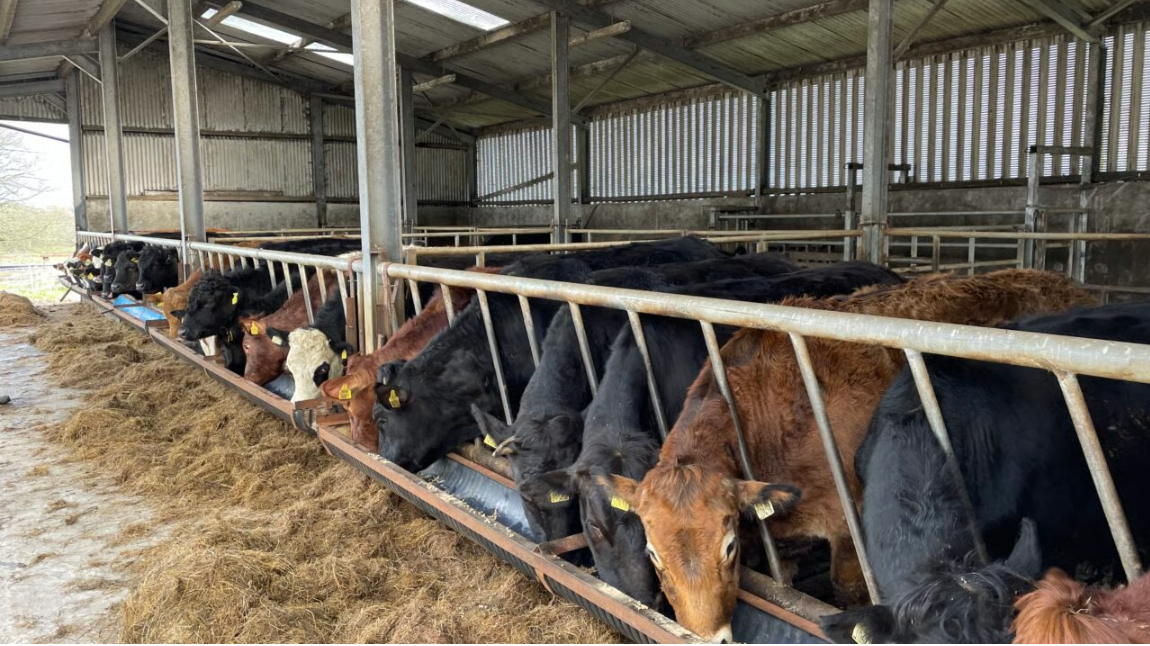
Barley is often the amongst the main ingredients of the beef cattle finisher rations used on Irish beef farms with oats less commonly found.
Research has shown that beef cattle on a grass-silage based diet perform just as well when supplemented with rolled oats compared to rolled barley.
Two experiments conducted at Teagasc Grange found that beef cattle being finished performed equally as well when fed rolled barley or rolled oat as a supplement to grass silage.
The silage was offered ad-lib and the concentrate feeding level was 4kg/head/day (dry matter) split over two feeds, morning and evening.
When researchers replaced rolled barley with rolled oats plus a small quantity of additional protein feed in the concentrate ration, they found there was no difference in performance between the cattle fed the oats based concentrates versus the cattle fed the barley-based concentrates.
The following aspects were measured in the experiments:
- Grass silage;
- Total DM intake;
- Daily liveweight gain;
- Feed efficiency.
The experiments conducted at Teagasc Grange also found that Replacing barley with oats had no negative effect on:
- Slaughter weight;
- Carcass weight;
- Kill-out proportion;
- Estimated carcass gain;
- Carcass confirmation;
- Fat scores.
According to Teagasc, while oats and barley do have different chemical compositions, these differences did not negatively impact the animals final performance when fed as supplements to grass silage.
The table below compares rolled barley and rolled oats-based concentrates as supplements to grass silage for finishing cattle:
| Barley-based | Oats-based | Key message | |
|---|---|---|---|
| Experiment 1 (Kennedy et al., 2003) | |||
| Carcass weight (kg) | 402kg | 405kg | No significant difference |
| Kill-out (%) | 57.7% | 58.1% | No significant difference |
| Carcass confirmation score (1-15) | 9.0 | 9.5 | No significant difference |
| Carcass fat score (1-15) | 7.9 | 7.8 | No significant difference |
| Experiment 2 (Molooney et al., 2025) | |||
| Carcass weight (kg) | 328kg | 325kg | No significant difference |
| Kill-out (%) | 56.4% | 56.0% | No significant difference |
| Carcass confirmation score (1-15) | 9.1 | 8.6 | No significant difference |
| Carcass fat score (1-15) | 7.6 | 7.3 | No significant difference |
Source: Teagasc
According to Teagasc, the carbon footprint of native Irish oats is low and typically ranges from 187-206kg CO2e/t which is significantly lower than imported grain which can be 300-380kg CO2e/t.
Teagasc also said that competitively-priced rolled oats can directly replace rolled barley with no loss in growth rate, efficiency or carcass grades while supporting Irish tillage farmers and reducing reliance on imports.