Quality is key when it comes to water this November


With the weather set to deteriorate in the coming weeks, what practical action can farmers undertake to protect water quality on their farm this November?
The Teagasc Better Farming for Water Campaign have outlined five key practices farmers should adopt this winter period to avoid polluting water courses.
Gutters and downpipes
Gutters and downpipes should collect rainwater from roofs of sheds and transfer it directly to an outlet in the ground.
If the downpipe is directed to a concrete yard where silage and clay may accumulate, this water will mix with this material.
As part of the Good Agricultural Practice (GAP) initial inspections in 2025, broken or faulty gutters and downpipes were found to have been accountable for 43% of non-compliances on farm.
All gutters and downpipes should be inspected this month to ensure correct working order.
Feeding silage
When feeding silage, farmers should always collect any that may have spilled around the yard, and keep a clean pit-face.
A loader-mounted bucket and brush or a yard scraper are ideal to prevent the build-up of silage and dirt this winter.
In addition, settlement tanks are necessary to collect runoff from yards and to prevent effluent entering waterways.
Silage quality
Taking silage samples is a good opportunity for farmers to test silage quality, but also to see if there is any effluent leaking from the bales or the pit.
With silage effluent being so acidic (pH 3.5-5.0), it has the capability to cut through concrete and lead to unwanted leakages.
If the silage was harvested wet or before it was wilted fully, there may be higher effluent volumes which must be collected and stored in a settlement tank to prevent it entering waterways.
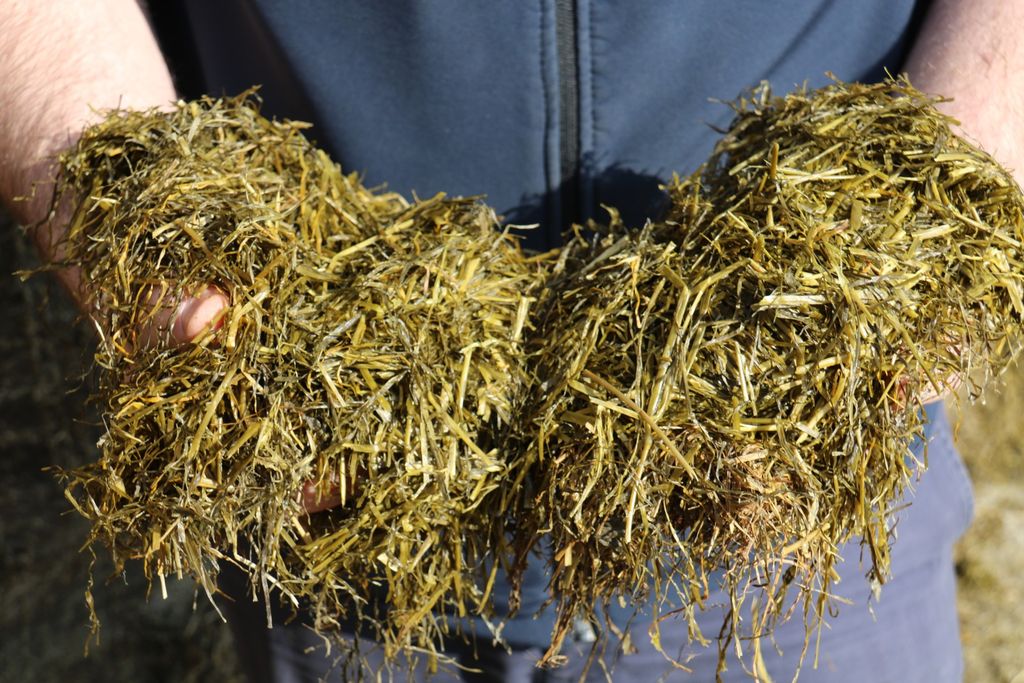
With silage effluent potentially 200 times more potent than raw sewage due to its high Biochemical Oxygen Demand - which causes fish kills in streams and rivers - the correct collection of effluent is vital.
Effluent channels around silage pits must be kept clean and in working order, with effluent having a clear path to the runoff tank.
Farmyard manure
Dung storage should be fully sealed and, ideally, have a roof as to keep the dung solid and dry to prevent levels of runoff.
Ensuring stocking rates do not exceed farmyard manure storage is important to adhere to the guidelines set out within your manure application zone.
The table below outlines the prohibited application periods in the various zones:
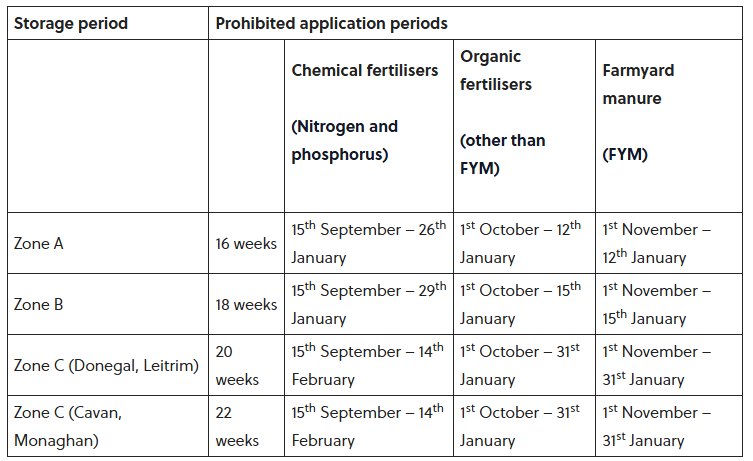
It is important to note that the storage of dung in a field during the closed period is also prohibited.
Late-harvested crops
Late harvested crops refer to vegetable crops harvested after September 15, which includes beet, maize and main crop potatoes.
With crops like beet and maize often being cut late into the year, there is a greater risk to water quality compared to grassland when most of the animals are indoors.
Due to more difficult soil conditions late in the year, tracks from machines and bare soil become a source of sediment to run into waterways.
In accordance with the Good Agricultural Practice for Protection of Waters set out by the European Union, all late harvested crops must adhere to a 6m uncultivated, vegetation filled buffer zone in any field sloping towards a waterway.
For fields that do not slope towards a watercourse, a 3m vegetation buffer zone is acceptable.