NZ sheep and beef farmers face tight margins despite strong prices

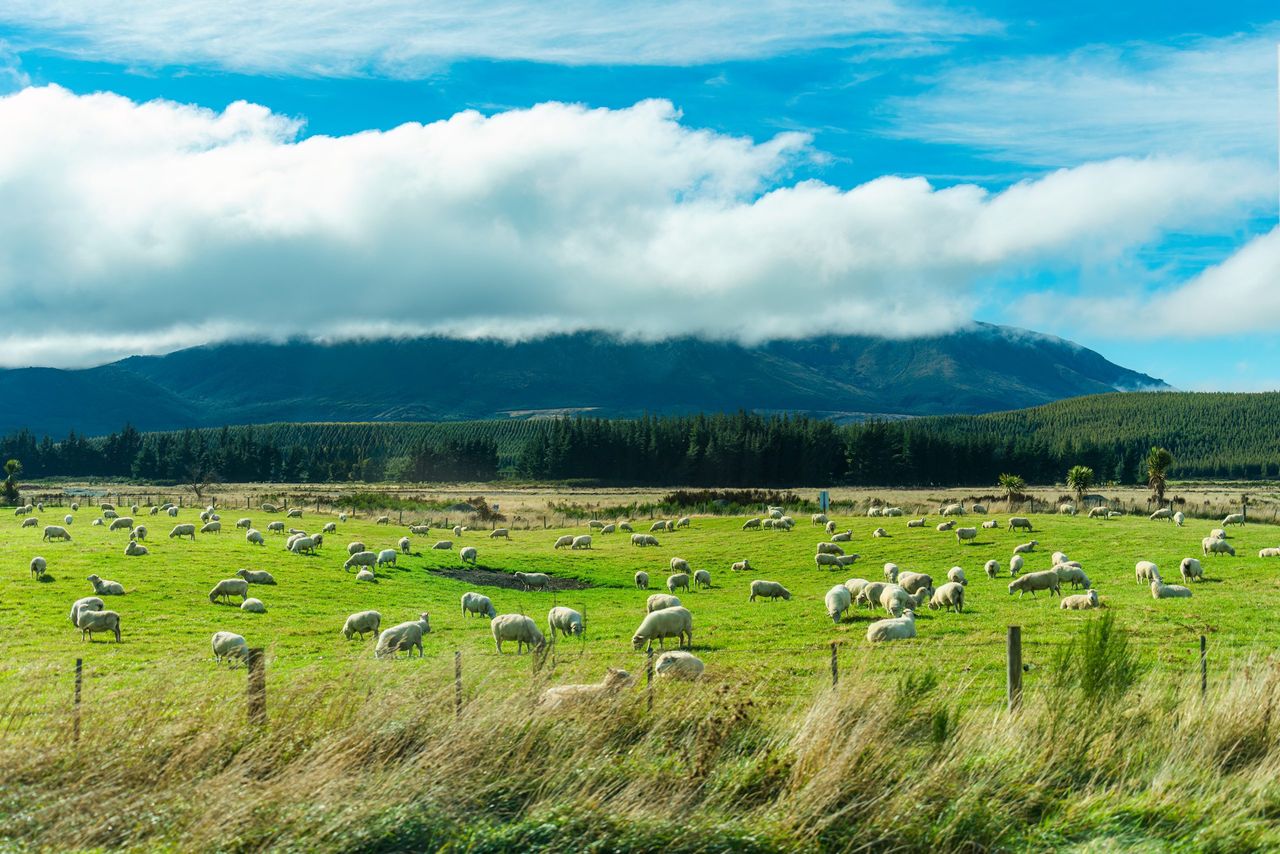
Sheep and beef farmers in New Zealand can expect continued strong red meat returns in 2026-2027.
However, Beef + Lamb New Zealand (B+LNZ) is warning that margins are likely to tighten.
A stronger New Zealand dollar is likely to limit export returns, while rising input costs and the risk of dry El Nino conditions are expected to place pressure on farm margins, according to B+LNZ’s new season outlook for 2026-2027 (year ending September).
Farmgate prices
Average farmgate prices are expected to soften slightly, but these are off historical highs.
Average lamb farmgate prices are forecast to decrease 8%, with beef cattle prices decreasing 4.5%, while farm expenditure is expected to rise 4.2%.
Farm profit before tax is forecast to average NZ$267,200, down 20% on the provisional record season average of $335,500 in 2025-2026, but is still well above the five-year average.
B+LNZ chair Kate Acland said that even with forecast decreases in both farmgate prices and profit, the new season returns promise to be very good.
They are still well above the 2024-2025 season and above the five-year average.

She noted the "exceptional" 2025-2026 results came after two "hugely difficult" years where many beef and sheep farmers were operating at a loss.
Recent prices provided a much-needed turnaround.
Acland said: "Stronger cashflow through 2025‑2026 has allowed many farm businesses to repay debt, catch up on fertiliser programmes, complete deferred repairs and maintenance, and reinvest in the farm business after several low‑profit years.
"Improved farm profitability has a powerful ripple effect.
"Sheep and beef farmers and processors spend $64 million a day on goods and services across New Zealand.
"When indirect impacts are included, that rises to $133 million a day flowing through the New Zealand economy."
Global red meat supply
Looking ahead, B+LNZ said global red meat supply remains tight and demand from key markets continues to support strong prices.
However, slower global economic growth, cost of living pressures, and a stronger New Zealand dollar are expected to limit further price increases in the coming season.
Combined beef, lamb, mutton and wool export receipts are forecast at $12.6 billion in 2026-2027, although the outlook differs across products.
For beef and veal, export receipts are forecast to increase 4.2% to a record $6.75 billion in 2026-2027 with an 8.2% increase in production and higher export volumes more than offsetting a slight easing in export prices (-3.8%) from 2025-2026 levels.
For lamb, export receipts are forecast to fall 5.9% to $4.41 billion, as lower production reduces the volume available for export and export prices also ease slightly (-3.6%) on 2025-2026 levels.
For mutton, export receipts are forecast to ease 0.4% to $880 million, with lower export volumes largely offset by a small increase in export prices (+1.2%).
For wool, production and raw wool export volumes are both forecast to fall in 2026-2027.
Higher export prices (+3.1%) offset the lower volume, leaving raw wool export receipts down 1.2% to $567 million.
International markets
Acland noted that events in international markets could negatively impact New Zealand, such as the US investigation into lamb imports and volatility in global beef export flows caused by China’s beef safeguard.
"In addition, the conflict in the Middle East is leading to higher fuel and fertiliser costs," the B+LNZ chair said.
"Farmers also need to consider the risk that the forecast dry El Nino conditions could inhibit pasture growth, leading to lower liveweight gains, lighter carcass weights and less production.
"These factors will all impact farm margins."
Although the red meat sector is in a stronger position than it has been for some time, farmers know conditions can change quickly, Acland added.
Farmers are advised to focus on building financial resilience, improving productivity, and planning for both climate‑related shocks and market downturns.