Can silage additives help during a looming fodder crisis?


A lot of farms may still have one final cut of silage to bring into the yard, but are silage additives worth the money for the last cut?
According to Teagasc's winter fodder survey last month, there was an average of 4.3 months of feed available.
However, many farms in drought-stricken areas will have gone through another month of that.
Five months of fodder used to be the comfort spot, but farms in the north-west have experienced two seven-month-long winters in the past three years, while farms in the south-east are now commonly feeding in the summer.
That means all farms across the country are realistically a ways off from where they would like to be in terms of fodder.
So if silage additives could help to extend what feed is available by boosting quality, it may very well be worth it.
Silage additives
The ideal time for mowing is always said to be in the late afternoon or evening, as this is when the sugars in the grass plant are at their highest.
These sugars, such as glucose, are then broken down by bacteria, and produce lactic acid as a by-product.
This lactic acid is a major player in fermenting and preserving silage, and hence why farms want silage rich in sugar.
Ideally, farms want to see sugars over the 3% mark to achieve a good level of fermentation, although that will be hard to achieve in mid- to late September.
Farms will also be testing grass for nitrates levels before cutting any silage, as following the long drought nitrates levels will be high due to mineralisation.
Realistically, there will be no getting nitrates levels down from the high side, but if nitrates are sitting under 800ppm, the crop should be fine as long as sugars are ok.
If sugars are below 2%, your crop will be exposed to poor fermentation, and if paired with high nitrates, the crop may end up even worse again.
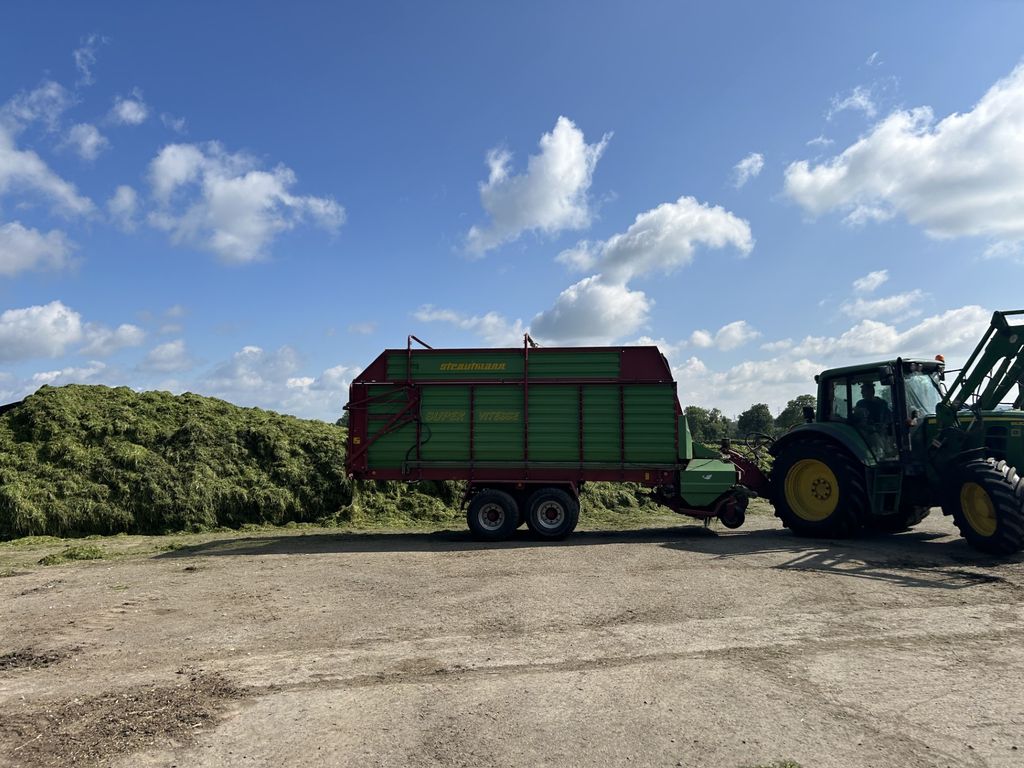
That's where silage additives come in, as the majority of them on the Irish market contain the bacteria Lactobacillus.
This bacteria digests these sugars discussed above, rapidly producing lactic acid and creating a better starting environment for the silage crop.
Trials have shown that the pH of silage with additives drops rapidly in the first 24-36 hours compared to silage which has not being treated.
The levels do quickly get back on par with each other - however, that first 24 hours will make a significant difference in getting the crop to stabilise in the crucial period where degradation is taking place and nutrients are being lost.
It is important to remember that silage additives do not act as compensation for poor silage making.
Realistically it will be hard to have sugars above 3% and even harder to get a good wilting as daylight falls back, but it is still important to cut cut grass at the ideal time.
Additives are costing in or around €1.50-€1.60/t, so do your calculations, and consider if they may be of use to your farm this September.