MEPs reiterate call for 'ambitious' EU budget ahead of draft

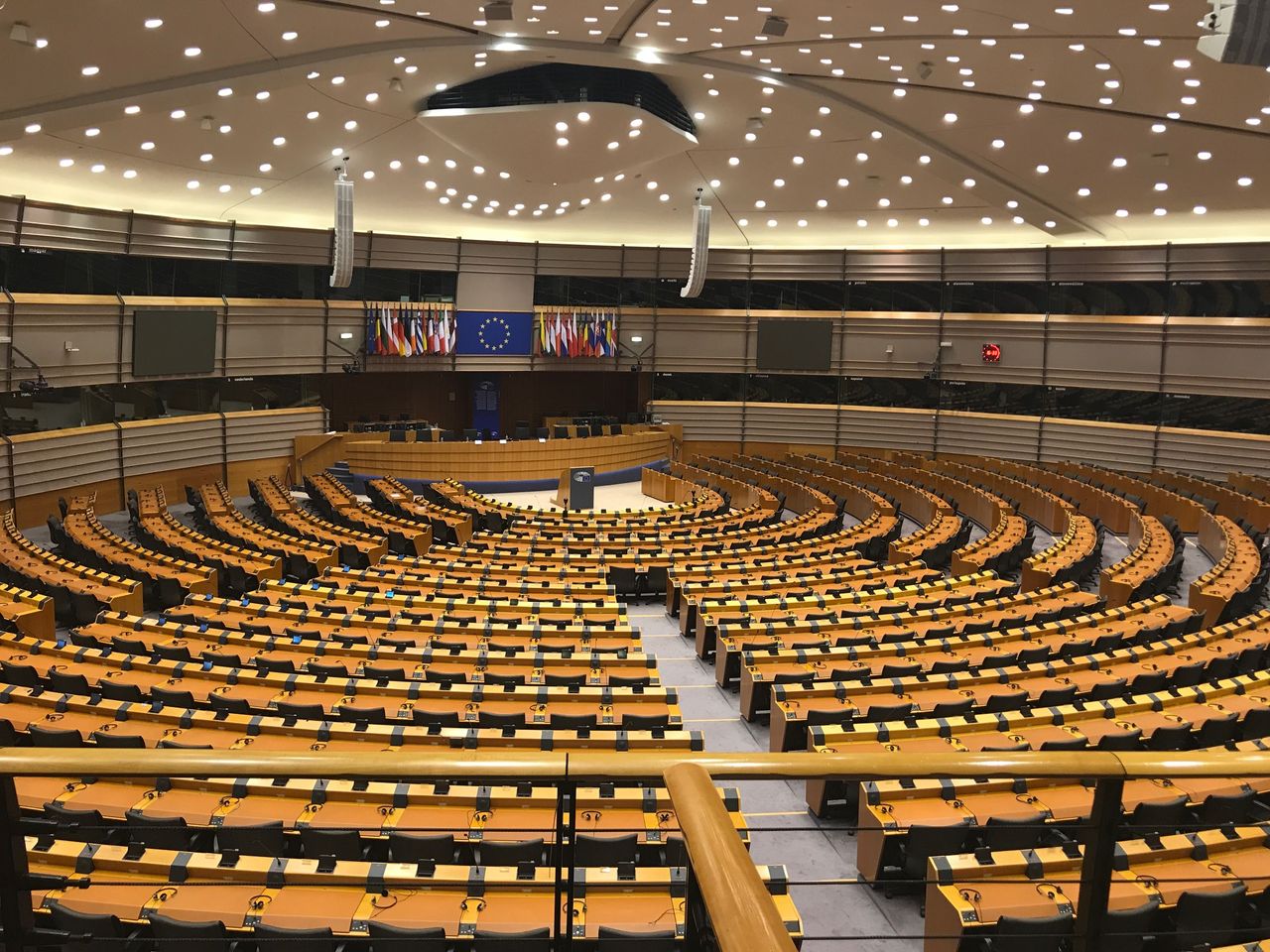
MEPs have debated the latest developments in the negotiations on the EU's next Multiannual Financial Framework (MFF).
Minister for European Affairs Thomas Byrne has confirmed that the Irish EU presidency will put forward the council’s draft negotiating position this coming Saturday.
"Our aim is to take negotiations one step closer to agreement,” he said.
He added that "finding a balance entails difficult decisions".
As part of the MFF, Minister for Agriculture, Food and the Marine Martin Heydon previously confirmed he was aiming to secure a "partial general approach" on the next Common Agricultural Policy (CAP) this month.
EU budget
MEP Siegfried Muresan, one of the European Parliament’s lead negotiators for the EU long-term budget (MFF co-rapporteur), warned that "any cuts to the budget, which would weaken Europe in the years ahead, will not be a basis for the consent of the parliament".
Muresan said: "This house will not approve a budget that would not allow us to achieve our goals, or that would affect our capacity to react when there are crises, or unexpected developments".
He stated that the European Commission had proposed a 2028-2034 budget at the same level as the current 2021-2027 budget despite the growing challenges.
The commission’s proposal accounts for 1.15% of the gross national income (GNI) of member states, while the current MFF when it was put forward was 1.14% of the GNI of member states.
"Any further reduction below the commission’s proposal would weaken Europe," Muresan said.
Muresan stressed that while national budgets have grown by 68% over the past seven years in absolute numbers, the EU budget has not kept pace.
MEP Carla Tavares, parliament’s MFF co-rapporteur, said: "We are no longer dealing with temporary crises, but with structural challenges".
"Our response must be equally structural and ambitious."
Speaking of the parliament’s position, she said: “We are not asking for more money. We are asking for resources that match the responsibilities assigned to the EU".
Everyone agrees, noted Tavares, that Europe needs a stronger budget to deliver on priorities such as competitiveness, energy independence, security, climate, education and health, while some in the council are calling for a smaller budget and rejecting new own resources.
Ambitions
Speakers from most political groups reaffirmed parliament’s position, which was adopted in April 2026.
MEPs are calling for a "strong, realistic EU budget that is future-oriented and introduces new revenue streams".
MEPs have insisted on a budget that "brings benefits to citizens, reduces inequalities and guarantees adequate resources for key policies including agriculture, regional, cohesion and social funding".
Members also expressed their concerns about how the EU budget is spent and stressed the need for increasing transparency and accountability.
Commissioner for Budget, Anti-Fraud and Public Administration, Piotr Serafin highlighted that "some capitals are continuing to look at the EU budget in the way accountants look at balance sheets: how much do I put in; and how much do I get out".
"This approach was misguided in the past, but with our modern budget it is entirely flawed,” Serafin said.
"The EU budget addresses common challenges that cannot be addressed by a single member state alone, or would likely be much more costly if they tried alone, in isolation."