Irish farmers descend on Brussels to join EU peers in major protest

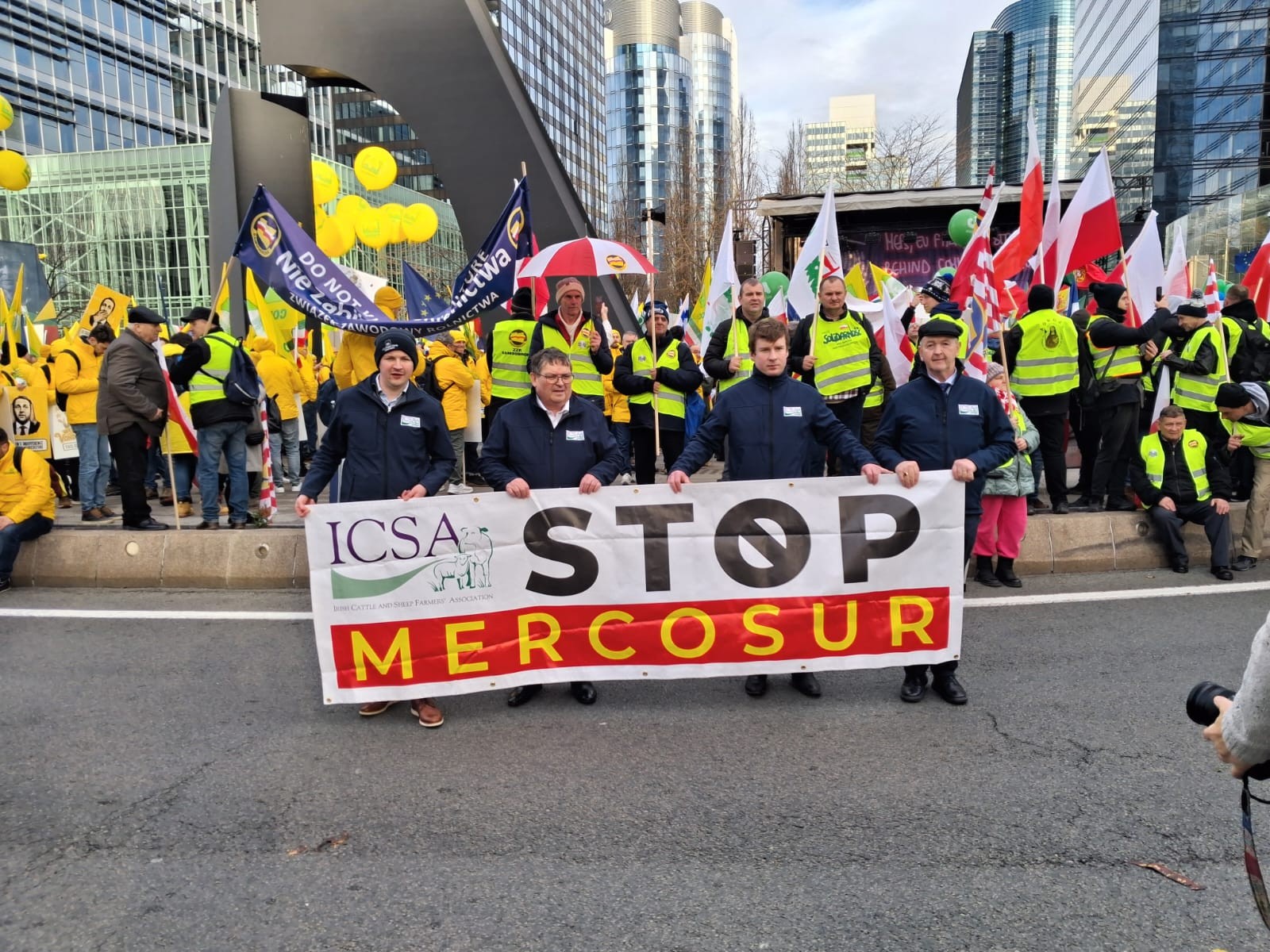
Irish farmers and co-op representatives are among thousands who had descended on Brussels today (Thursday, December 18) to protest over many issues including the Mercosur trade deal, cuts in funding to the Common Agricultural Policy (CAP) and generational renewal.
The event is organised by Copa Cogeca which represents farmers and cooperatives across the EU.
Among the Irish groups attending are members of the Irish Cattle and Sheep Farmers' Association (ICSA).
Speaking from the protest, ICSA general secretary Hugh Farrell said Irish farmers had no choice but to make their voices heard.
“It is hugely important that ICSA is here today, standing shoulder to shoulder with farmers from across Europe," he said.
"Agriculture is being sacrificed through reckless trade deals and proposals to slash the CAP budget, and farmers are here to say clearly that this will not be accepted.
“Mercosur is not a done deal. This agreement completely undermines the standards European farmers are required to meet and poses a direct threat to the future of beef farming in Ireland.”
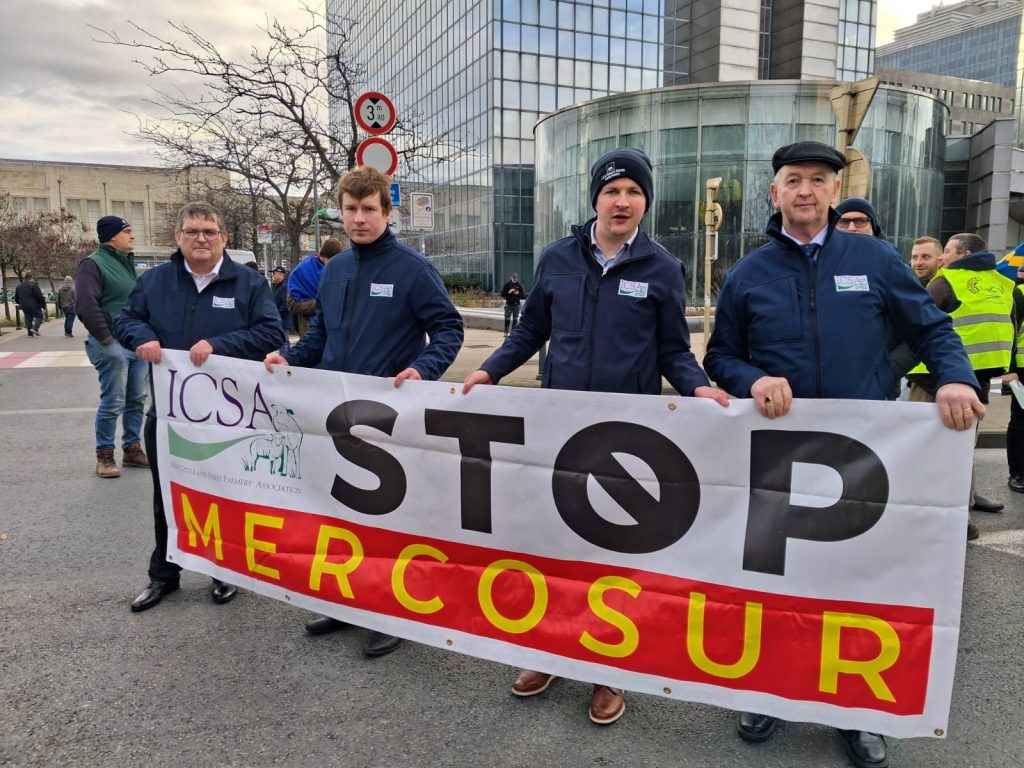
The ICSA has said that a strong, properly funded CAP is essential for farm incomes, rural communities and food security.
“European farmers will not be written off or sacrificed. A fair CAP and fair trade are non-negotiable," Farrell added.
ICOS in Brussels
Meanwhile one mantra that is being voiced today in Brussels is 'NO FARMERS, NO FOOD, NO FUTURE'.
President of the Irish Co-operative Organisation Society (ICOS), Edward Carr represented Irish co-ops and their farm families, alongside up to 10,000 farmers and other cooperative members and leaders from across Europe at the protest.
The protest coincides with today’s EU leaders’ summit in Brussels. ICOS represents cooperatives across Ireland, including dairy processing co-ops and livestock marts.
ICOS has said that these organisations collectively generate approximately €16 billion in turnover, with 175,000 members and employment for 12,000 individuals in Ireland, plus an additional 24,000 overseas.
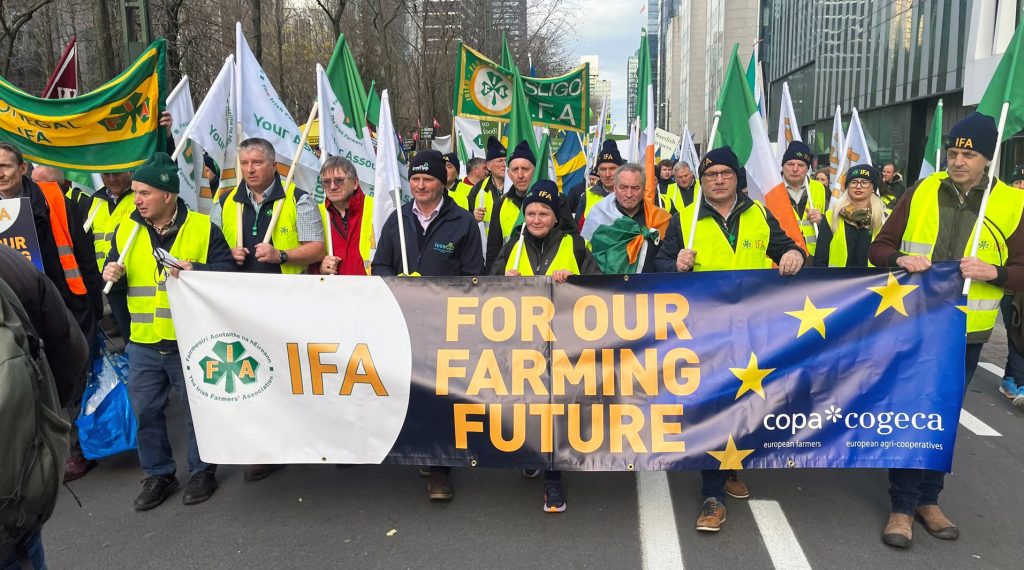
In total, Ireland has around 1,000 co-ops, not all of which are specifically agri co-ops.
Today's major demonstration comes on the back of the recent EU Commission CAP budget proposal for post-2027 which would see supports for farms slashed by up to 25%.
“The proposal to cut CAP funding and dismantle the two-pillar model of CAP is totally unacceptable at a time when food security in Europe is under threat," Carr said.
"It shows that the EU Commission has completely lost touch with reality on the ground and farmers and cooperatives have had enough.
"The fact, a week before Christmas that farmers, food producers from right across the EU27 have made the effort to travel to Brussels shows this deep frustration.
“EU Commission President Ursula von der Leyen has talked a lot about the place of farmers and cooperatives in the food supply chain, reducing red tape and ensuring fair competition. But actions speak louder than words and we are not seeing any of these promises being fulfilled," Carr added.
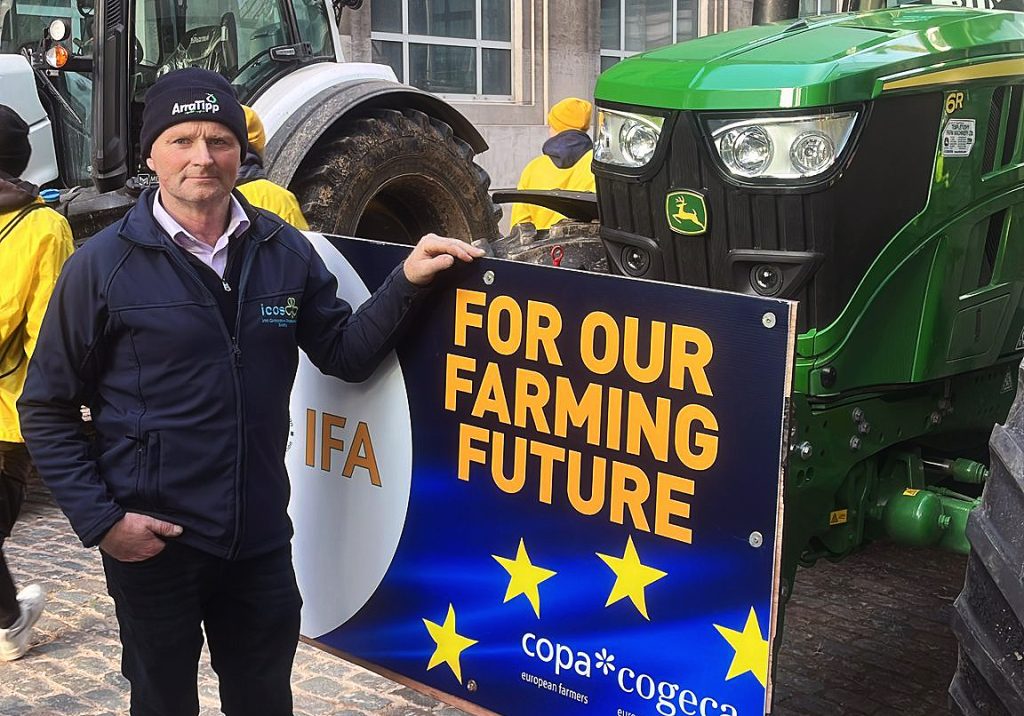
The ICOS president joined Irish Farmers' Association (IFA) president Francie Gorman along with Irish farmers in Brussels for this mass protest on the fringe of the EU Council meeting to call on Taoiseach Micheál Martin to stand up for Irish agriculture.
Six months out from Ireland taking over the presidency of the EU, ICOS is asking the Taoiseach to make food security and a properly funded and structured CAP a priority for Ireland.
“We are demanding three clear things now: a strong, common, and properly funded CAP after 2027 that guarantees fair incomes and food security; fair and transparent trade with real safeguards and reciprocity, including a halt to Mercosur; and real simplification, with workable environmental rules, postponed CBAM costs for fertilisers, and access to effective plant protection tools," Carr said.
CAP
Meanwhile, the European Federation of Food, Agriculture and Tourism Trade Unions (EFFAT) has strongly criticised the European Commission's proposal to cut the budget for the CAP 2028–2034 by more than 20% and to create a single European fund combining agricultural resources with funding for cohesion, rural development, fisheries and other policies.
The organisation is concerned about what it says will be a weakening of the social dimension of the CAP, through clear attacks on social conditionality.
According to EFFAT, linking the allocation of public funds, paid for by EU taxpayers, to respect for workers’ rights is a matter of social justice.
It added that it also protects farmers who comply with labour laws and collective agreements, and who are otherwise exposed to unfair competition from those who do not.
Commenting on today’s farmers’ protests, general secretary of EFFAT, Enrico Somaglia said: “EFFAT shares many of the reasons behind today’s mobilisation.
"Farmers are demanding a fairer redistribution of value along the agri-food chain, which is increasingly marked by concentration and financialisation, to the detriment of the most vulnerable actors, including farm workers and small farmers.
"The EU’s current responses lack ambition and are misguided. Instead of investing in a just transition and the creation of quality jobs, the commission has pursued harmful free trade agreements and proposed cuts to the CAP budget, alongside a partial renationalisation.
"At the same time, how public funds are spent is just as important as their overall amount. This is why we strongly oppose any weakening of social conditionality, a vital social justice measure that places no additional burden on farmers and helps raise labour standards in one of the most precarious sectors of the economy," he said.