Ireland currently has enough fertiliser product to 'satisfy demand' – DAFM

Irish fertiliser imports have held relatively steady throughout the Middle East conflict according to latest government figures.
But urea has been the most impacted by the conflict because of the volume of urea that is exported through the Strait of Hormuz.
Fertiliser prices have spiked in Ireland because of the US-Iran war with calcium ammonium nitrate (CAN) estimated to have risen by around 20% since the beginning of March, while urea has jumped by as much as 60%.
Latest National Fertiliser Database information indicates that despite the impact of the Iran war on the global fertiliser industry, Irish fertiliser importers have continued to secure supplies since the war began on February 28.
An initial deal agreed this week to end the war may help to ease immediate price pressures on product but global stocks will take some to recover.
In the meantime a spokesperson for the Department of Agriculture, Food and Marine (DAFM) told Agriland: "It is understood that there is currently enough product to satisfy demand at present and further product continues to arrive.
"Products such as urea continue to be in shorter supply".
Fertiliser sales
According to DAFM in the six months running up to the end of March this year total fertiliser sales increased by more than 9% to 754,552t.
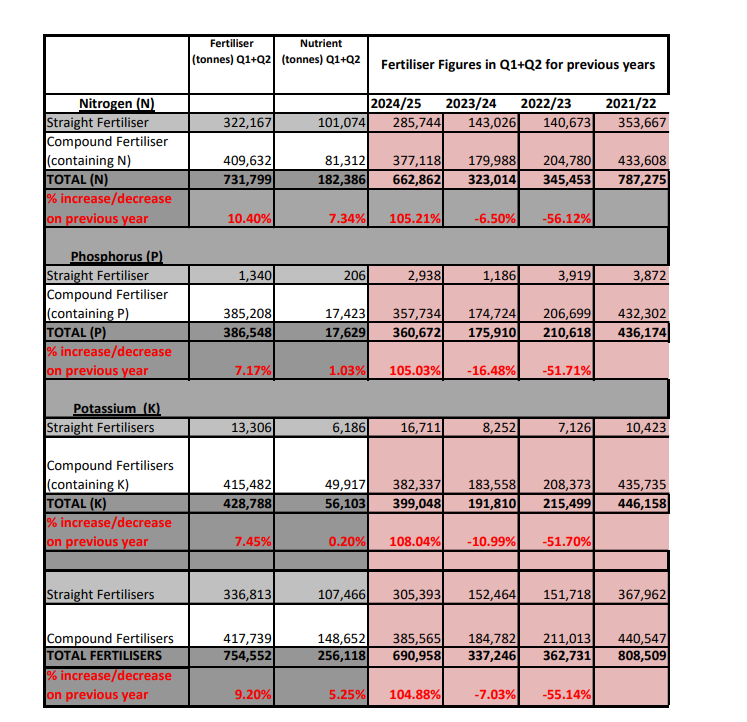
The latest data also highlights which products are driving sales and where demand has fallen.
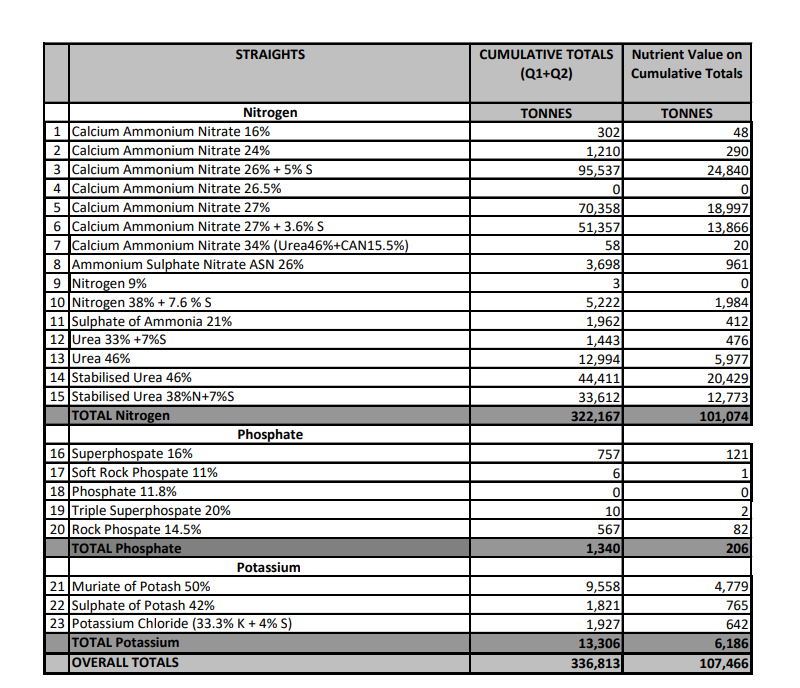
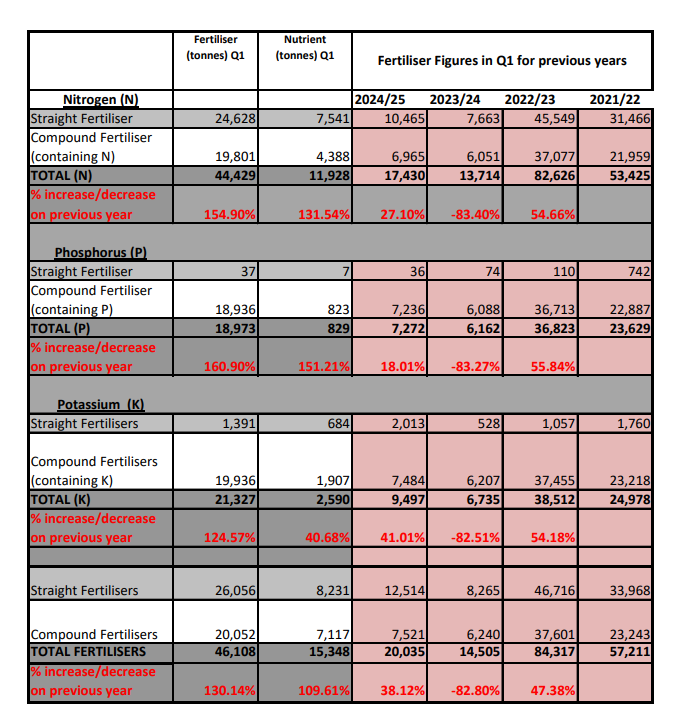
DAFM has also released data that shows in the last three months of 2025 there was a total 46,108t of fertiliser sold.
Support package
The European Commission last week (June 12) announced details of a major support package to help farmers battling the fertiliser crisis, with a potential new €1.5 billion in financial aid.
The commission has also proposed new Common Agricultural Policy flexibilities to speed up access to supports.
The European Commission aims to provide financial relief to help farmers who need to buy fertilisers by providing an immediate package of €540 million.
Member states will be able to top this up by up to 200% of national funds - which would bring the total available financial support to a potential total of €1.5 billion.