Veterinary nurses: 'We are facing a retention crisis'

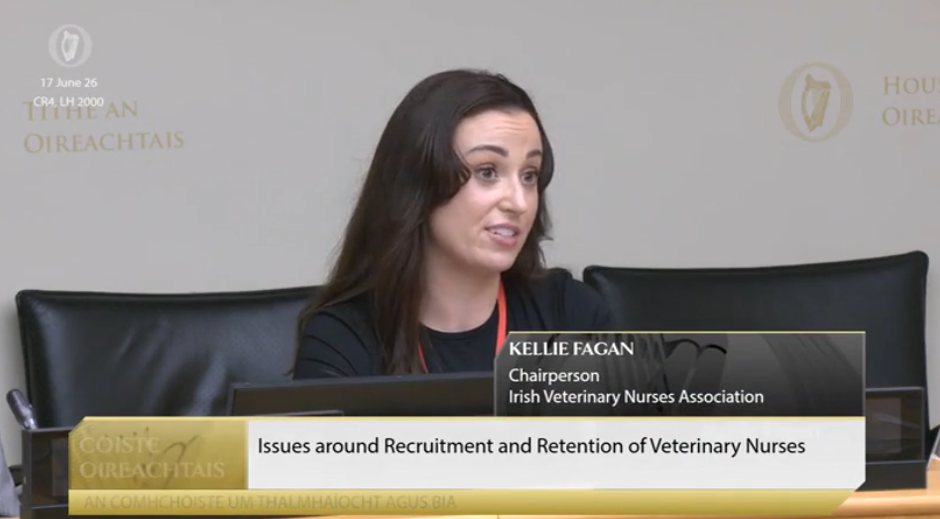
The Joint Oireachtas Committee on Agriculture and Food has heard of a looming retention crisis for veterinary nurses.
Kellie Fagan, chair of the Irish Veterinary Nurses Association (IVNA), said a recent survey found that nearly 76% of veterinary nurses are either "considering leaving, unsure about remaining, or planning to leave the profession altogether".
"The main reasons are low pay, burnout, poor work life balance, and limited career progression," she said.
The IVNA is the representative body for veterinary nurses in Ireland.
Egan said that despite being "highly skilled, regulated healthcare professionals with significant responsibility for patient care", veterinary nurses earn an average salary of just €36,800 per year.
"Many report unpaid overtime, inadequate breaks, and difficulties balancing family life and career.
"Nurses tell us repeatedly that they love their work, but they cannot build a sustainable life around it," she said.
Veterinary nurses
The committee heard the profession is "overwhelmingly female", with 97% of registered veterinary nurses in Ireland being women between 20-30.
"This is not simply a workforce issue. It is a women's workforce issue.
"When a predominantly female profession requires third level qualifications, carries significant responsibility, yet does not provide sufficient financial security or work life balance to sustain a long term career, we should be asking serious questions about how that profession is valued," Egan said.
The committee heard the Veterinary Council of Ireland's (VCI) workforce report highlighted the need to improve recruitment, retention, recognition and utilisation of veterinary nurses.
"Nearly two years later, many nurses feel little has changed," Egan said.
Regulation
Members of the committee were told that the level of confidence in regulation is "alarmingly low".
"Only 24% of respondents felt comfortable reporting potential breaches of veterinary legislation, while 73% feared approaching the Veterinary Council with concerns.
"Only 6% believed the council effectively safeguards the interests of veterinary nurses.
"We also found significant compliance concerns, with 39% reporting breaches of veterinary legislation and 66% reporting unregistered individuals performing veterinary nursing duties," Egan said.
The committee heard that 42% of respondents reported concerns regarding standards of care.
Representation
Egan said that there are over 1,200 veterinary nurses in Ireland.
However, she said the profession has only one seat on the Veterinary Council of Ireland, while veterinary surgeons have nine.
"If we are serious about creating a sustainable veterinary workforce, veterinary nurses must have a stronger voice in the regulatory structures that govern them," Egan said.
The IVNA is calling for "stronger and more proportional" veterinary nurse representation on the VCI council.
"We are asking for meaningful enforcement and education around title protection and scope of practice.
"We are asking for confidential reporting mechanisms that allow professionals to raise concerns without fear of retaliation.
"We are asking for transparent career pathways, better utilisation of veterinary nursing skills and meaningful progression opportunities," Egan said.
"We are not facing a recruitment crisis. We are facing a retention crisis.
"The students are enrolling. The graduates are qualifying. The commitment is there. What is missing is a profession that enables veterinary nurses to build a sustainable future within it.
"If we fail to address that now, we will continue to train highly skilled professionals only to watch them leave," she added.