How sward composition impacts lamb development

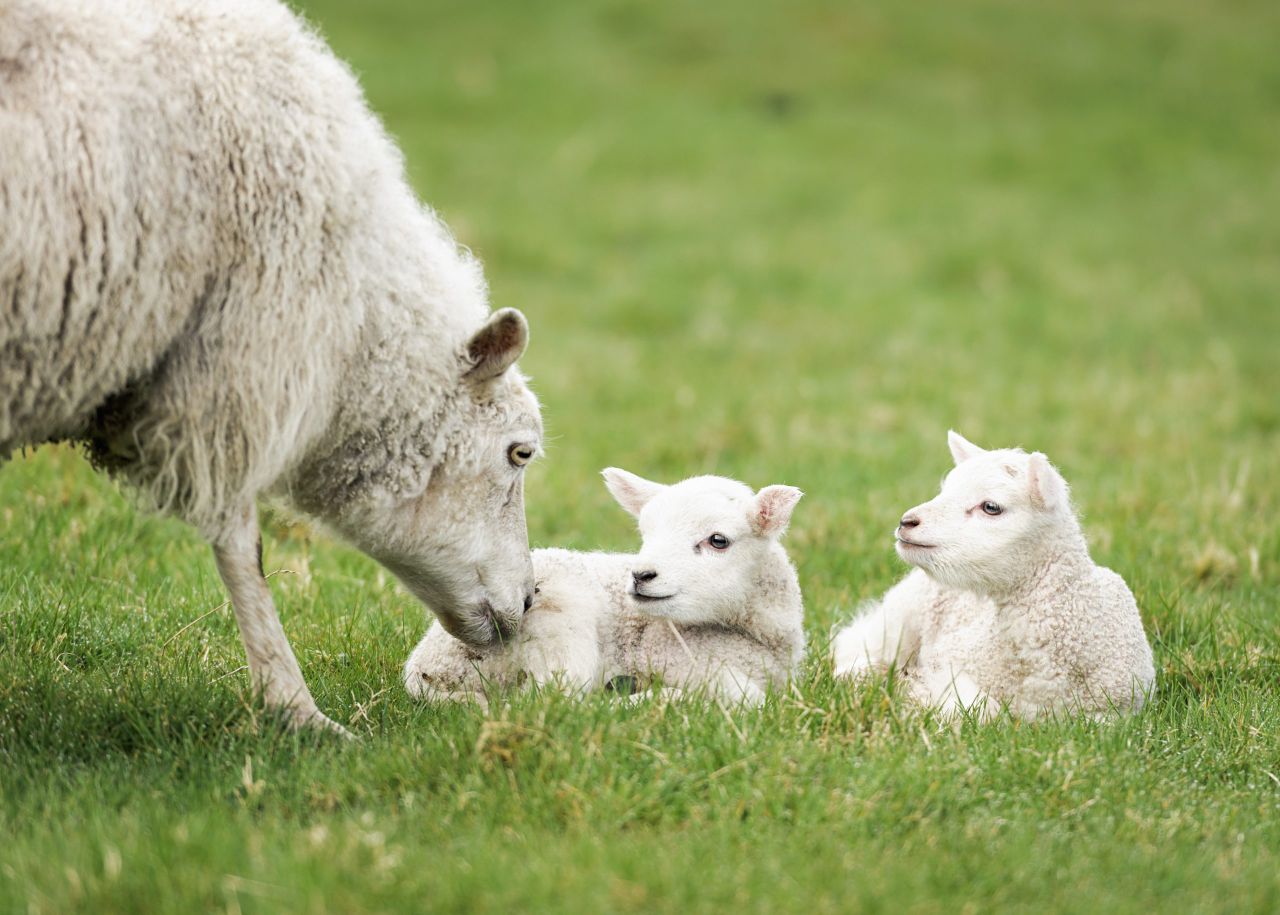
Farmers who attended the Datamars Sustainability Foundation launch event and farm walk for their multi-species swards for sustainable grazing trial at UCD Lyons farm will have seen the unique approach to lamb development taken on the farm.
The trial is attempting to create a synergy between commercial relevance and environmental sustainability during lamb development and in the sheep industry.
Prof. Tommy Boland of University College Dublin (UCD) explained how multi-species swards (MSS) were chosen for their environmental impact as well as potential to boost animal performance.
MSS boost sward diversity benefiting pollinators as well as providing greater shelter and habitats for animals including ground nesting birds who benefit from the additional herbage.
Plantain is also an excellent absorber of soil nitrates, thus reducing leaching.
The trial focused on lamb development on a number of sward types.
Lamb performance was measured on a permanent pasture (PP), perennial rye grass (PRG), six-species mix (6 SP), and a 12-species mix (12 SP).
The 12-species sward was included to determine if increasing the sward diversity would have additional benefits compared to the standard six-species sward typically used in MSS.
The six-species sward contains PRG, red and white clover, timothy, chicory, plantain.
Where possible, two varieties are used of each for optimum diversity and sward performance.
The traditional permanent pasture includes over 30 different plant species and was included to compare the differences from how sheep were finished on pasture in the "old days" compared to today and to gauge the progress of modern approaches.
Results
On average, lambs grazing the 6 SP were slaughtered 51 days earlier than those on the PRG; 45 days earlier than those on the PP, and 11 days earlier than those on the 12 SP.
The biggest revelation from the trial however, was the spread of finishing dates.
The range of lamb grazing days to slaughter was significantly different between the swards.
| Sward type | Days to slaughter |
|---|---|
| PRG | 40-240 |
| PP | 40-250 |
| 6 SP | 40-110 |
| 12 SP | 40-140 |
The significance of this is that it enables a farmer to better plan finishing schedules, meaning reduced over- or under-feeding of lambs, cutting costs and increasing margins.
Challenges
Persistency is highlighted as the key challenge for MSS.
UCD Lyons farm tackles this by opting to over-sow every 3-4 years, after taking silage off the pasture.
This has been successful in maintaining the MSS over a long-term period.
The 12 SP has a tendency to revert to a five- or six-species mix within a number of years as plant competition for light, nutrients and root space begins to have an effect.
Prof. Boland highlighted the need to focus research more intensely on sheep production to maximise farm viability.
He humorously commented: "I think there's five people in the country interested in sheep development and I think I count for two of them."