Over 1,800 farmers awaiting Farming for Water EIP payment
Over 1,800 farmers are currently awaiting a payment under the Farming for Water European Innovation Partnership (EIP).
Minister for Agriculture, Food and the Marine Martin Heydon confirmed the figure in response to a parliamentary question from independent Kerry TD Danny Healy-Rae.
The Farming for Water EIP is delivered by an operational group led by LAWPRO (the Local Authorities Water Programme) - now called the River Basin Management Service.
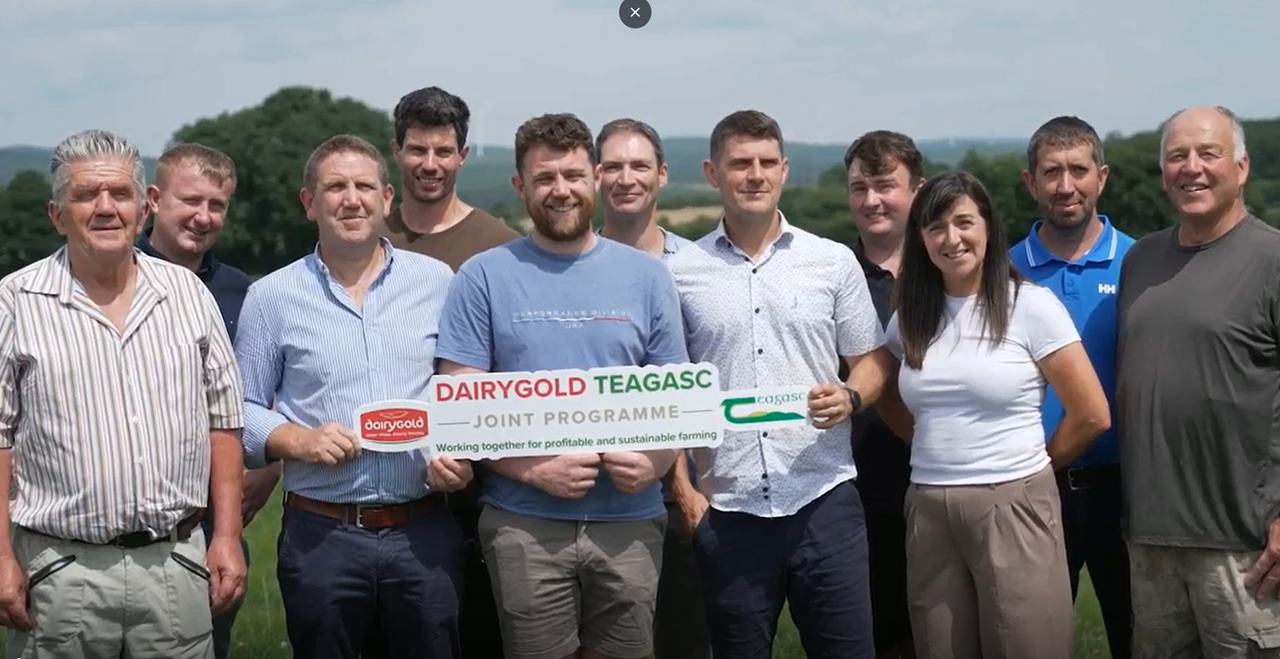
The group includes Teagasc, Dairy Industry Ireland and other stakeholders, such as Bord Bia.
Farming for Water
The Farming for Water EIP project is available in priority catchments across the country where water quality is not meeting its targets.
The project specifically focuses on reducing losses of phosphorus, nitrogen, sediment and pesticides to water from agricultural lands.
Funding is provided for measures that are above regulatory requirements like sediment traps, riparian areas and catch crops.
Minister Heydon said that 5,499 applications were submitted for the EIP covering the period 2024-2026, of which 5,461 have been approved.
"The number of verified applicants to have received at least one payment under this EIP is 4,362.
"1,823 applicants are currently awaiting a payment. Once all required checks are completed, payments will issue to these applicants," he said.
Minister Heydon noted that approvals for applications, verification of measures taken, processing and approval of individual farmer payments for the Farming for Water EIP are made by LAWPRO's administration staff and catchment scientists.
While payment checks are conducted by the Department of Agriculture, Food and the Marine (DAFM).
The five-year budget for the Farming for Water EIP is €60 million, with €50 million from DAFM for farmer payments and €10 million from the Department of Housing, Local Government and Heritage for administration of the project.
Speaking at the Environmental Protection Agency’s (EPA) Water Conference recently, Farming for Water project lead Mairéad Whitty said that so far, there are 34,000 approved water quality measures “being implemented or to be implemented” by participants.
“We have a huge amount of work to do, but we've achieved an awful lot to date,” Whitty added.