France commits €1bn in farmer support in wake of heatwaves

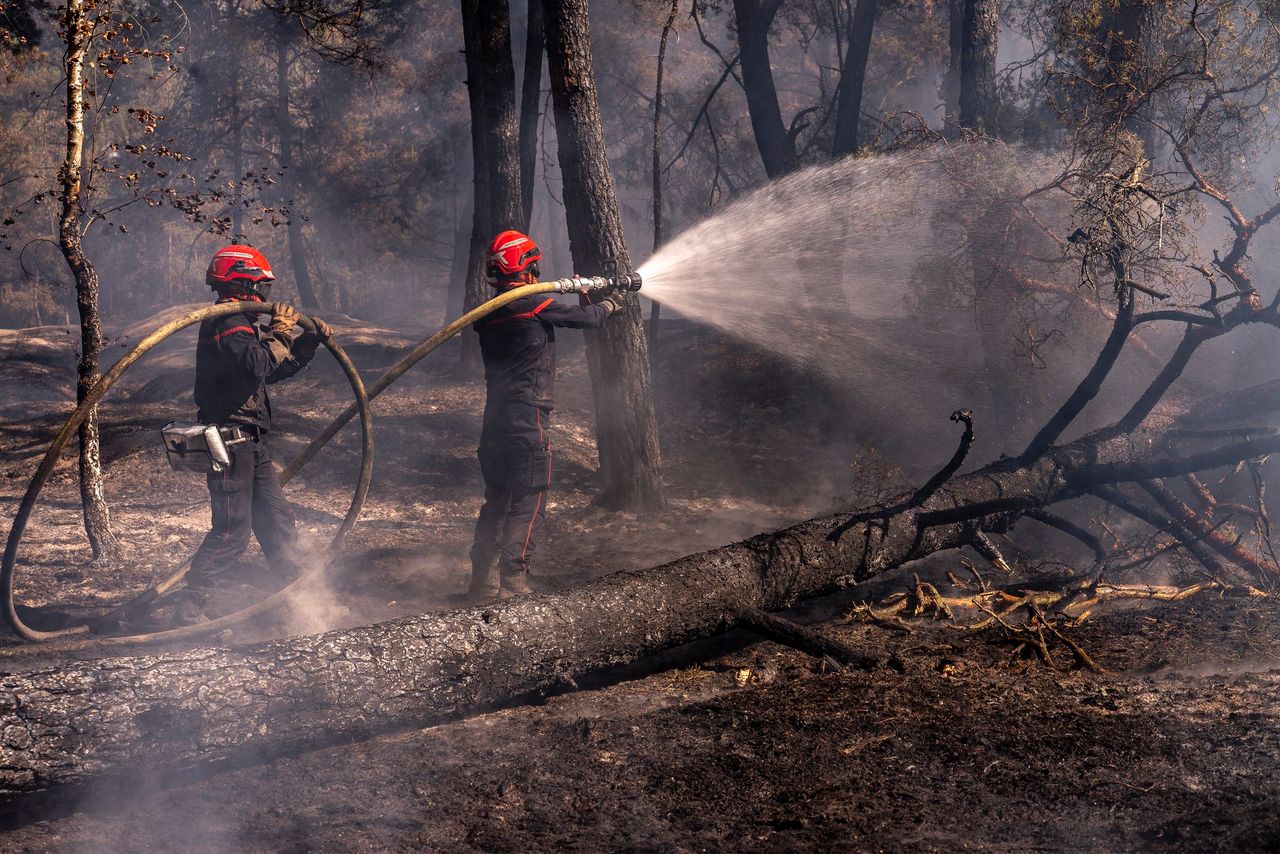
Over €1 billion in funding has been earmarked for the French agricultural sector “to support cash-flow and revive production” following a summer of heatwaves and fires.
The decision was announced today (September 4) by France’s Minister of Agriculture, Food Processing, and Food Sovereignty, Annie Genevard.
The French government said: "This plan pursues a dual objective: firstly, to compensate for exceptional losses to prevent bankruptcies, and secondly, to restart agricultural production by facilitating the supply of inputs (fodder, seeds, seedlings, etc.)."
Repeated heatwaves and drought this summer have had a massive impact on French agriculture.
While the average national temperature in July 2026 (24.9°C) was higher than the previous historical records of 2003 and 1976, 65% of the country faced unprecedented drought.
Yield losses of 50% on average were recorded in many areas.
In numerous regions, forage stocks are down by more than 50%.
Fabric of agricultural production
The French government said that the plan is based on a "clear principle": a farmer whose harvest, fodder or production equipment is impacted “must be able to receive support as quickly as possible, in order to preserve the agricultural production fabric”.
It said that the state is committed to mobilising and supplementing the various compensation schemes for losses, “according to the needs observed on the ground”.
According to initial estimates, the National Solidarity Compensation (ISN) scheme will amount to €520 million.
This is a government agricultural support system designed to compensate farmers for severe crop losses caused by exceptional and extreme weather events.
The plan also provides €30 million for the mobilisation of the agricultural disaster scheme for uninsurable losses of funds for plants (perennial crops, vines, etc.) and animals (cattle, sheep, poultry, etc.).
Additionally, property tax on undeveloped land will be subject to local tax relief, amounting to more than €300 million.
The reference period used to calculate yield losses will be extended from five to eight years, starting with the 2027 growing season “to better account for the recurrence of extreme weather events and thus provide farmers with better compensation”.
Agricultural sovereignty
Minister Genevard has also set up an “agricultural rearmament fund” of €235 million.
This fund - tailored to local areas and adapted to the specific needs of each region and sector - will support farms facing the most significant challenges, particularly in financing the supply of inputs (animal feed, forage, seeds, seedlings, and other inputs).
This allocation also includes a 'fire' component to assist farms affected by this summer's wildfires.
The plan also includes increasing the support provided by the MSA (Agricultural Social Security) for agricultural social security contributions of €20 million.
The French government also announced:
- An extension until December 31, 2026 of the exceptional aid scheme for the purchase of nitrogen fertilisers for an amount of €145 million, including €38 million in national credit, to take into account the delay in sowing linked to the drought;
- An extension until October 2026 of the exceptional support for agricultural GNR ("gazole non-routier", or non-road diesel) of 15 cent/litre for a total amount of €106 million euros, to support autumn agricultural work.
‘Duel challenge’
Minister Genevard has set up a national unit specifically dedicated to the deployment of the aid plan, in coordination with the units set up by the prefects.
She said: "This summer's drought poses a double threat to our agricultural sovereignty: by severely degrading certain cash reserves, and by creating the risk of a lower recovery in production for the 2027 campaign, especially as it adds to the difficulties encountered in terms of fuel and fertilisers.
“The plan I am presenting today addresses this dual challenge: it compensates for exceptional losses to prevent bankruptcies, and it prepares for the recovery of agricultural production.
“It is a substantial financial effort, a symbol of national solidarity and the commitment of all our citizens to French agriculture.”
The minister added that she is continuing and expanding work on adapting French agriculture to climate change.
She said: “By promoting future-orientated agricultural projects and providing them with tax incentives, by strengthening the agricultural water fund, and by safeguarding other plans, we are shaping the new agriculture of tomorrow, more resilient to the effects of climate change.”