EU young farmers urge member states to secure higher budget for CAP


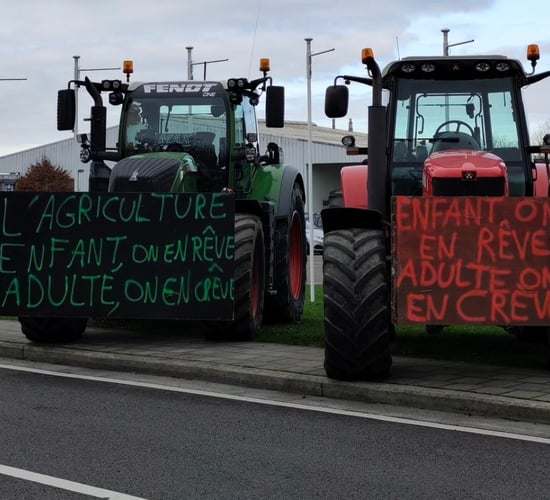
Young farmers from across Europe are joining the farm protest organised in Brussels today (Thursday, December 18) calling on Heads of States to restore an ambitious Common Agricultural Policy (CAP) for young farmers.
As the EU is shaping its budget for the years 2028-2034, the implications of the choices made today will span decades, affecting not only this generation of young farmers, but also the ones after, CEJA, the group representing young European farmers has said.
The organisation is calling on member states to clarify their intentions towards EU agriculture and young farmers.
CEJA president Peter Meedendorp said: “Member states must take this opportunity to reassert a true ambition for the future of the CAP and young farmers.
"If they do not give enough ambition to the CAP after 2028, they are not only taking away the tools for farmers to continue their important work, they are also penalising the next generations in farming.
"It is not only about tomorrow; it is about after 2034, 2060 even, when our generation of farmers will leave the sector and wonder what is left of this reform, besides a taste of regrets.”
Focus for young farmers
Over the past two years, CEJA has placed generational renewal and the long-term viability of EU agriculture at the core of its vision.
It said that the proposals of the European Commission currently on the table do not fully reflect that ambition.
The lack of clarity created by the governance system of the National and Regional Partnership Plans (NRPPs) and the deletion of the legally binding minimum budget for generational renewal bear the risk to see a discontinuity in public support for thousands of young farmers, according to CEJA.
Young farmers are therefore calling on member states, not only to secure a higher budgetary ambition for the overall CAP, but also to re-establish a mandatory ring-fenced allocation for young farmers.
"Such signal is highly needed at a time when EU agriculture is facing multiple challenges ranging from growing market volatility characterised with increasing costs and lowering prices, a lack of tools to sustain the sustainability transition and a growing geopolitical and trade unrest," CEJA stated.