Current forecasts 'broadly positive' for EU oilseeds and protein crops

Cereal production is declining after last year's rebound, while oilseeds and protein crops maintain positive momentum, according to the latest forecast from Copa Cogeca.
The report, prepared by experts from the umbrella organisation's working parties for cereals, oilseeds and protein crops, said a more challenging year for EU cereals is expected in 2026.
Oilseeds, however, are forecast to deliver another strong harvest and protein crops are expected to maintain their positive momentum despite lower yields.
However, Copa Cogeca said the overall outlook remains highly weather-dependent, and the coming weeks will be crucial in confirming final production, as the recent weather events may have a greater impact than initially expected.
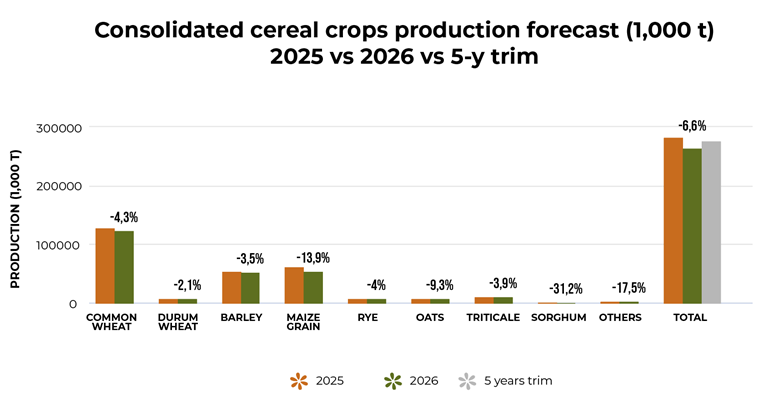
Cereal production in the EU is forecast to reach around 264 million tonnes in 2026, representing a 6.6% decline compared with 2025.
Although the cereal area is expected to contract only marginally for most crops, lower yields across much of the EU and a significant reduction in maize area are weighing on production prospects following last year's recovery.
This situation is partly linked to the current fertiliser crisis, although its impact on the 2026 harvest is expected to remain limited compared with the much greater effects anticipated for next year.
Wheat and barley to decline
Total wheat production is forecast to decline by 4.2%, with common wheat down by 4.3% and durum wheat by 2.1%.
Barley production is projected to decrease by 3.5%, while maize is expected to record the sharpest decline (13.9%), mainly due to a 15.2% reduction in sown area despite broadly stable yields, except in France, Hungary and Spain, Copa Cogeca said.
Among the other cereals, rye production is forecast to decrease by 4%, as improved yields are more than offset by a reduction in planted area.
Oat production is expected to decline by 9.3%, while triticale is also projected to record a moderate decrease.
Vulnerability
Overall, developments remain highly uneven across member states, Copa Cogeca said.
Some regions are benefiting from favourable growing conditions while others continue to face persistent drought, heat stress and water shortages, reducing yield potential, particularly in Spain and Hungary.
Although the 2026 cereal harvest is expected to remain above the levels recorded during the difficult harvests of recent years, it marks a clear step back from the recovery observed in 2025, Copa Cogeca said.
According to the organisation, this highlights the increasing vulnerability of European cereal production to climatic volatility and underlines the importance of maintaining farmers' competitiveness and access to effective production tools.
Oilseeds
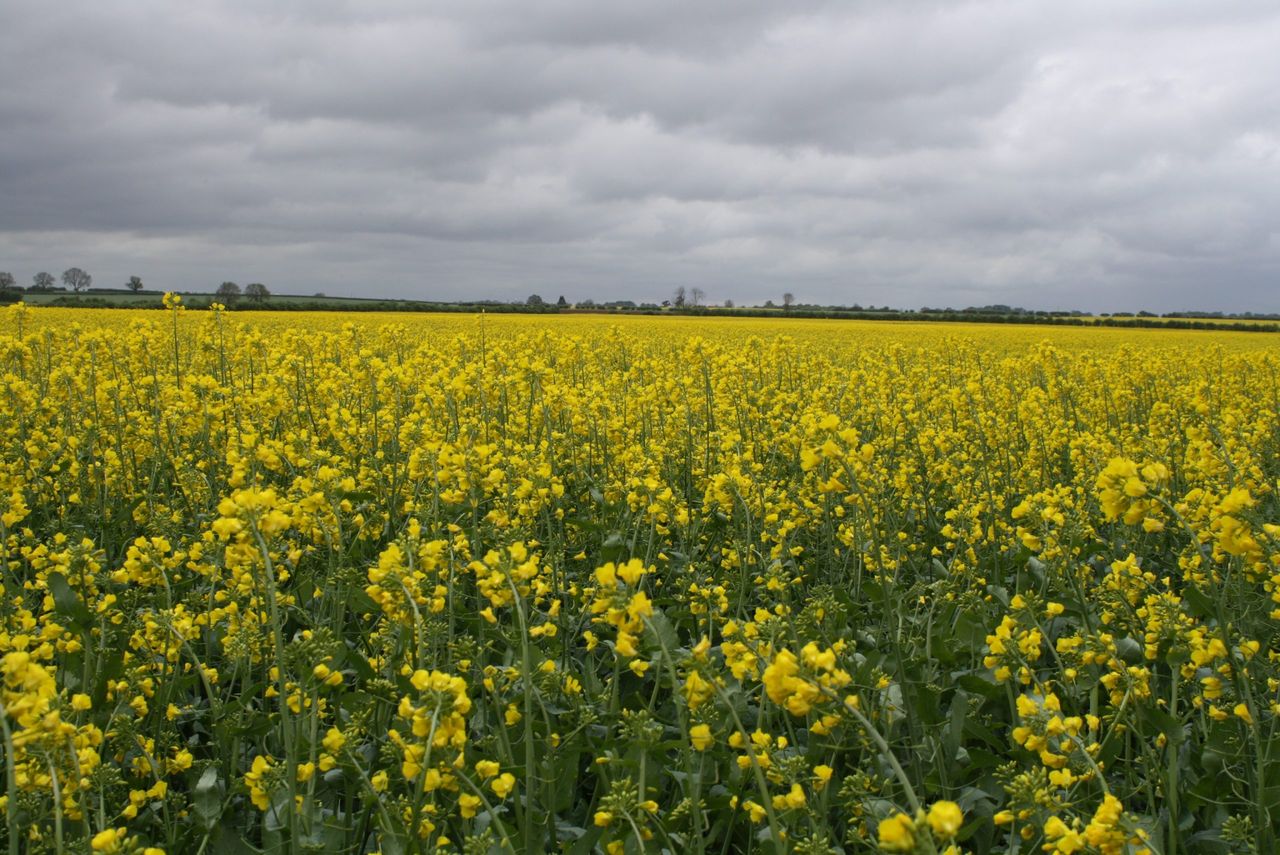
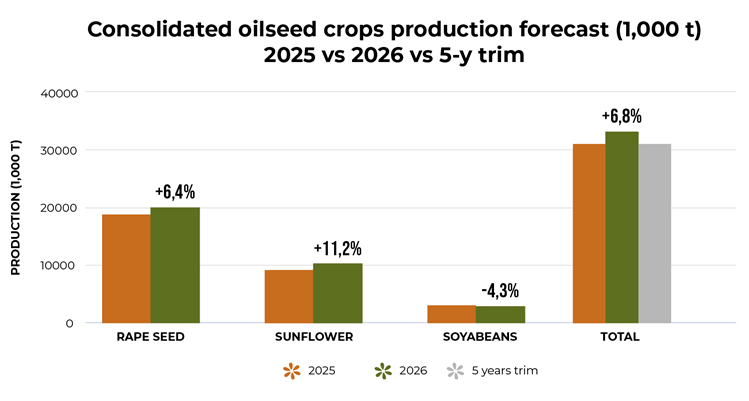
For oilseeds, the 2026 outlook is particularly encouraging, with total EU-27 production forecast to reach 33.3 million tonnes, up 6.8% compared to 2025.
The overall oilseed area is expected to expand by 6.6%, while average yields remain broadly stable.
However, the severe heatwave at the end of June, followed by the extreme weather events of recent days, particularly heavy rain and hail, may have significantly reduced yields in some countries, notably Germany.
Rapeseed production is projected to increase by 6.4%, supported by a larger planted area, while sunflower production is expected to record the strongest growth (11.2%), driven by both expanded acreage and improved yields.
In contrast, soybean production is forecast to decline by 4.3%, reflecting lower yields despite a slight increase in cultivated area.
As with cereals, Copa Cogeca said the outlook varies considerably across member states, depending on weather conditions and local agronomic circumstances.
Protein crops
Protein crops continue to show a positive outlook in 2026. EU-27 production is forecast to reach four million tonnes, an increase of 5% compared with 2025.
This growth is primarily driven by a significant expansion in cultivated area, more than offsetting lower average yields.
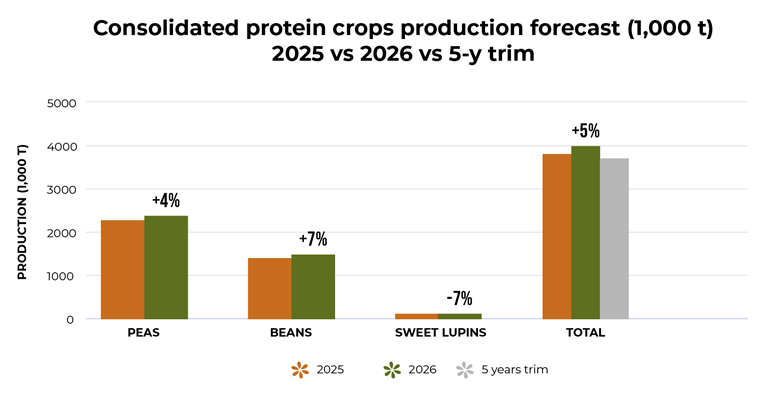
Pea production is expected to increase by 4.3%, bean production by 7.2%, while lupin production is projected to decline by 7% due to a marked drop in yields despite a larger cultivated area.
Final yields
While current forecasts remain broadly positive for oilseeds and protein crops, and cereal production is expected to remain at a satisfactory level despite the decline, the harvest is not yet secured.
Copa Cogeca stressed that continued heatwaves, prolonged drought, or adverse weather during grain-filling and harvesting in member states where harvesting is still underway could still affect final yields.
Close monitoring of crop conditions across the EU therefore remains essential, as the coming weeks will be decisive in determining the final outcome of the 2026 harvest, the organisation said.