Covid legacy and trust issues curb tech sharing on upland farms

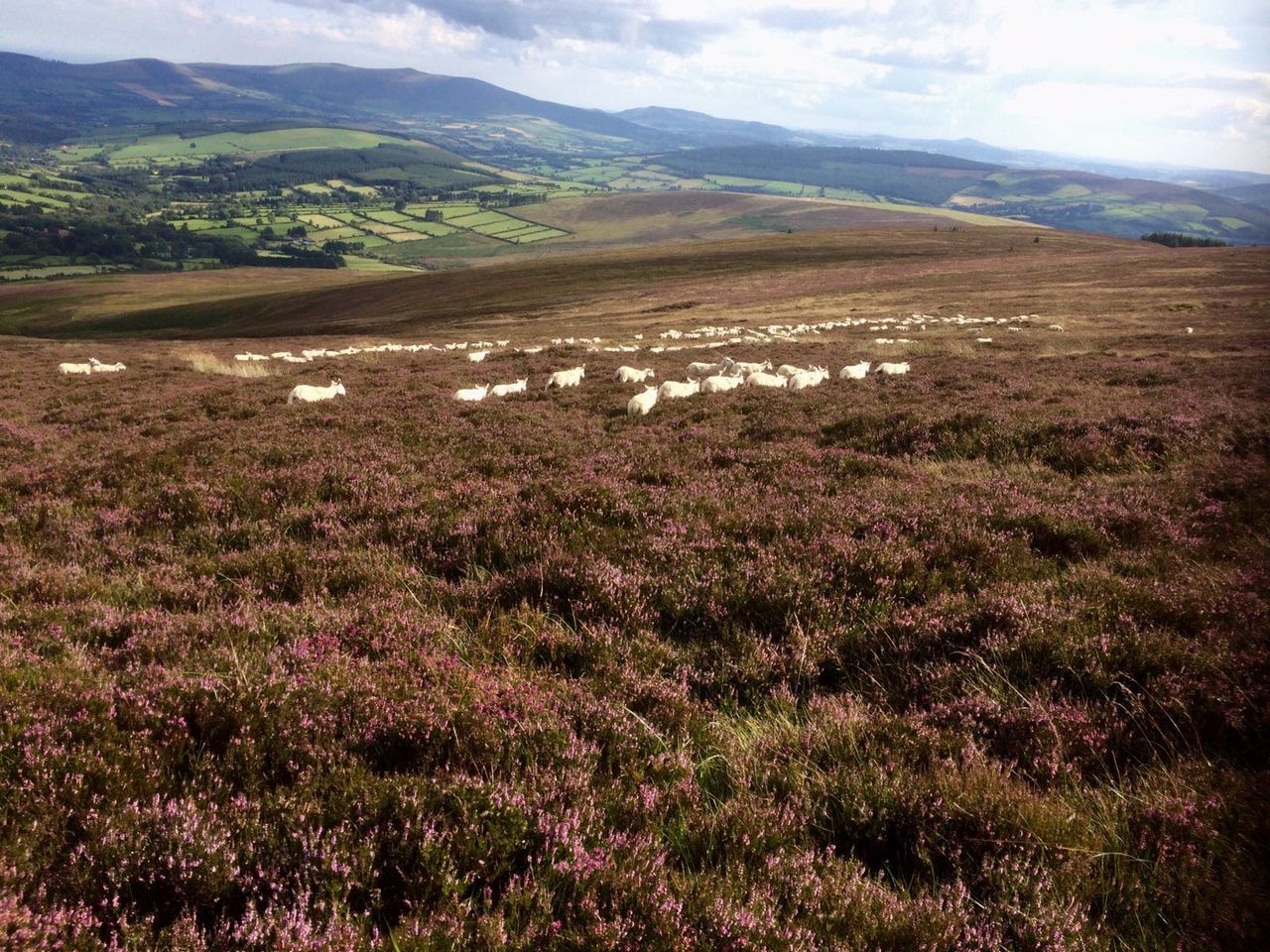
The legacy of Covid-19 is still being felt in upland farming communities when it comes to the sharing of technology and equipment between farmers.
That's according to a Teagasc/University College Dublin (UCD) study, which aimed to improve farm efficiency, reduce costs, and support sustainable land management in upland areas.
The study also found that some former long-standing sharing practices had been weakened by previous conflicts.
The study focused on technology sharing in upland High Nature Value Farmland (HNVF) farming, a sector it said "faces challenges including low profitability, labour shortages, difficult terrain andlimited access to machinery".
Technology sharing, which involves shared machinery and labour, may help to improve farm efficiency and reduce costs while supporting sustainable land management.
According to Éabha McNally, who conducted the study as part of the Teagasc/UCD Knowledge Transfer masters programme:
“Technology sharing already occurs in the upland regions and is predominantly informal, small-scale and based on family and neighbour relationships.”
The study, which surveyed 90 farmers in the Meath/Louth/Dublin region, saw trust emerge as the central precondition for participation, while cost savings and improved labour efficiency were key drivers.
Major barriers included concerns about machinery damageor misuse, scheduling, responsibility, and insurance.
Farmers showed potential interest in re-engagingwith technology sharing through small local groups, appropriate low-input machinery, clear semi-formal agreements andneutral third-party coordination.
The study recommended that practical support to encourage technology sharing should focus on "appropriate machinery, simple semi-formal agreements and neutral facilitation".
It also said a "flexible, locally adopted" technology sharing model should be supported by policy rather than a one-size-fits all approach.
French machinery co-ops
In France, thousands of farmers are members of machinery sharing co-operatives, titled FNCuma, or the National Federation of Cuma.
Cuma stands for Coopérative d’Utilisation de Matériel Agricole (farm machinery co-operative), which are local co-ops where farms pool resources such as machinery, labour, sheds, and workshops.
Members of Cuma can significantly reduce machine-related spending in their own business but still access the latest technology options.
Currently, there are around 9,200 of these co-ops all over France, with around 182,000 members.