Grass growth: Only 27% of farms on target for November covers

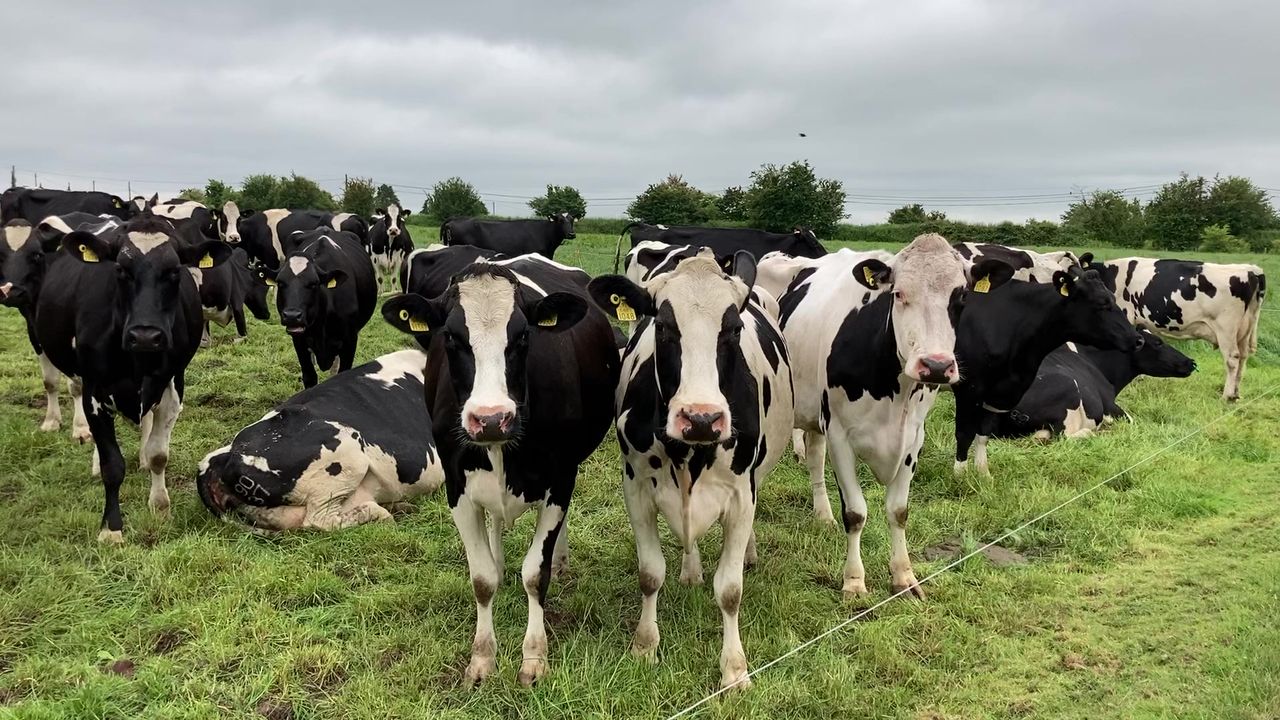
Soil temperatures are still as high as 3.4℃ above average in places while rainfall is below average, leaving a lot of farms still grazing well.
Currently, grass growth is averaging just 26kg dry matter (DM)/ha, 9kg DM/ha below the average demand, while DM% has been recorded at an average of 14% across the country.
The national average farm cover (AFC) is currently sitting at 724kg DM/ha, according to PastureBase Ireland.
With this, the average diet is being recorded at 12kg of grass, 4kg of meal, and 3kg of silage.
Farmers recording in PastureBase are currently entering paddocks with a 1,852kg DM/ha pre-grazing cover.
There is a contrast between individual farms though, as only 27% of recording farms are on target for early November.
Ideally, the farm cover should be sitting between 750-900kg DM/ha at the moment.
However, 58% of farms only have an AFC of below 750kg DM/ha, while 15% of farms still have an AFC above 900kg DM/ga.
November grazing
At the end of the day, targets do not suit every farm, as poorly drained paddocks are saturated in many areas, with no real opportunities for grazing.
Meanwhile, more heavy farms will be happy enough to over-graze coming into November, as they tell you cows are never out in February in the best of years.
But despite the favourable ground conditions, it remains crucial for the vast majority of farms not to delay to closing dates and over-graze in Novembers, as the decision can have serious consequences on spring grass.
Every farmer in the country knows that the grass cows are on currently is real watery and has minimal nutritional quality, which is then reflected on meal fed in the parlour.
Meanwhile, spring grass is know for its good quality, and will be much more beneficial to the fresh calver at that stage than it is to the late lactation cow at this stage.
Head of dairy knowledge transfer at Teagasc, Dr. Joe Patton, recently noted that approximately 67% of the grass available in February and March grows during October and early November.
Farms which are going back into paddock which should have already being closed for the sake of making the most of the weather conditions will undoubtably run tight on grass in early spring if the herd can get out.
In a compact calving system, the error of delayed closing dates will be costly in supplemented feed.