Beef Kill: When will current record low weekly factory supplies recover?

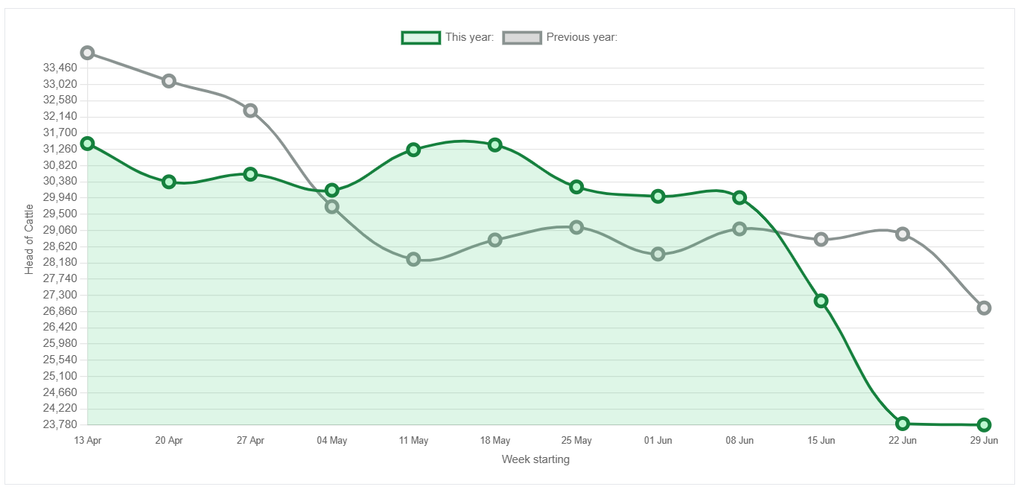
The past two consecutive weeks have seen weekly beef kill numbers fail to surpass 24,000 head, leaving current beef cattle supplies amongst the lowest full-week mid-summer weekly kill numbers on record.
Factory cattle supplies have declined sharply since mid-June and prices have uplifted firmly since then also after being in a general declining trend for the first half of the year.
The cumulative beef kill-to-date this year is down by 9.5% or over 84,500 head but this deficit is expected to recover later this year.
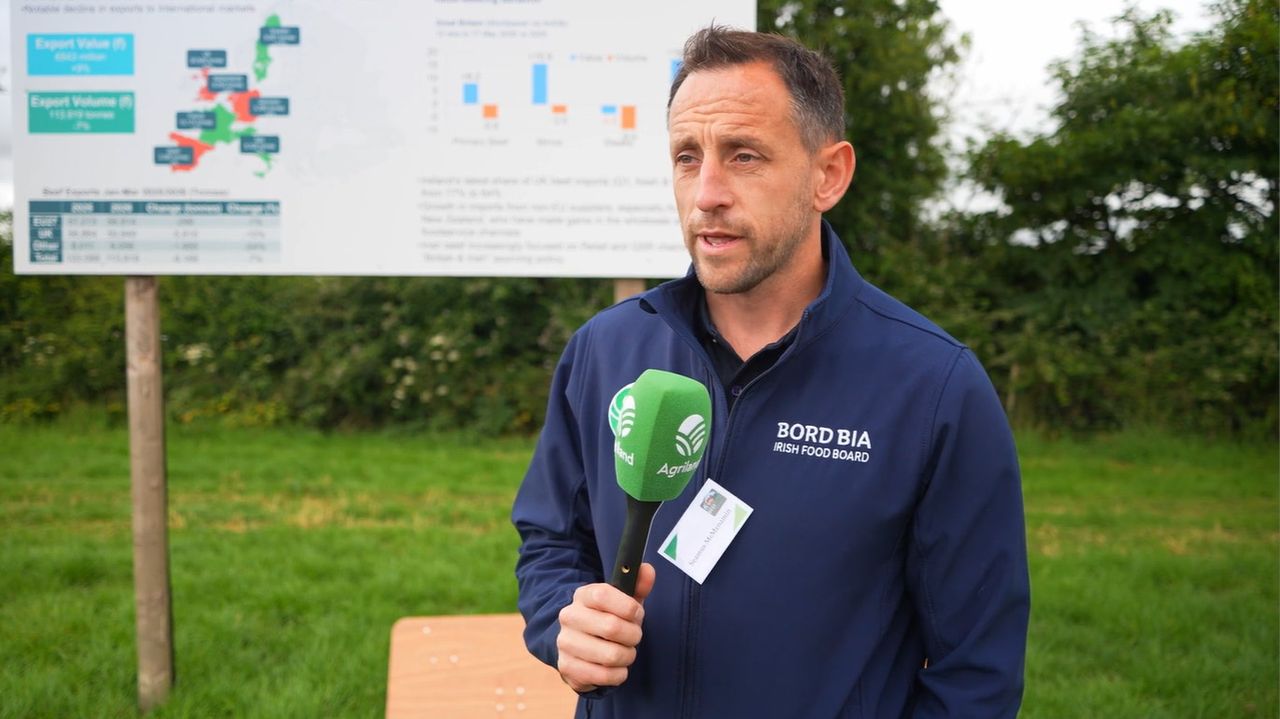
Speaking to Agriland at Teagasc's BEEF2026 open day, Bord Bia's livestock sector manager Seamus McMenamin said that more cattle are expected to come forward for finishing towards the end of the year.
The table below details weekly beef kill numbers in the week ending Sunday, July 5, versus the same week of last year, the cumulative beef kill-to-date this year versus the same week of last year, as well as the change in numbers and percentage changes:
| Animal Type | Week ending Sun, July 5 | Same week last year | Difference | Cumulative 2026 | Cumulative 2025 | Cumulative Change |
|---|---|---|---|---|---|---|
| Young Bulls | 1,904 | 2,557 | -653 (-25.5%) | 63,247 | 64,784 | -1,537 (-2.4%) |
| Bulls | 450 | 565 | -115 (-20.4%) | 13,209 | 13,304 | -95 (-0.7%) |
| Steers | 8,123 | 8,886 | -763 (-8.6%) | 304,504 | 327,410 | -22,906 (-7.0%) |
| Cows | 6,809 | 6,427 | +382 (+5.9%) | 173,650 | 203,234 | -29,584 (-14.6%) |
| Heifers | 6,499 | 8,522 | -2,023 (-23.7%) | 255,420 | 285,945 | -30,525 (-10.7%) |
| Total | 23,785 | 26,957 | -3,172 (-11.8%) | 810,030 | 894,677 | -84,647 (-9.5%) |
Commenting on his outlook for the beef sector, McMenamin said: "The trade has thankfully improved a little bit at the minute, cattle numbers are tight so that's sort of helping.
"Moving to the back end of the year, we're probably looking at a few more cattle coming forward for finishing and then we would be looking at recovery hopefully in some of our key markets to support a good trade."
The graph below illustrates how factory cattle supplies have declined over the past three weeks:
Commenting on the key markets for Irish beef, the Bord Bia sector manager said: "For beef, the UK remains our primary market. It still takes 50% of our beef.
"We're under pressure there with some other cheaper imported product coming in so we're looking elsewhere, mostly into European markets."
He noted that markets such as France, Germany, and Italy offer "opportunity" to grow Irish beef exports to.
"The cattle herds are declining elsewhere too but it's just finding that balance between beef consumption and beef supplies, trying to find that sweet spot in the middle," he explained.