77% of Tirlán suppliers face fodder crisis amid drought

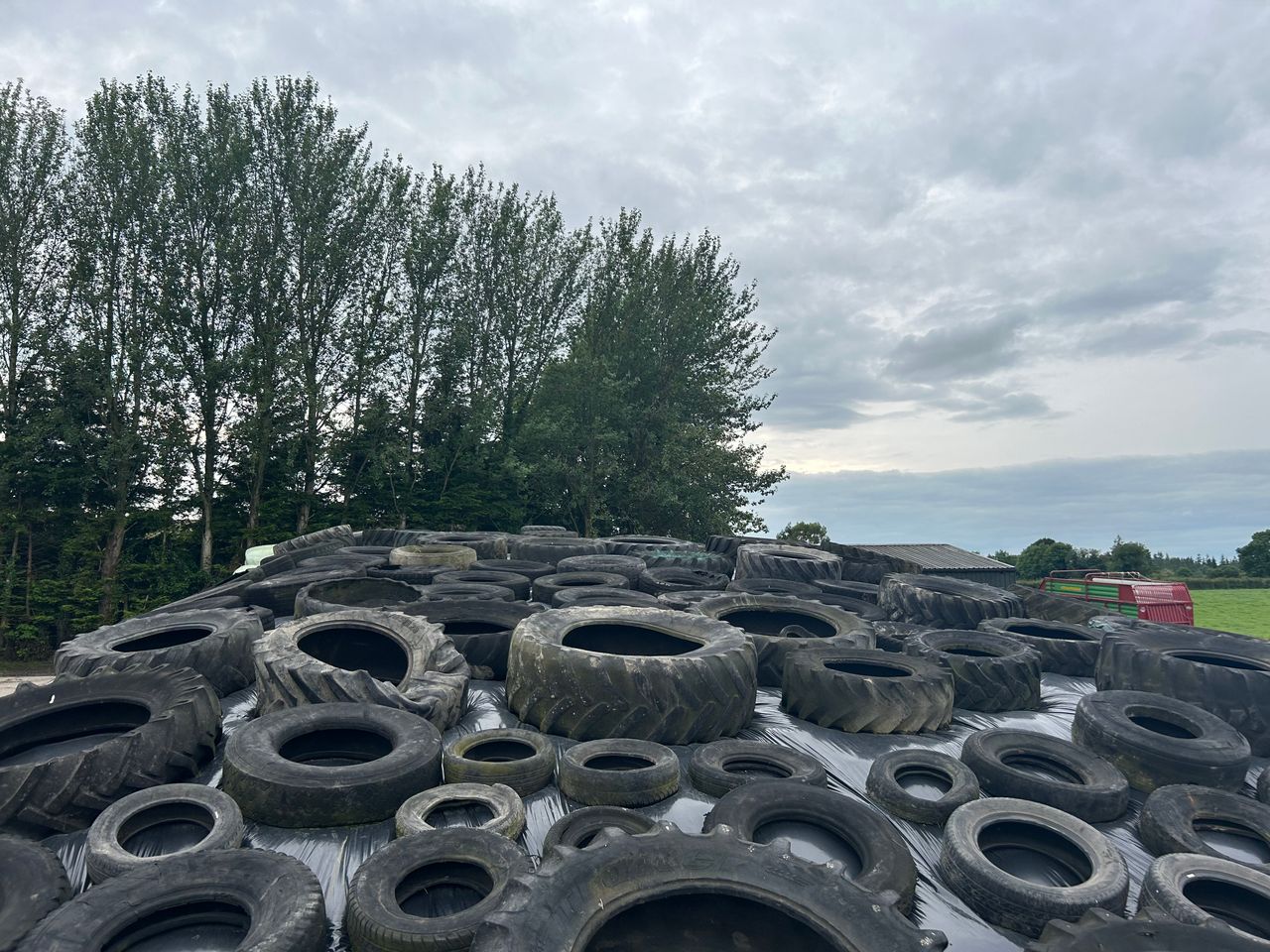
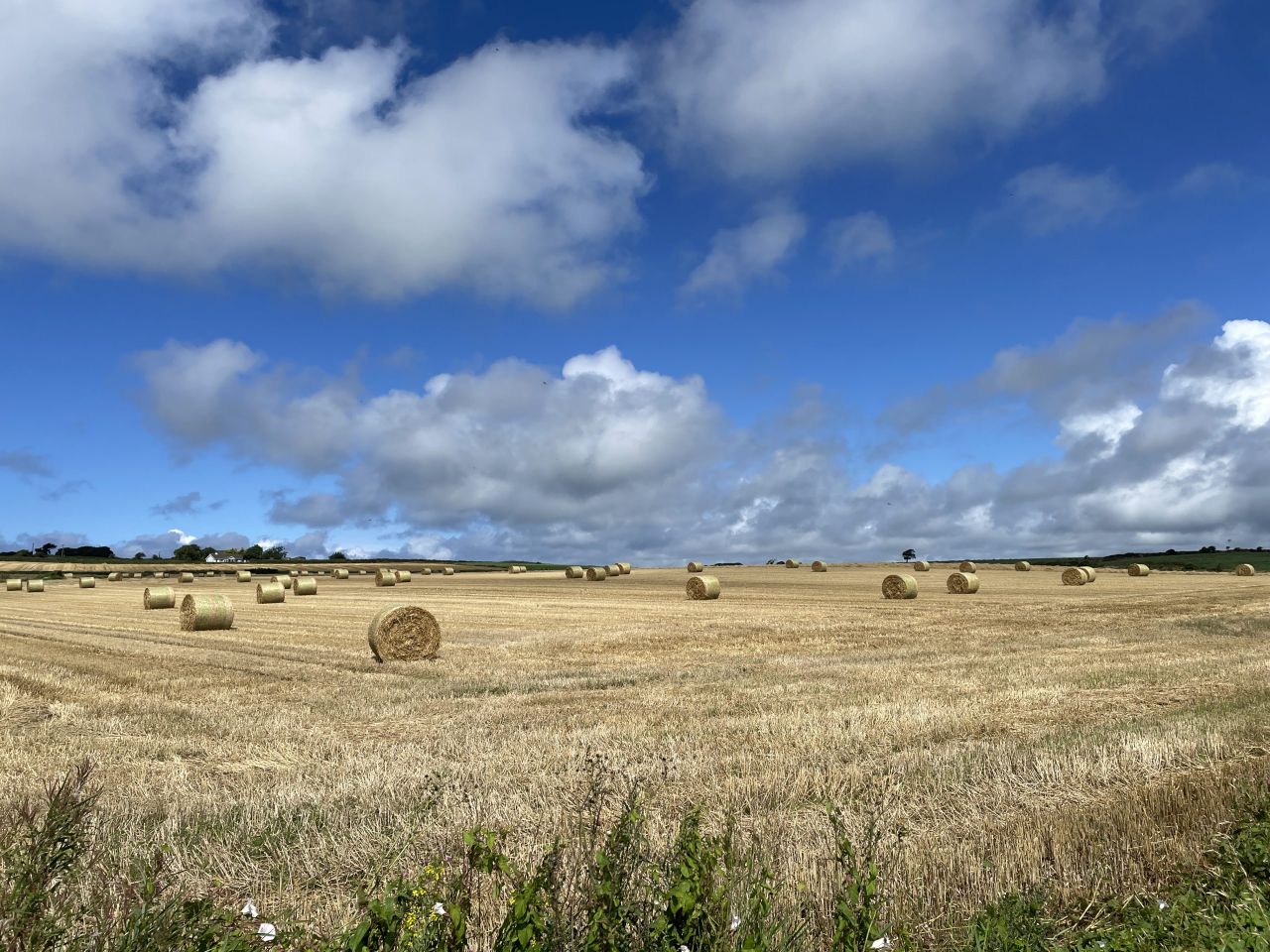
With a hard drought still hitting the south-east, farmers must prepare for the inevitable fodder crisis facing us this winter.
As of Saturday, August 22, Met Éireann's weather station in Oak Park, Co. Carlow, had recorded 8.6mm of rain since July 1.
Soil moisture deficits in the region are still up on 100mm, with a minimum of 50-60mm of rainfall needed for farms in the area to get grass growing again.
To make matters worse for farms in the worst affected areas, there is only an average of 3.6 months worth of winter fodder available, with another month of feeding still on the cards before grass starts to actually grow in abundance once again.
Nutritionist
Based in the south-east, many of Tirlán's milk suppliers are amongst the worst affected by the current drought.
Nutritionist with Tirlán, Brian Harte, recently highlighted some worrying figures from a recent survey carried out by the processor, in which it received 852 respondents in 24 hours.
Of the 852 respondents, 93% of them had little or no fresh grass currently in their diet.
Meanwhile, 77% do not have their full grass silage requirement for the winter months, and 82% are currently eating into what winter fodder stocks they do have.
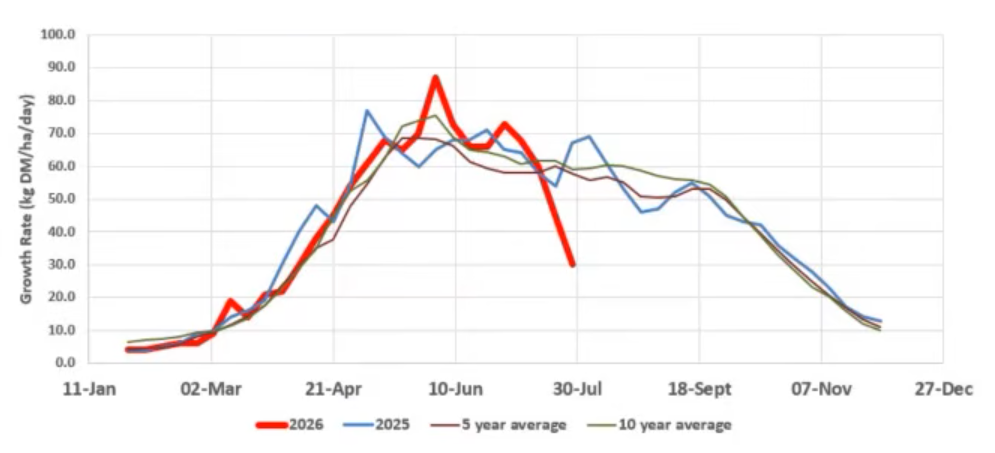
Harte noted how the above graph shows how much grass growth had diminished coming into August, when compared to 2025's growth rates as well as the average growth rate over the last five years, as well as the last 10 years.
He said despite this, farmers need to continue ensuring the cows are put first, especially with 30-35% of this year's milks solids still to be produced for spring calving herds, which is the equivalent of €800/cow.
That means drawing up fodder budgets now if this has not yet been done, allowing farms to make early informed decisions.
On-farm example
Harte noted that a 120-cow farm required approximately 1,613 bales of silage for the herd over the course of a five-month winter.
The farm had actually made 1,452 bales by July 10, which was the equivalent of 90% of their total winter requirement.
However, by September, the farm will have fed 400 of those bales just to get over the drought as they are now feeding a full silage diet.
This will bring them back to 1,045 bales, which is only 65% of their winter requirement by mid-September, or a 568 bale deficit.
So how do these farms deal with this situation?
Harte said the first option is increasing concentrates, as it stretches the silage while maintaining performance.
Feeding additional concentrates in the parlour alongside a mid-day feeding of straights - such as soya hulls, rolled barley, or oats - greatly reduces the silage required.
The farm Harte was using as an example increased parlour concentrates to 6kg, and started to feed 4.5kg of soya hulls during the day.
The farm was still feeding silage and getting a minimal grass intake of 2kg while sticking to a 30-day rotation.
But overall silage feeding was reduced by two bales per day, or 250 bales over the remaining four months of the lactation when feeding the additional concentrates.
Harte said this is one of the best performing diets the processor is currently seeing in terms of constituents and yields, while also maintaining body condition.
He did highlight it is a high concentrate diet, meaning that cows are more prone to digestive upsets, which is why it is crucial they have access to fibrous feed such as hay or straw.
The nutritionist also noted that concentrates do not replace silage on a 1:1 basis, highlighting that a kilo of concentrates may only reduces silage by three quarters of a kilo.
Costs
Finally, Harte noted the costs of switching to a heavier concentrate-based diet.
Harte said the above diet consisting of 6kg/meal, 4.5kg/soya hulls, 8kg/silage, and 2kg/grass, is working out at approximately €5/cow/day.
Based on last week's average milk production and the co-ops' milk price last month, cows are producing roughly €9/cow/day.
With only €4/cow/day left to cover every other cost such as labour and electricity, the diet is costly.
But Harte noted that it is also becoming very costly to buy silage in, giving the current shortage, especially considering silage is costing at least 20c/kg to produce currently.
He said the savings on feeding silage versus soya hulls is roughly 45c/day, but milk production will also more than likely fall back on a silage diet rather than a concentrate diet.