Storm damage resulted in 18% jump in forest harvesting in 2025

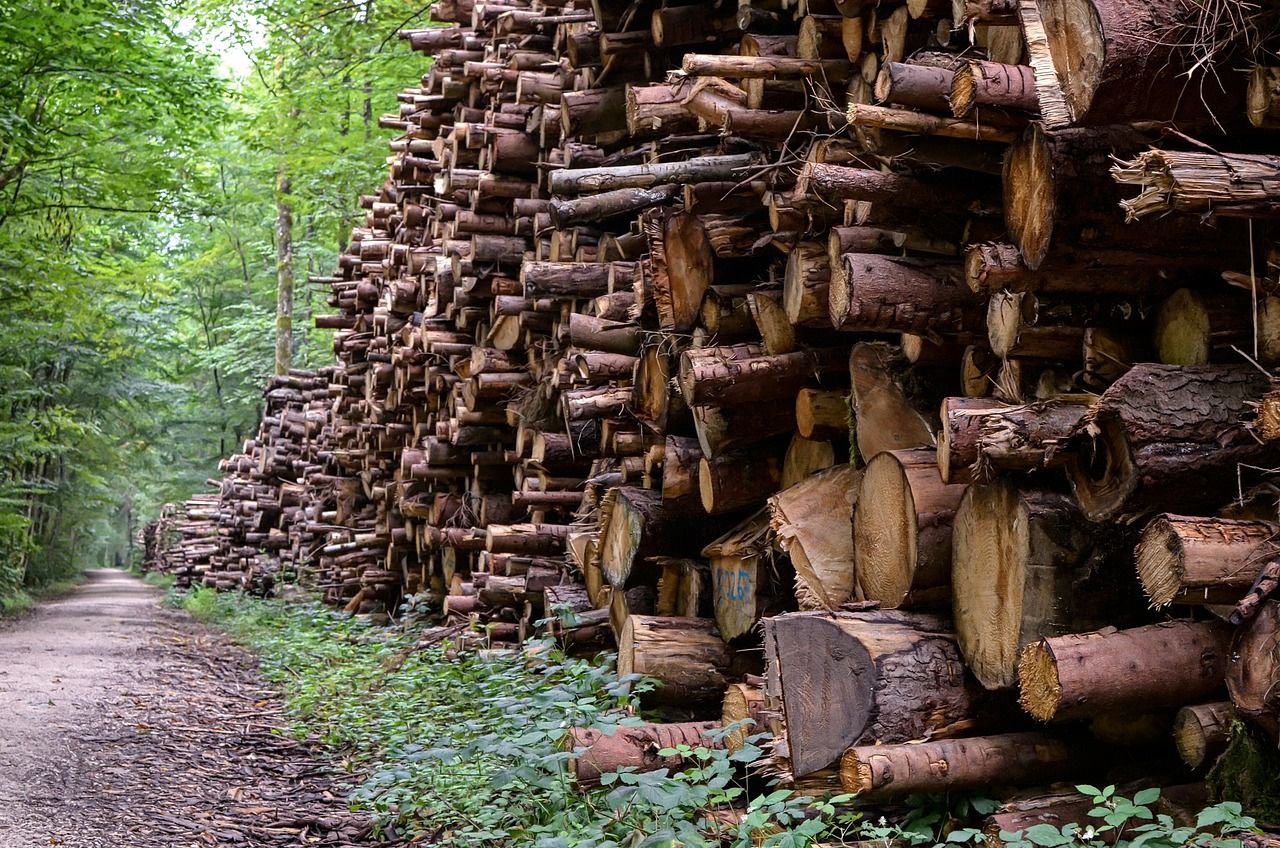
Storm damage in early 2025 resulted in an 18% jump in the amount of timber harvested from Irish forestry last year.
That is according to data published in the Forest Statistics Ireland 2026 report, which covers forestry data over the last number of decades up until last year.
The report was published today (Monday, August 24) by Minister of State for forestry Niall Collins.
As of last year, 11.6% of Ireland's land is forestry.
The forest area saw widespread felling of trees by windblow in early 2025, particularly as a result of Storm Éowyn.
It is estimated that 27,400ha of forest area was impacted by these weather events, and that 10 million cubic metres of timber volume was affected.
As a result of salvage harvesting, roundwood (the timber as cut from the tree before further processing) removals increased by 18%, from 4.4 million cubic metres in 2024 to 5.2 million cubic metres in 2025.
Removals from privately-owned forests were 2.9 million cubic metres in 2025, accounting for 57% of the total removal volume.
In 2025, 2,527ha of new forests were created, with the greatest afforestation taking place in Co. Roscommon, with 335ha, followed by Co. Cork, with 276ha.
Total state expenditure on forest activities in 2025 was €79 million; spent on maintenance grants, grants for forest road infrastructure, annual premium payments, and supports for afforestation.
The report states that the percentage of broadleaves in new forests created in 2025 was 66%, which is an increase of 12% on 2024.
Between 1980 and 2025, 24,500 private landowners accessed the grants available to establish new forests, with an average size of 8.5ha between 1980 and 2025.
Over the period 2006-2025, 40% of the area afforested was by those aged 60 years or more.
In 2025, 52% of the area afforested was by those aged 60 years or more, and for those in receipt of premium payments, 62% were aged 60 years or more.
In 2025, a total of 35.2t of broadleaf species seed was sown in forestry nurseries, equating to approximately 11.38 million plants.
The main broadleaf species included downy birch, common alder and pedunculate oak. The main conifer species included Sitka spruce, Scots pine and lodgepole pine.
The construction of 85km of private forest roads was funded during 2025, an increase on the average of 80km per year since 2020.
This reflects the projected increase in timber and wood to be harvested, which is expected to double by 2030, according to the Department of Agriculture, Food and the Marine.
During 2025, felling licences were issued for the thinning of 2,346ha, which is the lowest area thinned compared to any year since 2010.
Felling licences were issued for the clearfelling of 18,219ha.
This figure is a slight increase of some 170 licences compared to 2024. While it is the second lowest figure since 2020, it is higher than the same figure for any year between 2010 and 2020 inclusive.
53.6% of Ireland’s forest estate is certified by international non-governmental organisations to promote good forest practice.
The vast majority of this area is in the public forest estate, whereas 35,882ha of private forests are currently certified.
Commenting on the new report, Minister Collins said: "This publication is a comprehensive and vital resource to serve anyone interested in our forestry sector, from forest owners, stakeholders, policymakers, farmers, to researchers.
"I recognise that the winter storms of 2024 and 2025 caused significant damage to forests around the country and that presented a real challenge to stakeholders in the forestry sector. I welcome the positive progress made by the forestry sector in the mobilisation of windblown material in forests," he added.
On afforestation rates, Minister Collins said: "Compared to 2024, the annual afforestation rate increased by nearly 1,000ha in 2025. I believe that the increased financial supports made available under the Forestry Programme 2023-2027 and the improvements in the efficiency of the licensing processes, has made this possible.
"The long-term nature of forestry provides an attractive and viable alternative for farmers and landowners across the country.
"I would therefore like to encourage landowners to incorporate forestry as part of their land holding and farm enterprise. It is also encouraging to see the percentage of broadleaves in new forests increasing which will be important in restoring Ireland’s native forests as part of Ireland's Nature Restoration plans," Minister Collins said.