Would you pay 6c more for a carrot to ensure Irish growers remain viable?

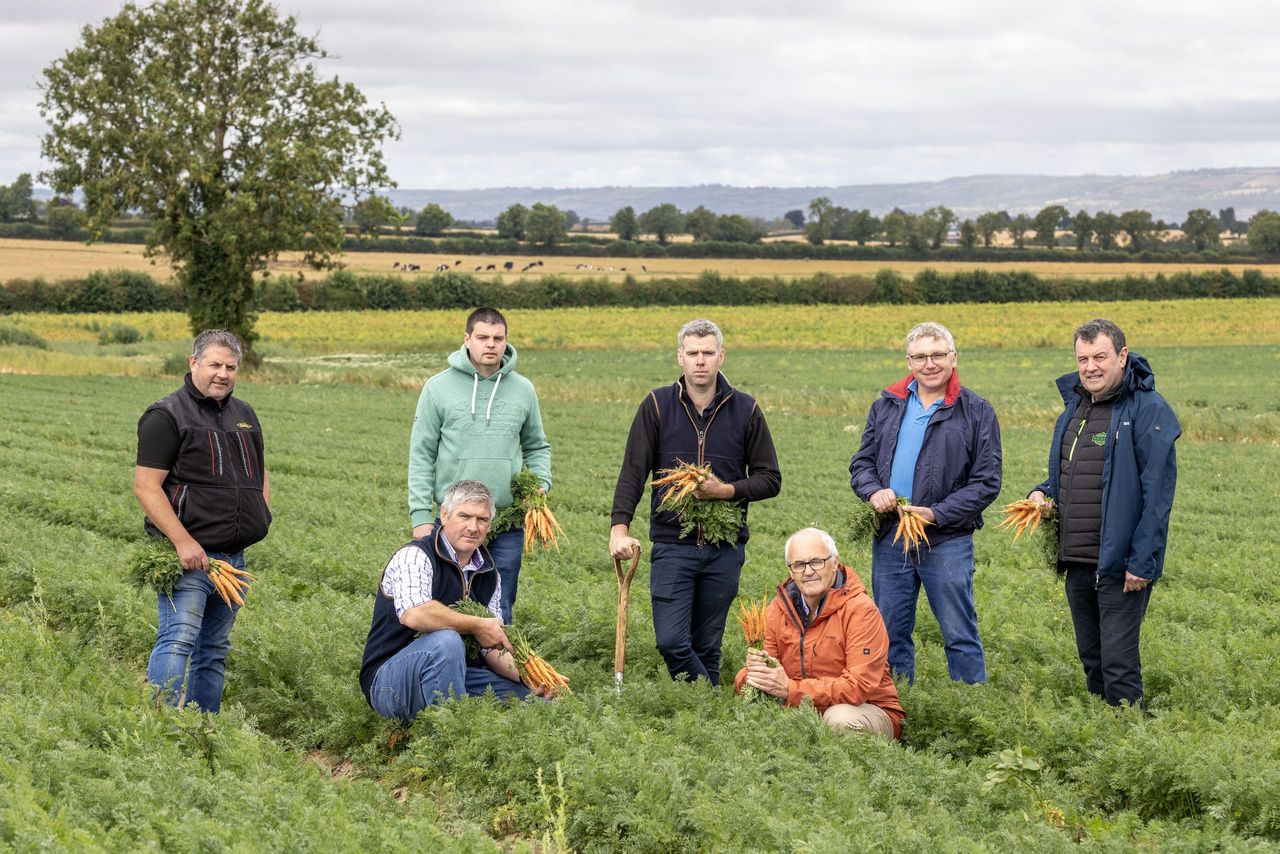
Irish carrot growers are warning that the economics of producing Ireland's favourite vegetable are becoming increasingly unsustainable.
This is due to production costs rising by approximately 100% since 2020 while retail carrot prices have increased by just 40% over the same period.
Faced with rising production costs, unsustainable market returns and increasing climate-related challenges, including recent drought conditions, growers are warning that urgent action is needed to ensure the long-term viability of Ireland’s favourite vegetable.
The Irish Carrot Growers' Group represents more than 95% of Ireland’s retail carrot supply.
The sector now comprises just nine commercial growers following the recent loss of a major producer that accounted for approximately 12% of national output.
Below sustainable cost of carrots
1kg of carrots currently retails for approximately €1.39. With an average kilogramme containing around 10 carrots, this equates to less than 14c/carrot.
Growers estimate that a retail price of €1.98/kg would be needed to track the cost against the Consumer Price Index (CPI) alone, which equates to approximately 20c/carrot, or an increase of just 6c/carrot.
However, they argue that this doesn’t even take into account the exceptional pressures of the current season or the substantial increases in costs that have occurred above general consumer inflation.
These additional costs include increases in labour and material inputs, the growing impact of permanent climate change, tighter European restrictions and regulatory requirements.
The growers' position is that these are not simply inflationary pressures captured by the CPI. They represent real, sector-specific increases in the cost and complexity of producing carrots in Ireland.
Drought impact
The pressure has intensified as growers manage one of the driest summers in recent years.
Drought conditions have increased the need for irrigation by approximately 166%, adding to fuel, labour and operational costs.
According to Teagasc, input costs for field vegetable production increased by 77% between 2020 and January 2026.
Meanwhile a survey of Irish carrot growers indicates that drought-related pressures have added a further 13% increase to input costs during the current season which translates into a 23% increase in marketable production costs (€/t) for this period.
Speaking about the issue, chair of the Irish Carrot Growers' Group, Tom Murray said: "Consumers see carrots as one of the most affordable and healthy foods available, and rightly so.
"However, the reality is that the current economics of producing carrots in Ireland no longer makes sense.
"The gap between production costs and returns has widened significantly over recent years and that is putting real pressure on growers.
"Ireland is fortunate to have highly skilled carrot growers but the challenge now is ensuring that domestic production remains financially viable and that the next generation of growers has confidence to continue investing in the sector."
Carrots remain Ireland's most purchased vegetable, with retail sales of approximately 52,000t annually and a retail market value of approximately €66 million.
Irish growers currently produce approximately 62,000t of carrots annually on 891ha nationwide.
Climate resilience and food security
Climate change is adding another layer of pressure to an already challenging production environment, according to the growers.
Following previous drought events, growers have invested heavily in irrigation equipment, water storage and other resilience measures.
However, increasingly frequent extreme weather events are requiring further investment just to maintain reliable domestic production.
At the same time, European restrictions on pesticide use and expanding national and EU regulatory requirements are changing the way crops can be grown and therefore increasing the resources required to produce them.
Vice-chair of the Irish Carrot Growers' Group, John Dockrell added: "Climate events that were once considered unusual are becoming increasingly common.
"Growers are investing heavily in irrigation infrastructure, water storage and other resilience measures, while also adapting to changes in crop protection and regulatory requirements.
"All of this requires significant capital and, critically, confidence that there will be a sustainable return on that investment.
"Food security is not simply about having food available today. It is about retaining the growers, skills, infrastructure and investment needed to continue producing food in Ireland in the years ahead."
The growers' group has said that Ireland currently imports approximately 18,000-20,000t of carrots annually.
"Consumers want to buy Irish and support local growers, but that can only happen if domestic production remains economically viable," Dockrell said.