Why your milking machine might need servicing this summer

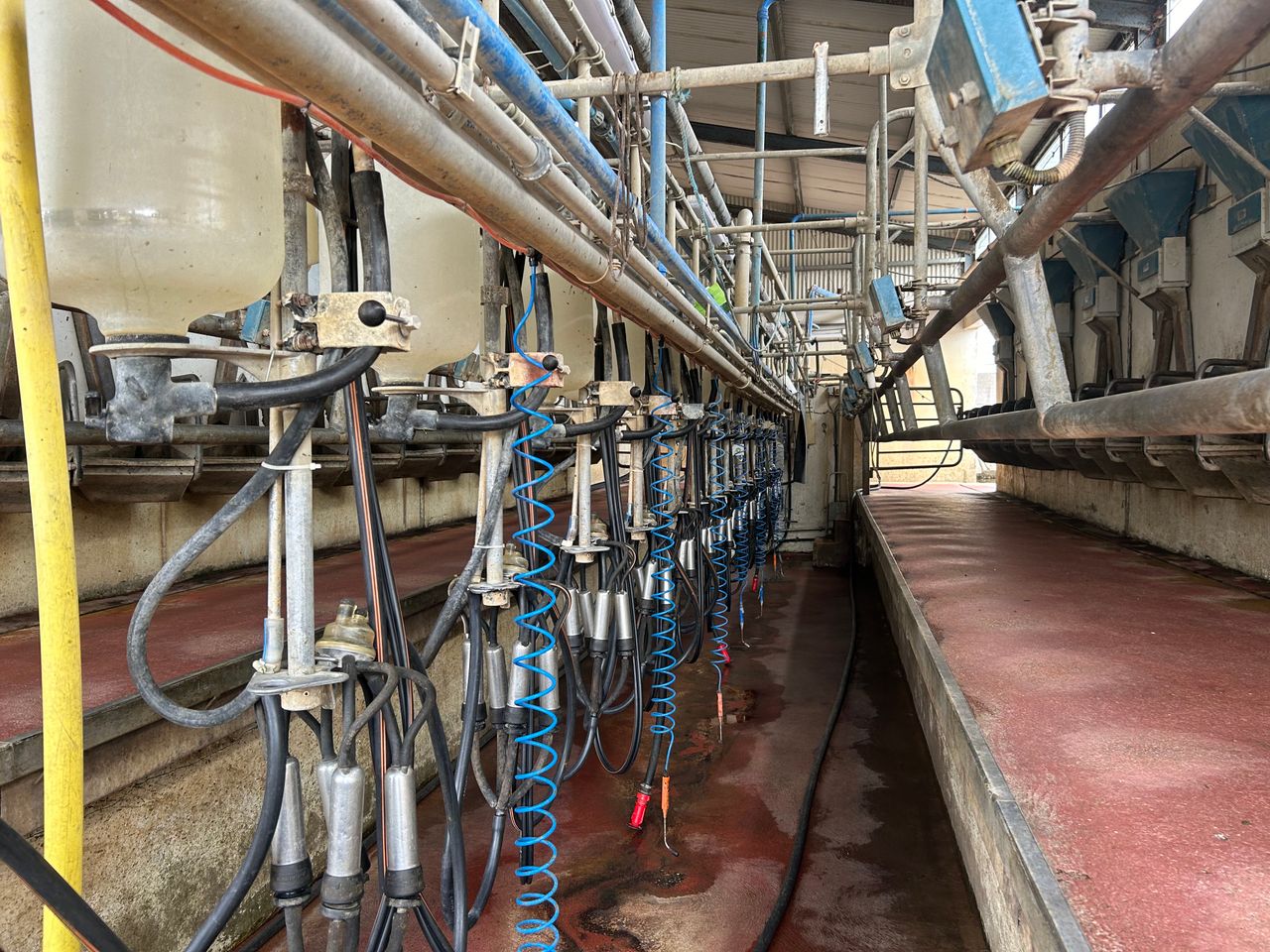
At this time of the year, farmers must check whether or not the milking machine needs to be serviced to keep on top of milk quality.
It is easy to get caught up with other jobs on the farm, especially with the good weather last week, meaning quite often jobs like servicing the milking parlour can be neglected.
A lot of farms have a bad habit of only servicing the milking machine in winter or if they are having issues such as high somatic cell count (SCC) and mastitis, but in reality these problems can be avoided if the parlour is serviced.
You should not let your machine get to that stage, as it should be serviced before it starts affecting your cows' health and production.
Ensuring proper maintenance of your milking parlour is good management practice when it comes to udder health and preventing issues such as mastitis.
Servicing your milking machine
A milking machine should be serviced twice a year by a registered technician, which equates to approximately every 550 hours of work.
If you have not had your machine serviced in a while, scheduling a technician as soon as possible should be a priority, as you do not want to wait for issues like an increase in SCC or mastitis to arise.
You should also regularly check the inside of the liners as they should be soft and smooth without any cracks or roughness.
Liners are the only part of the milking parlour in direct contact with the cow, and therefore have the potential to affect teat health and milking efficiency.
When your liners are worn, they will reduce milking performance, damage the teat, and give rise to the risk of mastitis and cross-contamination.
After a while, liners will lose their tension, which means they will absorb fat, hold bacteria, and deteriorate due to the cleaning products going through them twice-a-day.
Liners should be replaced every 2,000 milkings or every six months, whichever comes first.
For herds that have expanded in recent years and are still using the same parlour, the frequency of liner changes needs to increase.
The following calculation can be used to work out the number of days between linear changes:

For instance, if you are milking 140 cows in a 16-unit milking parlour twice a day, liners should be changed every 115 days.
This means that the liners in this parlour need to be changed at least twice-a-year in a spring calving herd with a two-month dry period.
A general rule of thumb to help work out how often the liners need to be changed is based on the number of rows of cows being milked at each milking. It is as follows:
- 8 rows: Change liners every four months;
- 12 rows: Change liners every three months.
It is also important to make sure your teat sprayers are serviced so that any blocked or faulty nozzles are replaced.