Summer teat spraying - is it worth the effort?


The current focus is on finishing out breeding and driving on solids through grassland management, but should farmers be looking at mastitis control at this time of the year?
The weather is still unpredictable, with scattered rain showers dampening any sun we seem to get.
That has left environmental conditions somewhat sub-par for this time of the year, with most herds physically dirtier than they usually would be in June.
However, temperatures are still climbing into the high teens whenever the sun is out, meaning there are plenty of flies on the go too.
All of this combined means summer mastitis can quickly become an issue, rapidly deteriorating milk quality and causing a substantial leak in the milk cheque.
That is why good mastitis control should be maintained through the summer months in a bid to safeguard your herd's milk quality,
Teat spraying
Good mastitis control involves a number of key management steps, one of which is teat spraying.
There is no doubt that teat spraying is worth the money, with researching showing post-milking teat disinfection can reduce the risk of new mastitis infections by up to and even over 50%, as it reduces bacterial loads, such as staph aureus and strep agalactiae.
However, this figure can only be achieved if the process is done thoroughly and throughout the entire lactation.
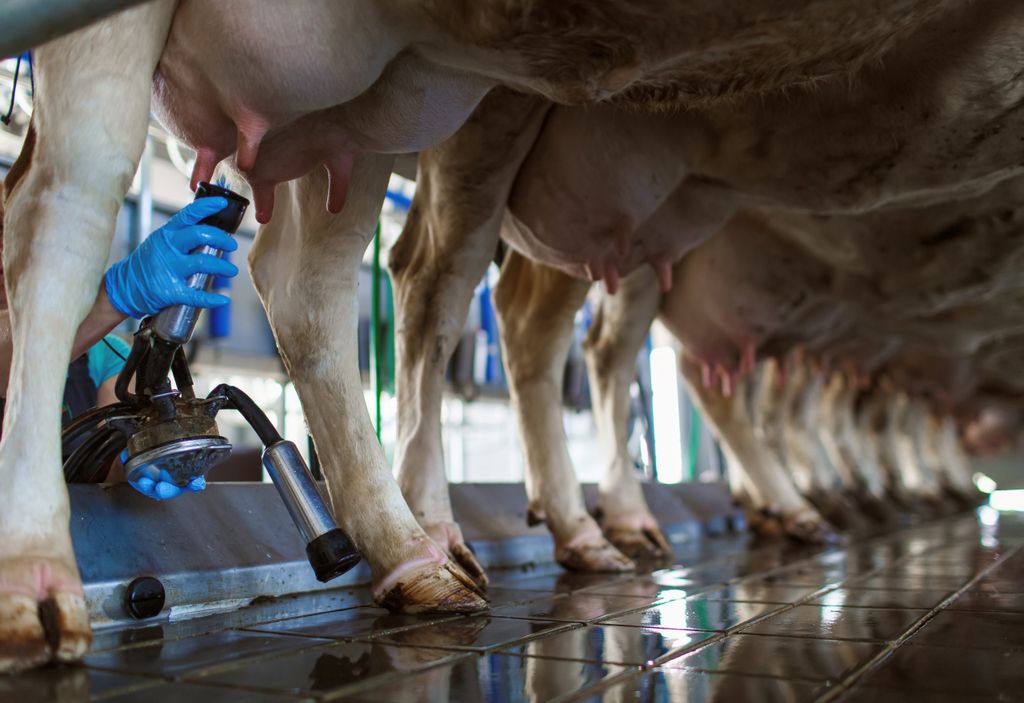
A lot of farmers still carry out teat spraying incorrectly, especially around breeding when things are hectic in the parlour.
But if you are teat spraying incorrectly, you may as well be not doing it at all.
Teat spraying should be done swiftly, as the longer bacteria is in contact with the teat skin, the more it can multiply, and ultimately increase the chances of the quarter getting infected from the bacteria entering the teat canal.
However, swiftly does not mean carelessly, as the process should still be done in a precise manner.
You must ensure that each teat end is properly sprayed, which will require approximately 15ml of solution per cow.
Avoid spraying down or flicking up dirt with hoses while disinfecting, as the canal will still be open after milking and more susceptible to dirt entering.
When choosing your disinfectant, unregistered products should be avoided, as they may not provide the desired level of protection required.
If done correctly, teat disinfecting will aid in healthy teat skin and heal teat lesions, all of which contribute to combatting and controlling mastitis.
If you are having issues with summer mastitis on a regular basis, it may be worth considering a cluster flush system to further improve hygiene.
Bacteria in milk from an infected cow may be found on the liners and transferred to the teat skin of the next five to six cows that are milked with the same unit.
A cluster flush system can help wash away this bacteria before it the cluster ever makes it to another cow.