When should fertiliser be spread again?

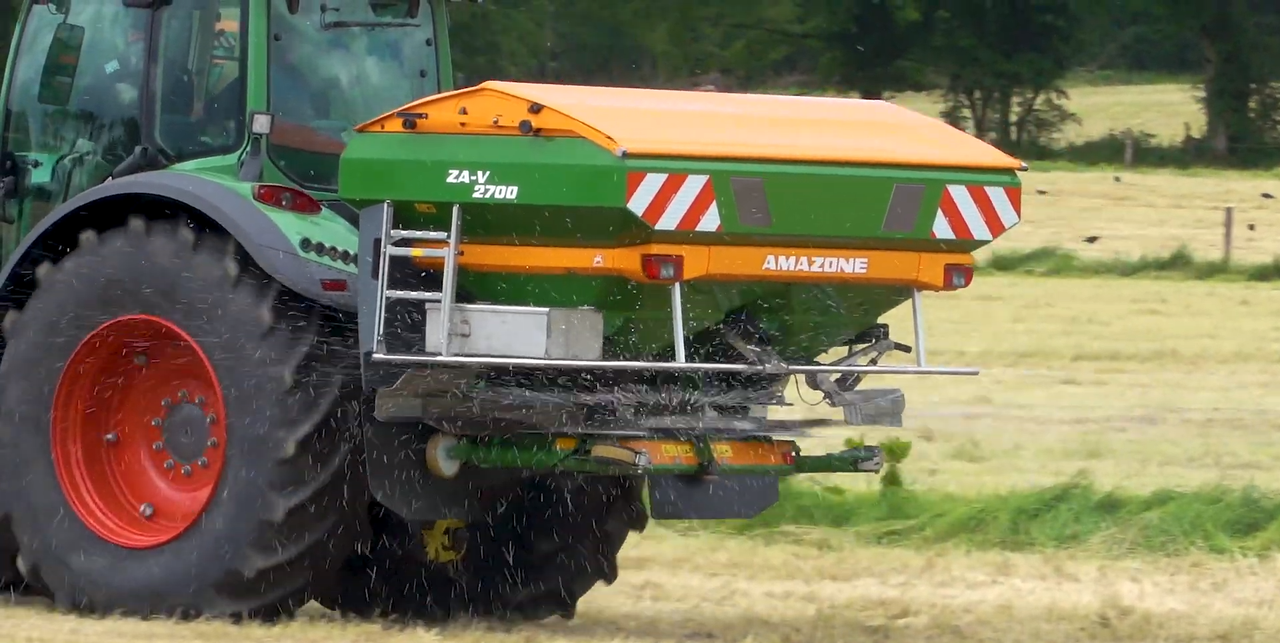
With rain finally falling in parts of the east this week, farmers will be eager to get fertiliser out and get grass growing.
However, farmers are being warned not to spread fertiliser until a significant volume of rain falls, and grass is back growing properly.
As it stands, there are farms with soil moisture deficits of up to 100mm still.
Spreading fertiliser on these farms would prove to be a significant waste of money.
Nitrogen
Ideally, soil moisture deficits should be nearing 40mm and grass growth pushing up over 30kg of dry matter (DM)/ha, before any chemical fertiliser goes out.
Grass growth will take time to kick off, but to grow 35kg DM/ha/day, the ground will need 1kg N/ha.
As its stands, the ground already has nitrogen in abundance which will feed the grass plant through soil mineralisation once rain starts to fall.
Spreading chemical fertiliser before grass growth goes back over 30kg DM/ha would only be a waste of time and money, especially when fertiliser is costly, as the plant will not need such volumes.
Once growth does pick up, nitrogen rates will have to be altered either way, as requirements are dropping in line with the shortening of the days.
Once soil moisture deficits begin to reduce, farmers will need to regularly walk the farm, as every paddock's recovery will be different.
If pastures are hitting growth rates in excess of 35kg DM/ha, then spreading 25kg N/ha is acceptable, although you do want to see a nice green base.
Farmers will also be conscious of the fertiliser deadlines rapidly closing in, but again there is no point in pre-spreading in a panic, as you will still be wasting costly fertiliser.
Hold out until your growth rates and moisture deficits are at desirable levels.
Soiled water
What can be done between now and then is spreading any soiled water still on the farm.
Watery slurry or soiled water will currently get the best response of anything spread on the land, by slightly reducing moisture deficits but also adding nutrients to the ground.
The longer nights will also aid this, as the grass is recieving more dew.
Once grass is actively growing, slurry should also be utilised before the deadlines in October.
Slurry will also provide additional nutrients to the ground rather than straight N.
If slurry is not available, farms should be spreading sulphur, potash, and phosphorus if there is an allowance, alongside N.