What had the greatest impact on winter barley yields this harvest?

Take-all had a greater impact on Irish winter barley grain yields recorded during harvest 2026 than Barley Yellow Dwarf Virus (BYDV).
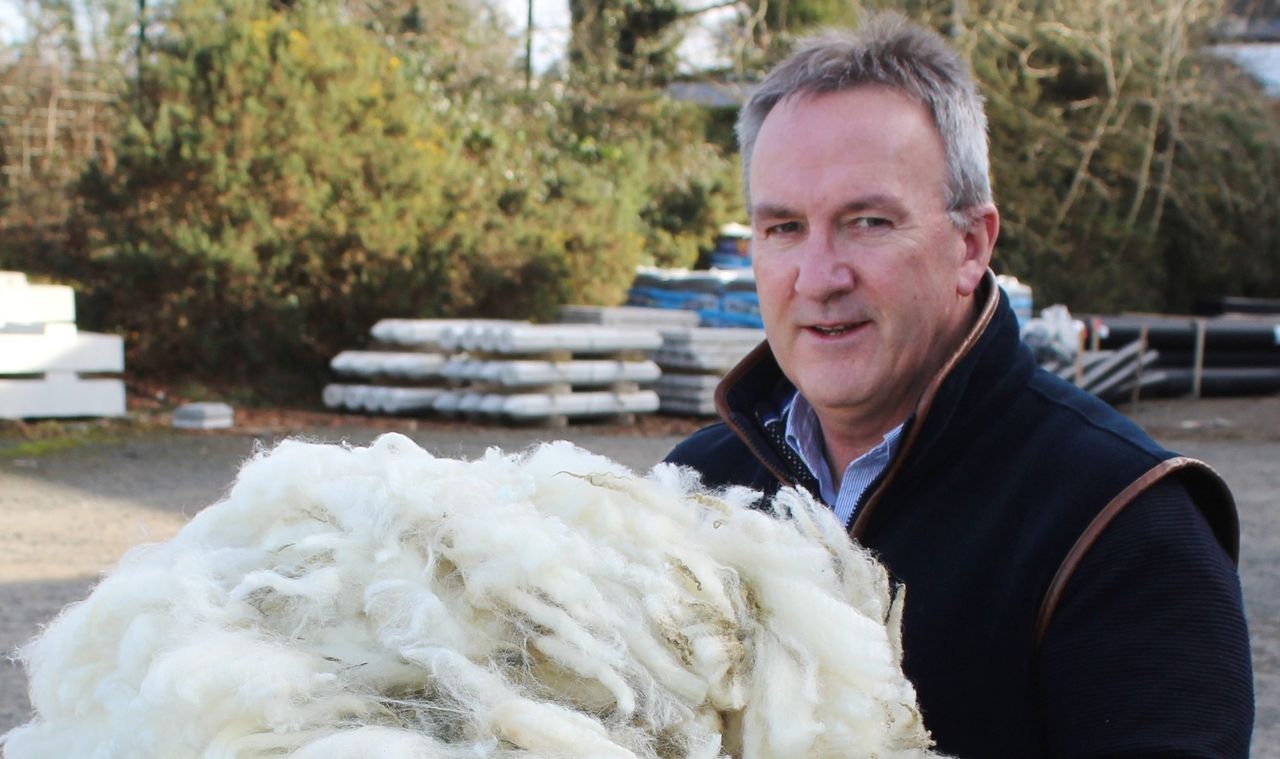
That's according to Seedtech director, Tim O’Donovan.
He added: “This trend has been confirmed courtesy of our own trials in Co Waterford and also looking at the variety trial data hosted by the Department of Agriculture, Food and the Marine.”
According to the Seedtech representative, take-all is a multi-factorial disease, caused by a soil-borne fungus.
Tillage farmers can limit its impact on cereal crops by addressing a number of issues.
These include: the make-up of a crop rotation; sowing date; seed rate; applying a appropriate seed treatment; and spreading organic manures prior to drilling.
For example, it has long been recognised that sowing a cereal option directly after a break crop - such as winter oilseed rape, oats or spring beans - will significantly reduce the threat of take-all.
O’Donovan said: “Maximising the length of time between the harvest of one cereal crop and the planting of another is a further step that growers can take to counter the challenge of the disease.
“In addition, the seed treatment Latitude can be used as a means of helping to control the threat posed by take-all.
“Another approach that growers can take is that of reducing seed rates, an approach that works particularly well with early sown varieties of hybrid winter barleys.
“And, finally, the application of farm yard manure prior to drilling a cereal crop has been shown to reduce the threat of take-all.”
Winter cereals
Meanwhile, demand for winter cereal seed has started to take off.
“The winter oilseed rape season is coming towards the end but we are very confident that rape crops drilled up to middle of September will give a profitable yield,” O’Donovan confirmed.
He added that demand has begun to shift to hybrid rye, with sales starting to strengthen significantly.
He said: “Rye was one of the success stories coming out of Harvest 2026: it is relatively tolerant to take-all.
“But it’s still too early to say if the acreage grown will increase for 2026/2027.
“There is one fundamental issue associated with the growing of hybrid rye: farmers must have a guaranteed market for the grain prior to sowing the crop.”
Where the issue of BYDV tolerance is concerned, the Seedtech representative indicated that the 2026 growing season, in contrast to 2019 and 2022, did not see cereal crops come under excessive disease pressure from the virus.
He added: “But every year is different. What we do know is that the technology works particularly when early sown winter barley crops are sown out a time when aphids are extremely active."
Seedtech is currently offering a range of two-row, six-row and hybrid varieties with BYDV tolerance.
“Significantly, Kestrel is already sold out," O’Donovan added.
"It is a high yielding BYDV protected hybrid that can be drilled at lower seeding rates, thereby delivering additional take-all protection."