Feed For Growth: Your Partner For Calf Performance

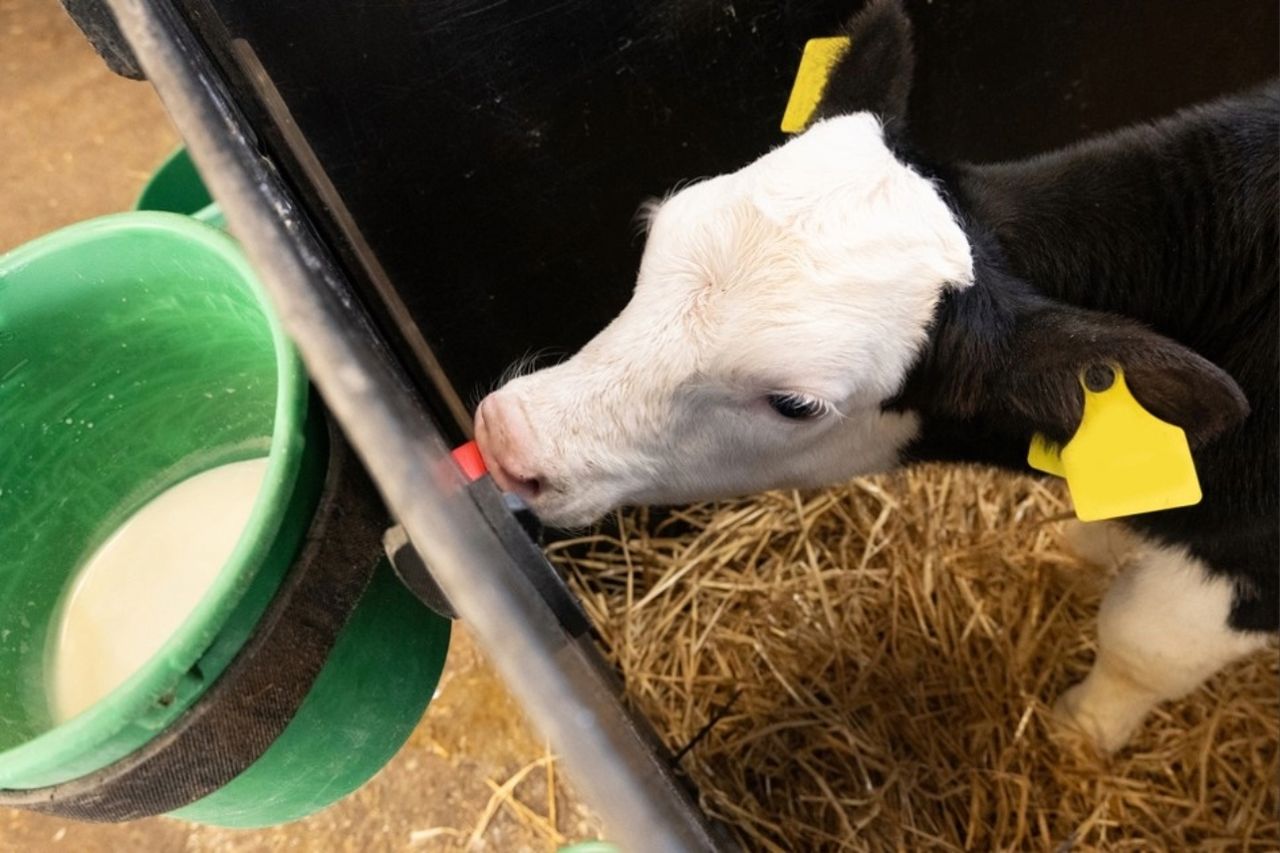
As part of an Agriland series in partnership with Feed For Growth (Volac Milk Replacers), over the next four weeks, we’ll be meeting Irish calf rearers to find out how they are doing just that.
From a family-run dairy, to a calf-to-beef unit, each farm has its own unique goals and set-up.
What unites them is a drive to do the best job they can at every stage.
This stems around carefully considering the CMR they feed, focusing on hygiene and disease prevention and using technology to facilitate consistent mixing.
Dr. Jessica Cooke, research and development manager for Feed for Growth (Volac Milk Replacers) says targeted nutrition is fundamental to success on any rearing unit.
She explained: “Calves that receive targeted nutritional support from the beginning are better placed to thrive and become resilient, helping reduce the challenges that can impact performance and result in additional labour input.
"It is also worth choosing a CMR that includes an appropriate additional health package."
Avoid feeding excessive volumes
Dr. Cooke also advises against feeding excessively high milk volumes, highlighting recent research which shows excessive volumes are not justified from both a performance and cost perspective.
“It’s fundamental to invest in calf rearing to produce healthy and productive replacements.
"However, cost benefit analysis needs to be carried out on feeding volumes.
“Our research shows that higher milk volumes - of over 1,050g milk solids per calf per day - do not deliver significant improvements in growth or health, could be compromising performance at weaning and costing farmers more,” she said.
The two studies carried out at Duchy College in Cornwall, and AFBI Hillsborough, showed that higher feed volumes – either from quality whey protein concentrate or skim-based CMR - tended to deliver better pre-weaning growth due to increased energy supply.
However, growth suffered at weaning as calf starter intakes were reduced.
There were also high CMR refusals on calves fed high volumes.
AFBI Hillsborough study
In the study at AFBI Hillsborough, half of the 96 calves received 6L (900g of milk solids) of Radiant Calf CMR per calf per day across two feeds and the other half, 8L (1,200g of milk solids) per calf per day.
Starter feed intakes were higher (108kg per calf to day 90) in the group fed 6L, compared to those fed 8L (79kg).
Average daily live weight gains were 0.93kg/day to 90 days in the 8L group and 0.89kg/day in the 6L group.
That translated into 3kg difference in weight at 13 weeks.

“A growth rate of 0.89kg/day is excellent, and calves were more equipped to deal with weaning, so it’s worth questioning if the 26kg of extra CMR fed was worth the investment, particularly as calf refusals were higher in higher fed group so some CMR was wasted,” Dr. Cooke said, adding that health was good in both groups.
Another study at Duchy College in Cornwall, compared performance of 25 Holstein heifer calves fed 7L a day (1,050kg of milk solids) or 9L (1,350kg of milk solids) of Imunogard Calf Milk Replacer.
Average DLWG to day 84 was identical at 0.78kg per calf per day.
“Both studies show excessively high CMR volumes are not always necessary.
"What’s important is providing a CMR with good levels of protein, either from whey or skim, at a level which will promote starter intakes which are just as important for rearing success as CMR,” Dr. Cooke added.
You can find out more about how Irish rearers are optimising nutrition and calf performance over the next four weeks.
Feed for Growth series
As part of the series entitled: 'Feed for Growth: Your Partner for Calf Performance', we will profile four units.
In Week 1, we will meet Patrick and Valerie Sheehy to find out how they achieve weaning weights of 112kg on their spring calving dairy.
In Week 2, Fergal Hanrahan will tell us all about his calf-to-beef enterprise which is focused on efficient growth, using the latest technology.
In Week 3, we visit Stephen Normoyle in Co. Limerick, who focuses on consistency and hygiene in his calf-to-beef unit.
And finally, in Week 4, we’ll meet the Nolan family who are passionate about rearing the best possible replacements which are born to the earliest calvers in their split block system in Co. Limerick.
Follow the weekly series on Agriland.