Watch: A look inside Teagasc's Johnstown winter-milking herd


Agriland visited Teagasc's Johnstown Castle farm to speak with farm manager, Aiden Lawless, to see how the winter milking herd is performing.
The farm, which was originally established in 2003, is currently milking 140 cows on a 70ha platform.
The farm is Teagasc's main research centre for winter milk production, therefore 90-95 of the 140 cows are calved down in the autumn for winter milk production.
The herd is producing on average 600kg/milk solids (MS) annually, with an economic breeding index (EBI) of €165 (updated figures).
The autumn calving season begins on farm from the middle of September and is wrapped by the start of December.
The herd has an average calving interval of 370 days and a six-week calving rate just under 80%.
Over the last number of years, the herd has averaged over 7,500kg of milk, consisting of 3.66% protein and 4.52% fat.
Lawless admitted that the herd's performance peaked in 2022, and ever since they have being 'pinched' with either bad weather or droughts.
He said that that production is achieved through 1.6t of concentrate, 1t of which is fed during the housed period while trying to fulfil the farm's liquid milk contract.
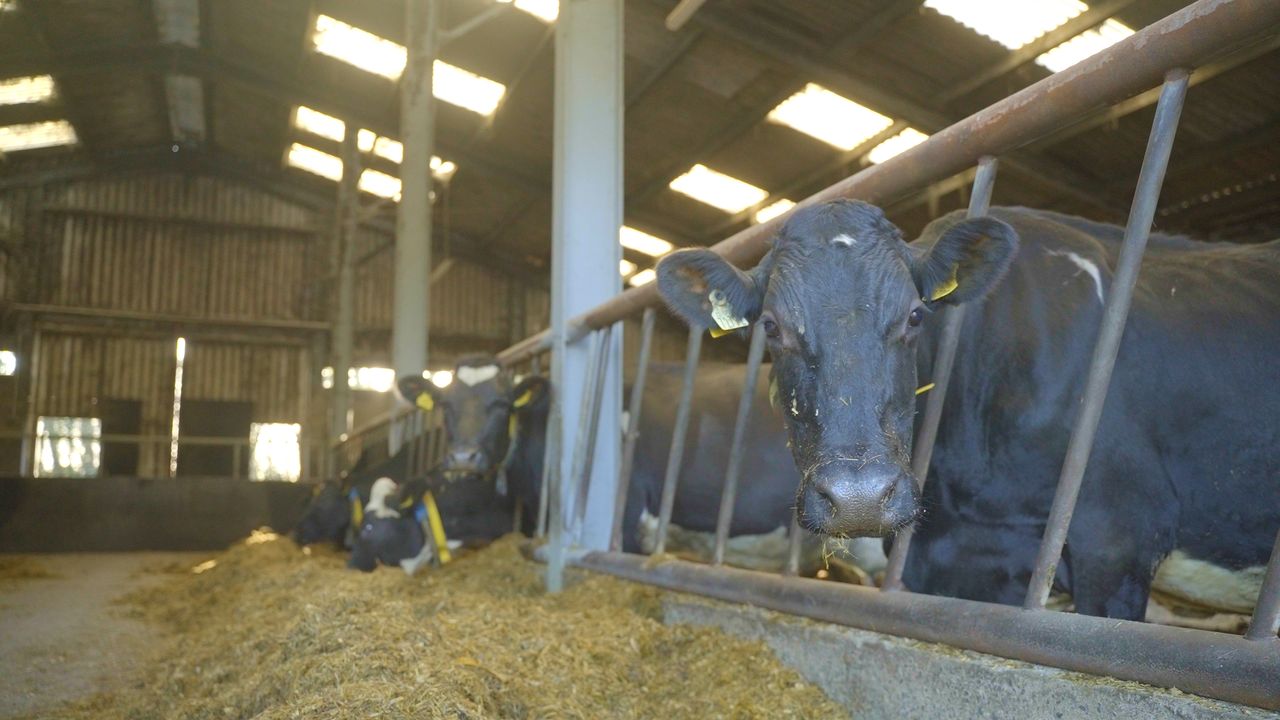
The farm manager also said over the last number of years, they have been targeting percentages and kilos of milk solids through the farm's breeding programme.
The farm's herd is relatively young, with an average lactation of 3.2 following a bovine tuberculosis (TB) outbreak last year.
They are currently free of TB but are still under consistent monitoring/testing in accordance with the Department of Agriculture, Food, and the Marine (DAFM) requirements.
Feeding and calving
Lawless said cows were in earlier this year with the way weather went, stating that cows were in by night at the end of October and full-time from November 10.
However, they are always happy to build covers up to 900kg/DM/ha in autumn to get cows out to high-energy pasture in February.
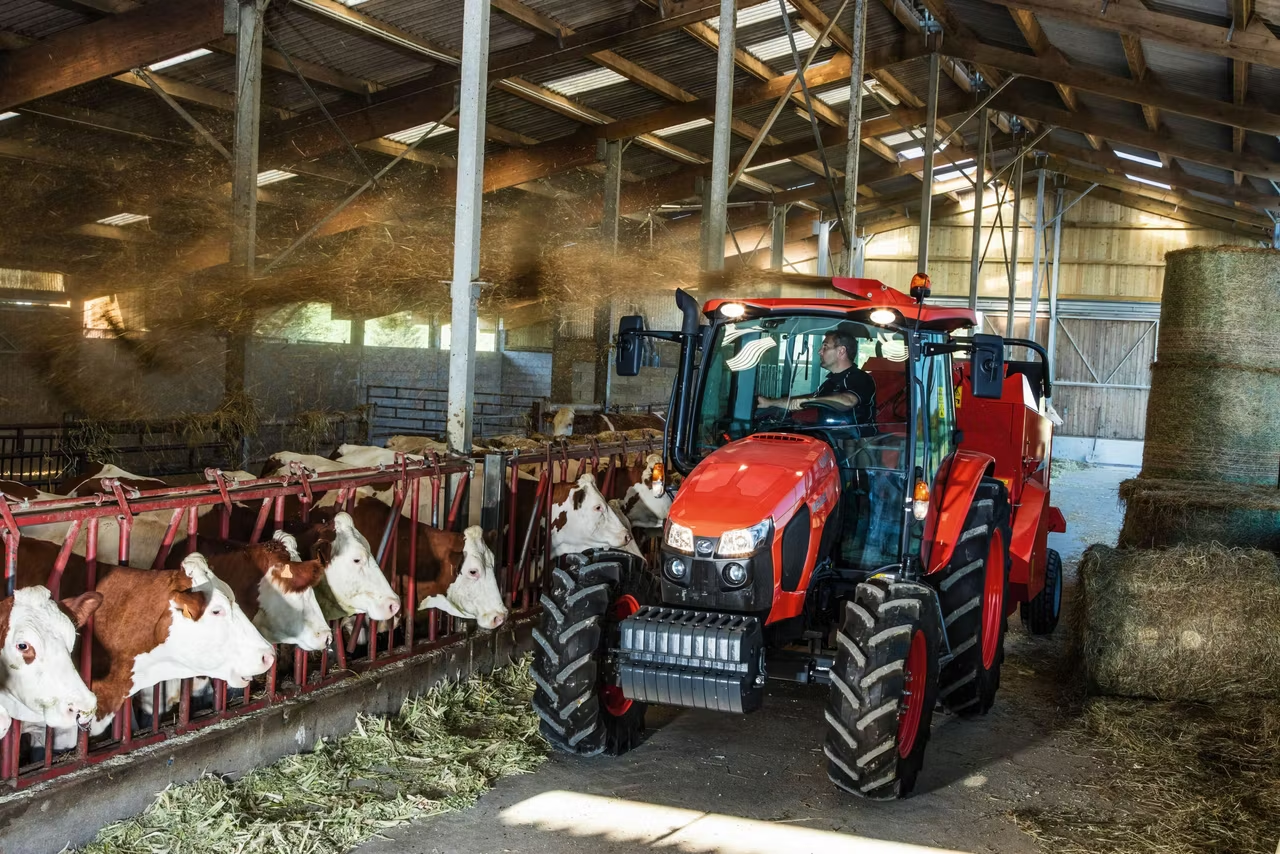
The farm manager said that the herd is now settled on their winter diet, which is a total mixed ration (TMR) diet comprised of silage and maize.
He said the summer drought led to them buying in additional maize, with the diet now at a 50:50 silage to maize ratio.
The maize they are feeding is coming in at 28-30% starch and 26-27% dry matter, while the grass silage is coming in at 76-77%.
When talking about the grass silage, Lawless said: "We're never happy with it, we always want it higher."
They target the high 70s, however can struggle to achieve this as their cutting date is pushed out to May 15 with silage pasture also being grazed.
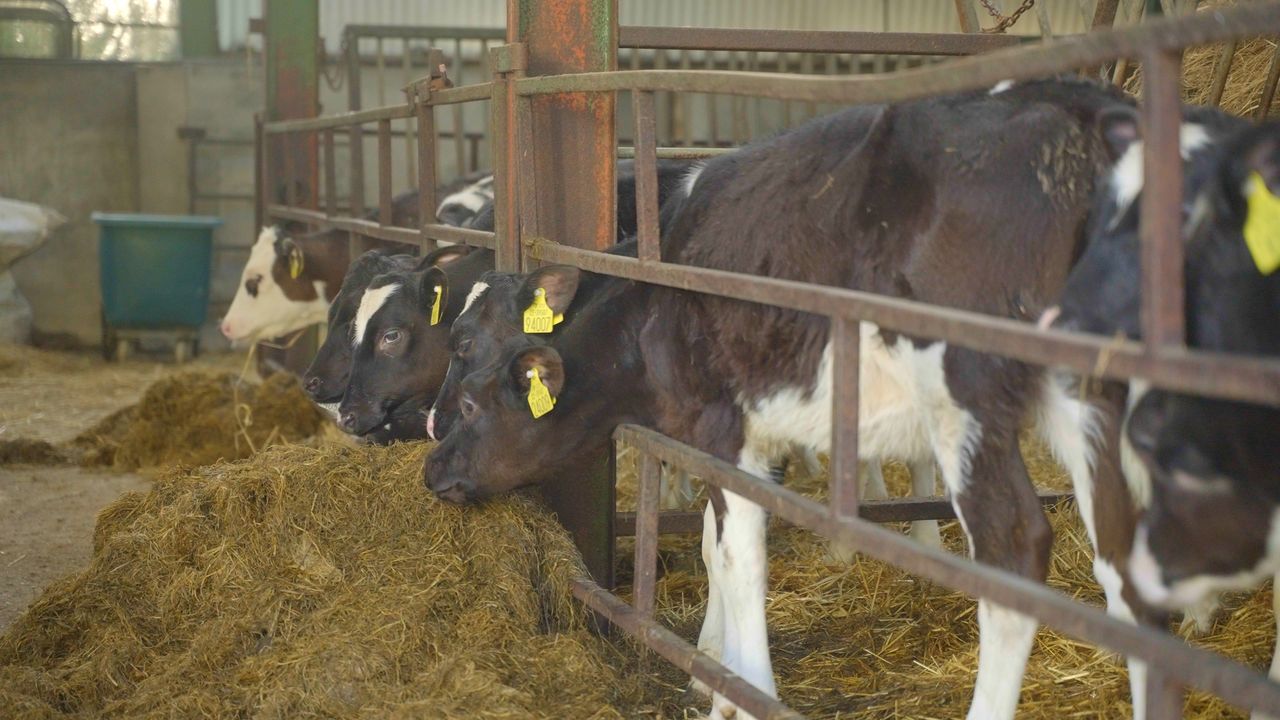
Meanwhile, Lawless said they were quite happy with this autumn's calving season, with everything going relatively smoothly.
He said they only had two cases of milk fever, and no mortality during calving, though they did lose two calves to isolated incidents such as twisted abomasums later on.
The majority of the early calves were calved down outdoors as conditions held up well, with the last few calving inside.
Johnstown is beginning to wean the first of those autumn calves now as they reach 95-100kg or 12-weeks-of-age.
They have been on 3.5L of milk replacer (550g powder) once a day for the last number of weeks, with the calves currently eating 1.5kg of concentrates daily and aiming for 2kg at weaning.
Lawless said feeding milk replacer on the farm's liquid milk contract 'still makes sense' this year despite the way prices are going.
SCC
Winter milk herds can be prone to spikes in somatic cell counts (SCC), total bacteria counts (TBC), and thermoduric levels, as conditions are less than ideal in comparison to spring calving herds who spend most of the lactation out grazing.
Currently the Johnstown herd's cell count is reading 125,000cell/ml.
Lawless admitted that SCC is a problem within the Johnstown herd every year, however, they are continuously working on reducing it.
He said they had a "bad run of it last year" but things seem to have improved a lot this year.
He stated that while they still had a couple of cases this year, it was "nothing that isn't controllable".
One of the things the farm is doing to reduce SCC is keeping cows standing in the yard for 20 minutes post milking to let their teats close back up.
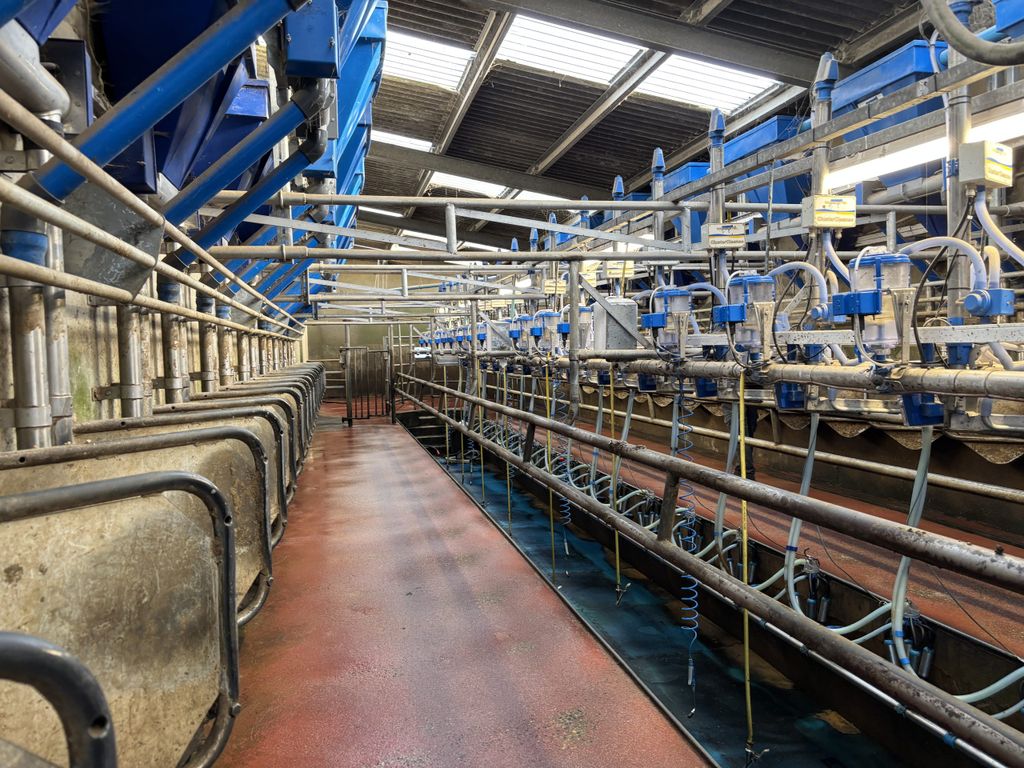
Lawless said this is because they are feeding silage ad-lib, and after the concentrates in the parlour, cows are not hungry and go to lie straight down in the cubicles after milking, which can let bacteria in through the open teat canal.
There is also a strong focus on teat spraying and cubicle hygiene, with cubicles cleaned and limed twice a day.
If mastitis is detected, sensitivity tests are carried out to determine how to treat the infection best.
Lawless said: "The burden is always in housing no matter how well you do it."
Keep an eye on Agriland next week to hear from Teagasc's dairy specialist, James Dunne, on the Johnstown breeding system.