Video: Catch up at the mart - hot weather, fodder and the risk of overstocking

Last month was one of the driest on record, leaving farmers waiting for significant rainfall as grass growth remains stubbornly low in parts of the country.
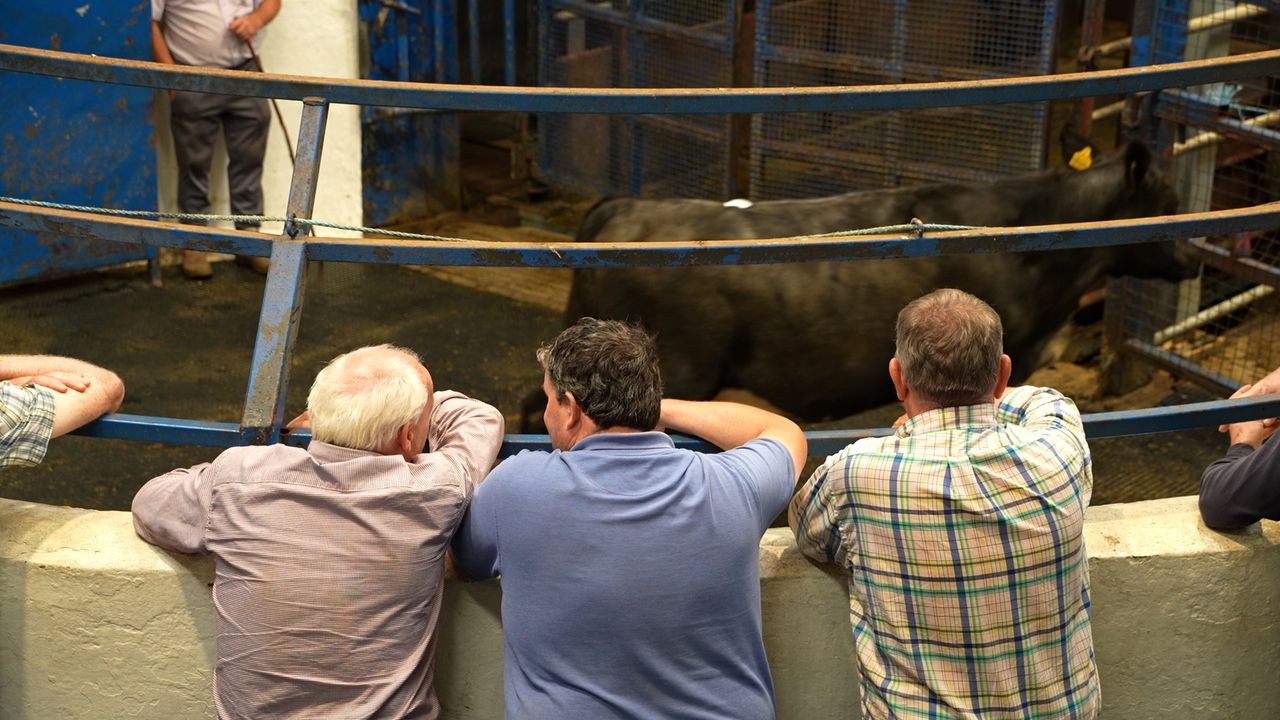
Agriland caught up with farmers at Carnaross Mart in Co. Meath to hear how they've been dealing with the prolonged spell of dry weather and whether it has impacted their fodder supplies.
While conditions have varied considerably across the country, several farmers at the mart said that grass supplies are now under pressure, with some already having to feed fodder to livestock.
With fodder expected to be stretched thin this winter, one farmer highlighted that "you wouldn't want to be overstocked" during times like this.
Another mart-goer said that dairy farmers and beef finishers are being particularly impacted by the lack of grass growth, with many offloading cattle at marts earlier than usual to reduce feed demand.
But some farmers said that conditions around Co. Meath may not as bad as elsewhere, suggesting that counties in the south-east could be facing the brunt of the dry spells.
"If you go to different parts of the country, the ground is burnt red," one farmer told Agriland.
Mart trade
Around the ring at Carnaross Mart, farmers gave mixed views on cattle and sheep trade in recent weeks.
One farmer said that beef prices have steadied for cattle "with a bit of flesh and weight", while plainer cattle are experiencing a weaker trade as of late.
Sheep prices were also reported to have eased, with a different farmer estimating that lambs are back by around 20c/kg.
Another mart-goer felt that factory prices had pulled cattle trade back in recent weeks, while describing bullock trade as strong but heifer trade as a "complete disaster."
Live exports
The future of the calf trade was another major talking point around the mart, following the announcement that Brittany Ferries is to stop carrying livestock from next month onwards.
The decision is expected to have a significant impact on the trade of Irish calves to customers located on mainland Europe.
Brittany Ferries is one of only two ferry companies who currently export more than 200,00 calves from Ireland this year.
Farmers around the ring expressed concerns about Brittany Ferries' decision and what this could mean for calf trade next spring - especially considering the strong prices recorded for calves earlier this year.
One mart-goer warned that the decision could be a "big problem" for dairy farmers in particular, while another farmer suggested that the demand for calves will remain but that alternative routes for exporting them will need to be established.
"If they can't export them, it'll definitely be back," one farmer said in relation to calf prices next spring.