UK Dairy Carbon Network: Sharing insights to cut emissions

The UK Dairy Carbon Network (UK-DCN) is an initiative working with dairy farms across England, Scotland, Wales, and Northern Ireland to put practical, farm-ready solutions for reducing greenhouse gas (GHG) emissions into action.
Led by the Agri-Food and Biosciences Institute and funded by Department for Environment, Food and Rural Affairs (Defra), the project brings together a UK-wide consortium of leading research institutions, farmer levy bodies, and industry organisations.
Alistair McLaren, senior strategic communications manager of the Agriculture and Horticulture Development Board, also manages communications for the UK Dairy Carbon Network.
He talked to Agriland about the network.
A growing project
At the time of writing, there are dozens of farms involved with this project.
McLaren said: “There are over 50 UK dairy farms involved, split across four farm networks: South and South-West England/Wales; Cumbria and South-West Scotland; North-West England; and Northern Ireland.”
“This is a three-year project funded by Defra and is limited to a selection of UK farms.
“There are around 20 farms spread across Northern Ireland, which reflect a wide mix of calving patterns, grazing approaches, herd sizes and milk yields.
“Although the project doesn’t cover the Republic of Ireland, it would be great to work alongside any similar initiatives on Irish farms and where possible share learnings.”
Trackable
McLaren also maintained that the collaboration is trackable, from a carbon footprint perspective.
“In partnership with the farmer, tailored measurement plans are developed and customised to the farm for the approaches they have chosen to reduce their carbon footprint,” he said.
“These measurements - such as fertiliser use, land and livestock productivity, and animal health - flow into general performance reporting but also into a partial carbon budget.
“This will help identify where emissions are coming from, track changes over time, and highlight opportunities to reduce them without compromising productivity."
McLaren explained that where possible, the scientific team aim to measure emissions using specialist equipment, or estimate emissions using novel proxy measurements that are being developed as part of the project.
“Equally important, we capture the day-to-day experiences of farmers as they adopt new practices and technologies," McLaren said.
“These insights, reinforced by scientific evidence, document their journey and help inform other farmers, creating a knowledge base that supports wider adoption of effective strategies.”
Tailored advice
McLaren says that it is “very important” to tailor advice to individual farms.
“No two farms are the same,” he noted.
“Farm liaison officers will work with farmers alongside their supply chain partners, such as nutritionists, vets and milk processors, to help choose the approaches best suited to their farm.
“Each farm will select from four key areas where meaningful emissions reductions can be achieved: livestock breeding; nutrition; improving health and disease control; and nutrient management.”
A key factor in UK-DCN is the sharing of information and tips.
“Extensive discussions have already taken place between our farm liaison officers, academics, farmers and their advisers,” said McLaren.
“These have focused on sharing practical advice and choosing options that not only reduce GHG emissions, but also deliver improvements in efficiency and productivity.
“In addition, we’ve held meetings with all farmers across the networks to share experiences, discuss challenges and encourage peer-to-peer learning, laying the groundwork for actionable insights as the project develops.”
Carbon footprints
McLaren said that the network has “no doubt” that working together with a network of dairy farmers and their supply chain partners “will make meaningful improvements in their carbon footprints”.
He added: “Through sharing their journeys of firstly reviewing and then implementing science-backed mitigations, we believe the project can help other farmers confidently adopt proven approaches to reduce greenhouse gases whilst delivering productivity.
“We also want carbon savings to be fully recognised within national reporting and policy, ensuring farmers’ actions are credited.
“Ultimately, it is about creating a ripple effect and success means a more sustainable, resilient and lower-carbon UK dairy sector.”
Each participating farm receives personalised support, including a tailored implementation plan that suits their system, local climate and geography.
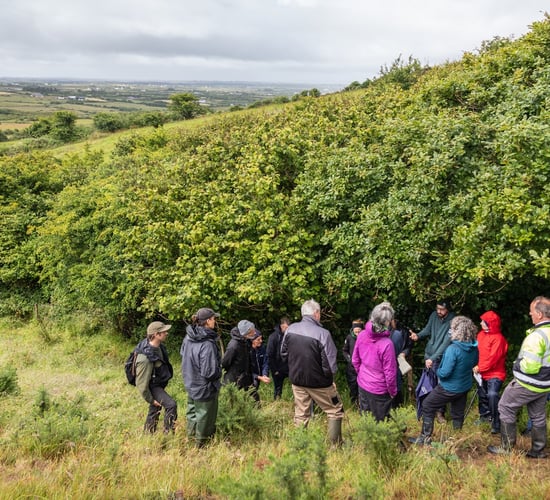
The network also creates opportunities for shared learning through events such as farm walks, open days and peer-to-peer exchanges.