TII working with dept to improve greenway procedures

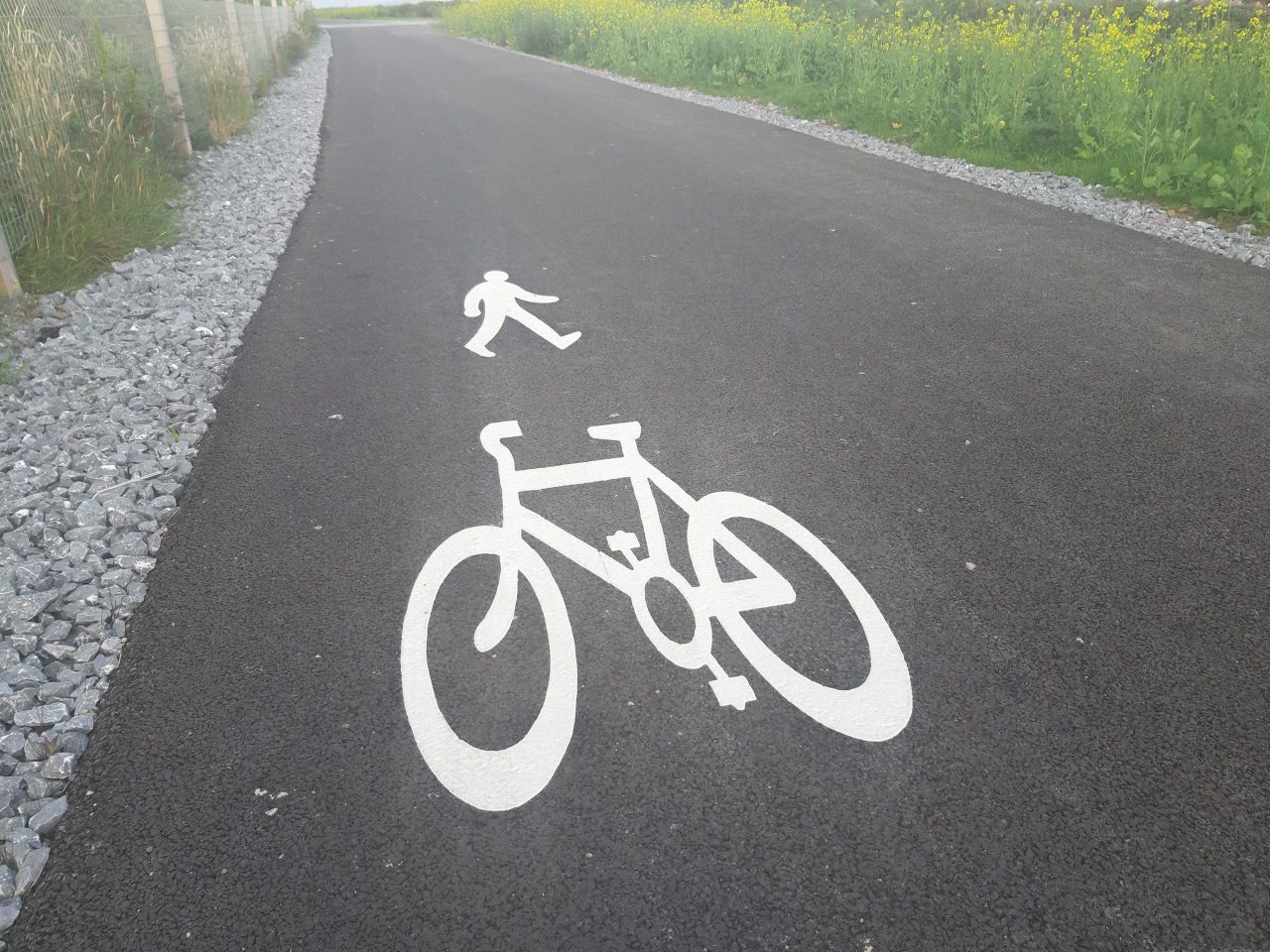
Transport Infrastructure Ireland (TII) has acknowledged the concerns expressed by landowners and farm organisations in relation to the delivery of the national greenway programme.
Representatives from TII and the County and City Management Association (CCMA) appeared before the Joint Oireachtas Committee on Agriculture and Food yesterday (Wednesday, June 10) to discuss the impact of greenways on farmers.
TII is the approving authority for roads and greenways and provides funding and support to local authorities to deliver such projects.
Lorcan O'Connor, TII chief executive, said the organisation is working with the Department of Transport to "find mechanisms to improve the existing processes and procedures" around greenway developments.
Greenway policy
Last month, the committee heard from landowners who slammed current greenway policy, a lack of consultation and the use of compulsory purchase orders (CPOs) to secure land for projects.
Lorcan O'Connor said that CPO "permits the acquisition of land for the development of public infrastructure when it's in the public or common good".
"The challenge for an organisation such as TII or indeed the local authorities who are charged with delivering a greenway project is that inevitably there is likely to be a large number of landowners involved.
"While everything throughout the process is designed around reaching voluntary agreement, if you don't have the CPO as part of your box of tools or solutions open to you, it can be particularly problematic," he said.
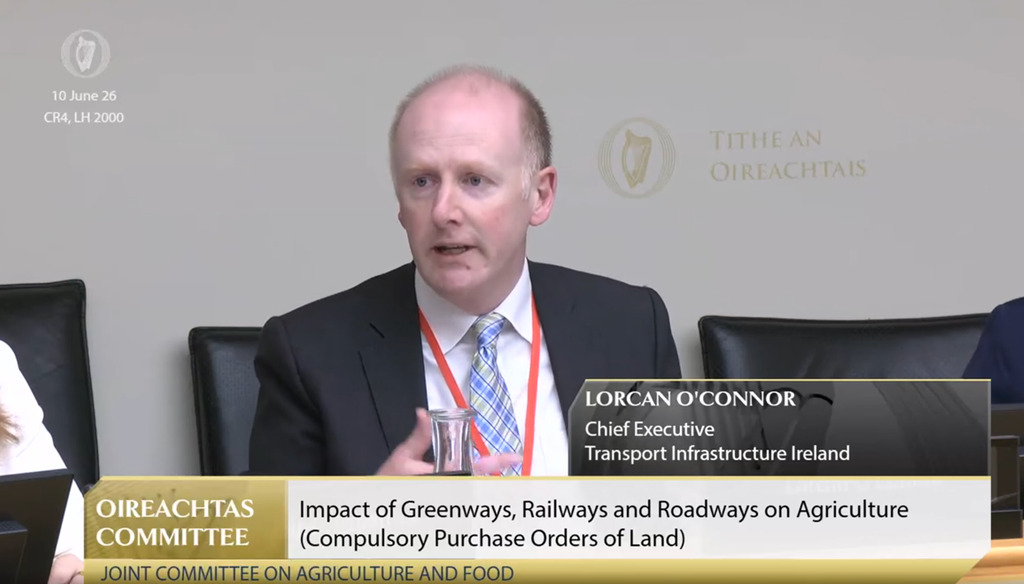
O'Connor said issues around greenways were also discussed when he recently appeared before the Oireachtas Committee on Transport.
"One of the points that was made clear to me at the time was the sense that local authorities, when they were talking to the communities and the landowners, there was an impression that CPO was almost the first step instead of the last step.
"I think certainly that isn't what we wish it to be," he said.
"As we're reviewing the code [of Best Practice for National and Regional Greenways], and indeed the Department of Transport are undertaking their broader review of the strategic approach to greenways, that is something that I think warrants being reinforced.
"But what I am saying to you today is that I do see that it is necessary as a last resort in order for us to try and ensure that we're able to deliver on the greenway programme," O'Connor added.
Cathaoirleach of the committee, Aindrais Moynihan said many residents impacted by greenway projects have reported that CPO "appears very early in the day and that it's not a last resort".
O'Connor noted that changes to CPO legislation is outside the remit of TII.
CPO
O'Connor said the CPO process includes "a mandatory obligation to seek to negotiate a settlement of the compensation issues, including accommodation works".
"There is a misconception that the issuance of a CPO brings voluntary negotiations to an end.
"This is not the case, and indeed most CPO cases are settled by voluntary agreement without utilising the arbitral process," he added.
O'Connor said that in his opinion greenways meet the definition of "securing infrastructure for the common good", citing the health and economic benefits.
In response to questions from Senator Joanne Collins, the TII chief executive acknowledged the need to "minimise the interruption to the landowner".
"As we're looking at the review of the code I think it is fair to say heretofore perhaps there have been instances where the attempt to go from A to B in the most direct route has been somewhat too rigid.
"I think we should have greater flexibility to see if we can skirt the circumference of a farm or a landowner and I think that is something certainly we should be looking to try and do," O'Connor said.
Independent Senator Victor Boyhan highlighted several key issues he believed need to be addressed as part of any review of the Code of Best Practice for Greenways.
The senator said there should be no farm severance and called for "whole farm impact assessments" before greenway routes are selected.
O'Connor agreed with a suggestion from Senator Boyhan on the need for mandatory Department of Agriculture, Food and the Marine (DAFM) involvement where productive farmland would be affected by a project.
Projects
Barry Kehoe from the CCMA told the committee "greenways must be delivered with widespread community and landowner support and agreement".
"Genuine, early engagement with landowners and communities is the right approach; and it produces better, faster and more durable projects," he said.
Kehoe said it is the view of the CCMA that the power to compulsorily acquire land must remain available, "as a genuine last resort in a limited number of instances".
He pointed to "the scale of public investment involved" and "the particular difficulties that arise in Ireland around property registration and title".
"This is not a departure from the principle of agreement; it is a necessary safeguard for the protection of public investment," he said.