Mixed outlook for GB crops as barley area falls

There was a sharp (12%) year-on-year fall in the area of barley for harvest 2026 in Great Britain (GB), according to the Agricultural and Horticultural Development Board (AHDB)
Its planting and variety survey for 2026 also showed a smaller UK oat area, but larger areas in GB for oilseed rape (OSR), and to a lesser extent, wheat.
For the UK a whole, the area of oats is estimated to have fallen 15% in 2026 to 168Kha - the lowest area since 2023 (167Kha).
For the rest of the crop categories, figures are available for Great Britain (GB) only.
GB cereals
The total GB wheat area is estimated at 1,711Kha, a 3% rise from 2025 and the highest area since 2023 (1,712Kha).
The total area of barley is down 12% compared to last year, at 930Kha, and 17% below the five-year (2021-2025) average. This would be the lowest GB barley area since 2010.
Meanwhile, the Scottish barley area is down 13% to its lowest level since the 1960s.
A lower spring barley area is driving the fall, though the winter barley area has also declined slightly year-on-year.
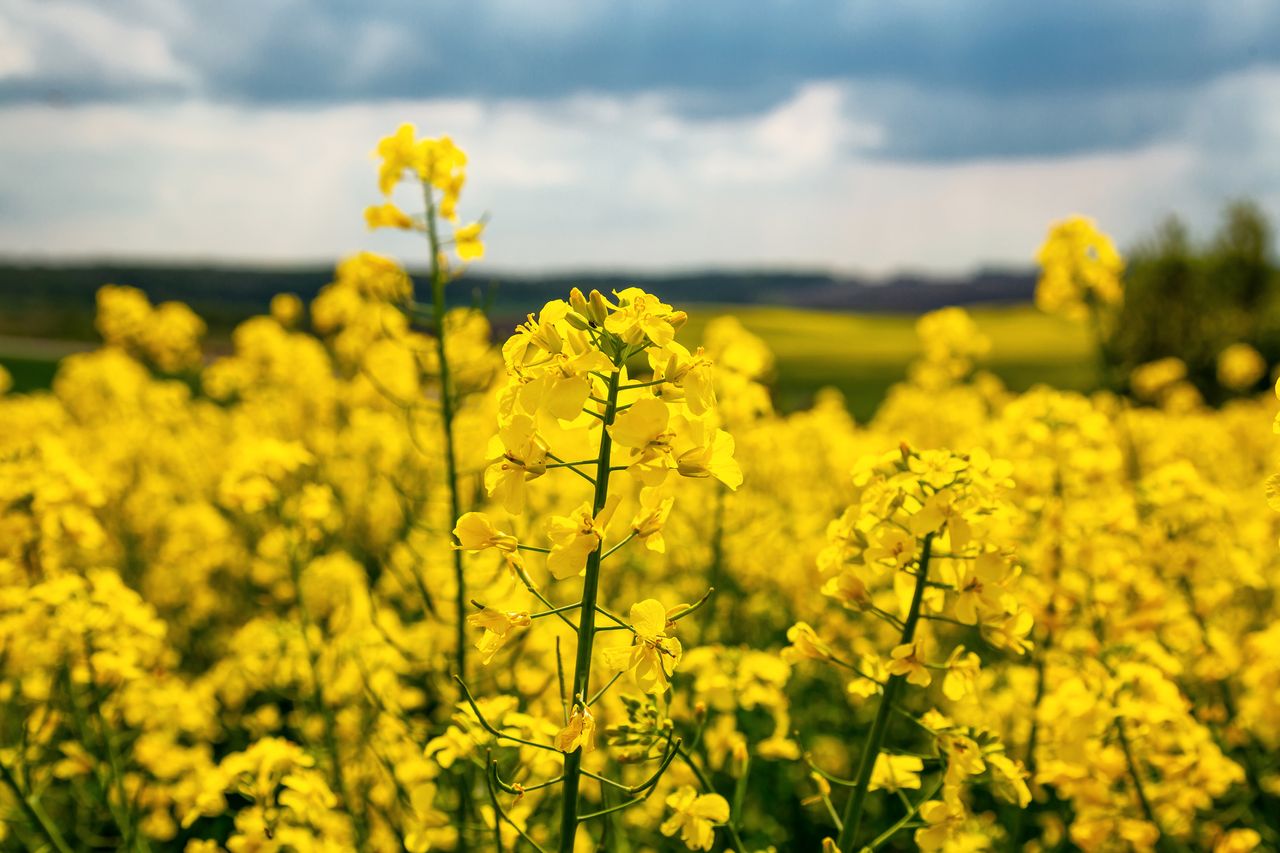
Where OSR is concerned, the area rises 49% year-on-year to an estimated 358Kha.
While this is a large percentage change, this area would still be below the 390Kha reported in 2023
The falls in barley and oat areas outweigh the rise in wheat. As a result, the total GB cereals area declines 4% to 2,807Kha, the lowest level since 2006
Meanwhile, the combined area of cereals and oilseeds is marginally (6Kha) higher than in 2025 due to the expanded oilseed rape area.
Data for this survey was collected from 7 April to 15 May 2026. The survey had 1,126 valid responses, which cover approximately 5% of the UK total cereals and oilseeds planted area in 2025.
AHDB analysts believe that shifts in cropping reflect growers looking for the best options they can find locally in a very challenging environment.
In addition, growers continue to face considerable challenges to profitability from low cereal prices, low milling and malting premiums, changes to demand for barley, and now rising costs.
The good conditions for autumn planting may also have factored into decisions, alongside the poorer yields for many spring cereal crops last year.
Specifically, where barley is concerned, the brewing, malting and distilling (BMD) sectors have faced considerable challenges over the past couple of seasons.
Demand for alcohol has been hit by the cost of living both at home and globally, with generational and diet-led changes to consumer habits also contributing.
Wheat
The GB wheat area is estimated to return close to 2023 levels, the last time there were good autumn planting conditions across the country, with a 3% year-on-year rise.
However, there is variation across GB.
At 116 Kha, the Scottish wheat area is estimated to be the largest since 1992.
It is up 7% from 2025 with similar increases in hectares for both North and South Scotland, likely a reflection of the challenging situation for barley.
In England, the largest increases in area are for the South East (+12%), South West (+7%) and East Midlands (+7%).
Meanwhile, year-on-year declines are noted across the northern regions of England.
This is potentially linked to the uncertainty over bioethanol demand when many planting decisions were being made due to the announcement of the US-UK trade deal.
This concern was borne out with UK bioethanol production mothballed for large periods in the 2025/26 season, impacting demand for wheat, especially in the north of England and on the east coast.
Barley
Driven by a fall in spring barley, the 2026 GB total barley area falls 12% to a 16-year low of 930Kha.
There are declines for all but one region of England, with the largest percentage decline for the East Midlands (-20%). While the area in Yorkshire and The Humber is stable year-on-year, it remains at its lowest level since 2012.
In Scotland, the fall in spring barley area more than offsets a small rise for winter barley. This results in a 13% fall to the lowest total Scottish barley area since 1965 at 258Kha.
The share of varieties approved for malting, brewing and distilling is 62%, down from 65% in 2025 and 68% in 2024.
This change in varieties, together with the overall year-on-year fall in barley area, indicates a smaller area of barley suitable for malting, brewing and distilling.
Usually, a lower area combined with a lower malting share would put more emphasis on the current year’s yields and quality to support availability for malting, brewing and distilling.
However, the impact in 2026/27 will also depend on how demand develops in the months ahead.
For the sixth year in a row, Laureate is the most prevalent barley variety. Laureate accounts for 39% of the GB barley area in 2026, followed by LG Caravelle with 10%.
Winter barley
At an estimated 352Kha, the GB winter barley area is only slightly (1%) lower than in 2025. This follows notable area declines in both 2024 and 2025 due to poorer crop economics and the fall in OSR plantings.
A lower OSR area reduced the need for an earlier-harvested crop to precede OSR.
The area remains the lowest since 2020 but seems to have found some overall stability.
However, there is variation across GB. The largest year-on-year declines are in the East Midlands (-13%) and Eastern England (-12%), where some of the largest increases in OSR are also seen. There are also small declines across the south of England.
However, the areas are stable or higher areas for the West Midlands, northern areas of England and Scotland. The Scottish winter barley area is up an estimated 6% to 46Kha. This may also be linked to the good autumn planting conditions.
Spring barley
The GB spring barley area has fallen 18% year-on-year to its lowest level since 2010, due to a combination of reduced malting demand, low prices, and poorer recent yields.
In key producer Scotland, the spring barley area is estimated to fall 16% to 212Kha. This is the lowest level reported in records back to 1982.
Declines are also reported across all of England and Wales. The largest decline in percentage terms is for the West Midlands and Wales (-49%), while the smallest decline is for Yorkshire & The Humber (-2%).
Oats
At 168 Kha, the 2026 UK oat area is down 15% year-on-year and the smallest area since 2023, likely reflecting the pressure on spot oat prices over the past year.
Spring oat varieties account for an estimated 62% of the area, down from 66% in 2025, with a corresponding rise in the share of winter oat varieties.
This suggests that spring oats account for more of the nationwide decline in plantings.

The oat area has declined in all areas of the UK, except for Northern Ireland and the South East of England, where small increases are reported in hectare terms. The largest falls are in Eastern England (-37%) and Yorkshire & The Humber (-35%).
For the third year running, WPB Isabel is the most prevalent oat variety with 25% of the UK area.
It is followed by Mascani at 19%, Merlin at 14% and Canyon at 8% of the total UK area.
Oilseed rape
The OSR area has risen 49% year-on-year to an estimated 358Kha (Table 4). While this is a large percentage change, this area would still be below the 390 Kha reported in 2023.
Higher prices, good yields in 2025, and industry collaboration to support growing the crop, such as the top 10 cabbage stem flea beetle management tips, are likely to have encouraged a larger area.
However, anecdotally, confidence remains a limiting factor for some growers. This follows pest pressure and variable crop performance, which strained profitability in multiple years.
The area increases for all countries and regions of GB. The largest increases in area are reported for Yorkshire & The Humber and the East Midlands, followed by Eastern England and Scotland.
Meanwhile, the smallest increase was in the South East of England (+10%).
The most widely planted variety is Pi Pinnacle, with 9% of the total, followed closely by Maverick with 8%.
Other varieties covering more than 5% of the area include Ramses, LG Adeline, LG Armada, LG Adapt and last year’s most widely planted variety, Aurelia.