Thomas Duffy: Can electric tractors compete with diesel on Irish farms?

Government supports and high fuel costs appear to have spurred on a wave of electric car purchases in Ireland, according to latest figures.
For farming, however, is there any real alternative to offset the similar increase in fuel price?
There remain only three alternatives to diesel on the dealers lot for most Irish field work, Fendt’s e107 Vario and New Holland’s T6.180 and T7.270 methane tractors.
All three carry a hefty price tag but the larger drawback to all three remains refuelling and running time.
Unless you have a personal biodigester methane-powered tractors will require a trip to a specialist CNG refuelling station so infield refuelling is out.
Electric tractors
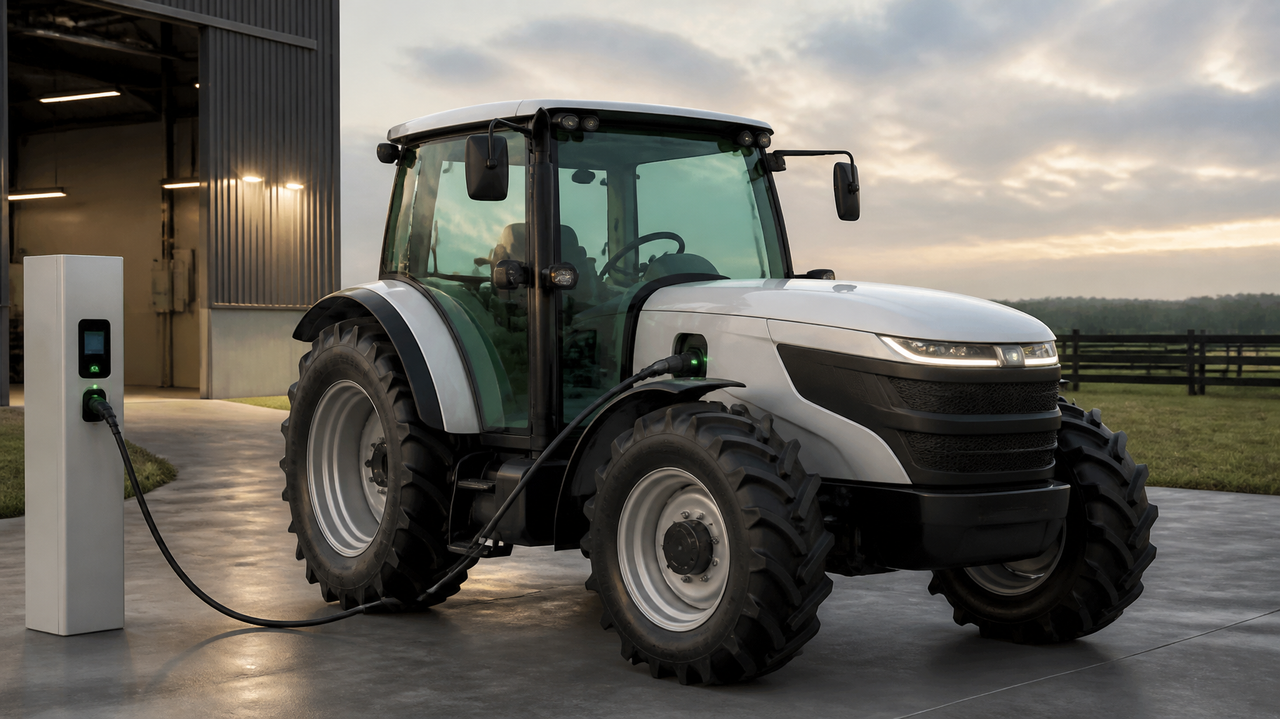
Electric tractors however do have a ready resupplying source in every socket - the issue instead is speed of recharging.
The largest issue with knocking diesel from its throne in agriculture is that unlike with electric cars you cannot overcome shorter ranges with more chargers.
Not only do field tractors require long run times but more importantly suffer short windows to refuel.
Even without considering contractor jobs such as silage - which depending on even tighter weather windows and often a 24-hour job only stopping minutes to refuel driver and machine - farmer demands are far higher than most car users.
Crunching the numbers on fuel use is challenging as everything from soil type to weather conditions can vary consumption.
Interestingly emissions management systems such as DPF and adblue, along with more transmission consumption because of its complexity, have undone a lot of the efficiency gains in the internal combustion engine.
This means that often 30-year-old machines use as much per hour as those rolling off the forecourt.
Speaking with the operators of newer machines on a sample of work gives anywhere from 20L to 180L per hour for various jobs from topping to pumping slurry.
A sample job such as ploughing alone can vary from 40L to 80L per hour.
For a demonstration of the challenges facing electric tractors, we can take the example of a job which normally consumes 60L per hour of field work.
Considering how much electricity is needed to replace this, we need to convert those 60ltrs into energy units (kWh).
Handily a litre is equivalent to 10.7kWh in stored capacity.
For convenience we will round this down to 10kWh to account for some variables, meaning our 60L/hour means 600kWh roughly 6 times that of the storage of the Fendt e107.
Super power
Here is where electric tractors have a super power - efficiency.
Diesel is a very efficient dense way to transport energy.
The same 10kWh in lithium batteries would be 60-80kg vs diesel’s 0.85kg, but getting that power out is extremely inefficient.
Even the most efficient tractor engines will only get approximately 35% of the stored power per litre losing the remainder to friction and majority to heat.
We do not yet have public figures for the efficiency of the on the market electric tractors but comparing car EVs to their diesel counterparts shows an efficiency of grid energy to kms is close to 70%.
If we take this figure then that energy requirement falls to 300kWh.
In theory, this means our 100kWh tractor would require recharging after roughly 20 minutes.
Fendt, as the first out, says however their aim is not this form of field work but rather smaller jobs where run time could be more realistic.
Recharging
But then recharging is where it gets really tricky.
If you happen to be right beside an EV fast charger (80kWh), this electric tractor can recharge fully in a little over an hour.
Charging on a more realistic set-up in yard of 22kw on 3-phase means it will take just under five hours.
Unfortunately this runs into a different issue; while most continental farms have 3-phase as standard, Irish farms do not, meaning they are limited to 7kw or lengthy 14hrs charge time for approximately 20 minutes' work.
That poses the question: if our EV tractor has such limitations will diesel ever have a real competitor?
Perhaps some would argue not in its standard formation, but there are companies which are currently working on ideas.
Two startups in the tractor space are squaring up to the legacy makers by using the innovative idea of swappable batteries.
The idea may not be as outlandish as it sounds – just look at the efforts that were made to overcome the issues of slow charging in Chinese HGVs.