Teagasc outlines sector priorities for 2025-2028

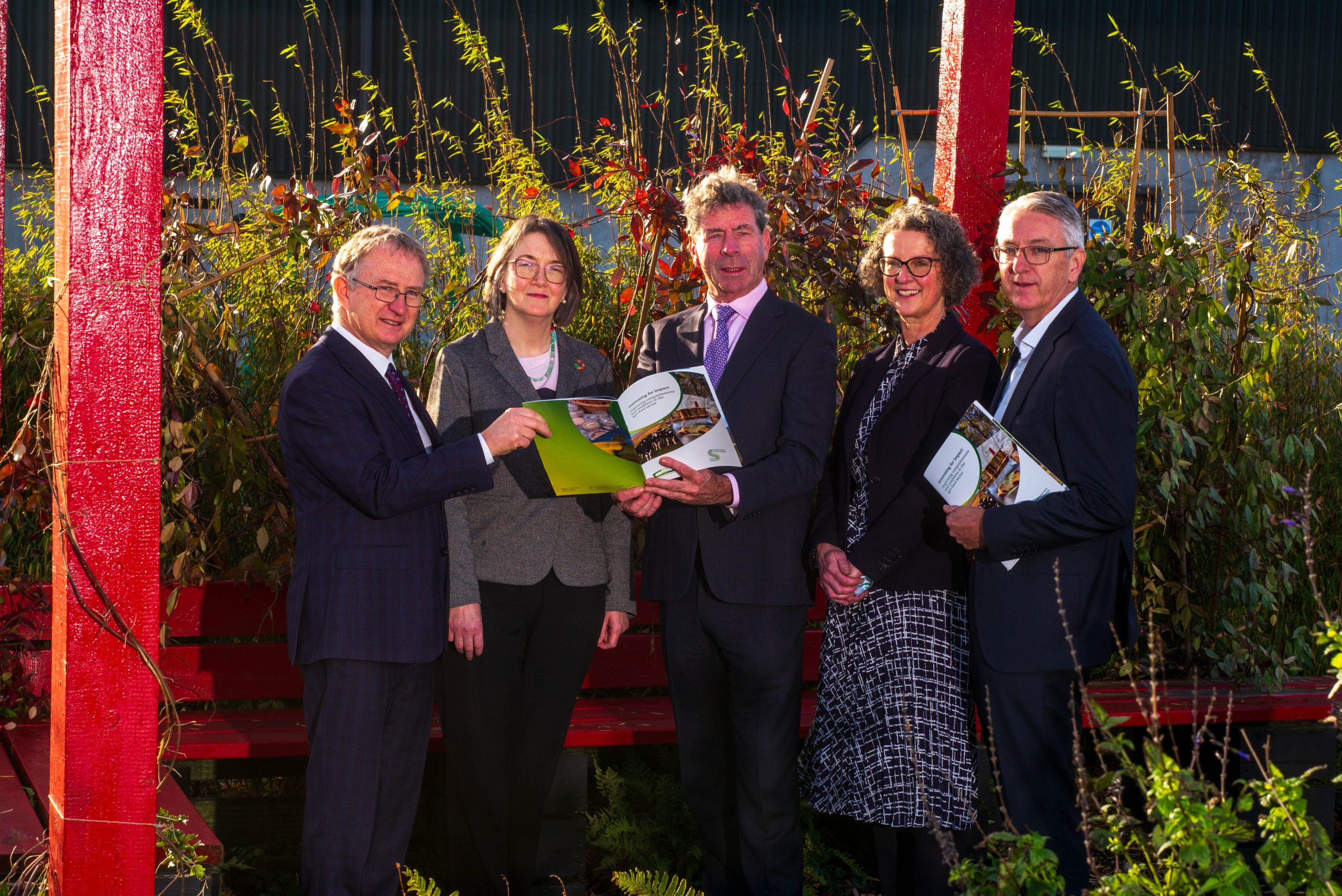
Teagasc has outlined its priorities in the agriculture sector for the coming years in its statement of strategy for 2025 to 2028.
The strategy document is titled Innovating for Impact: Improving Competitiveness and Resilience in the Agrifood Sector.
The sectoral priorities outlined in the document include: productivity; environmental sustainability; attractiveness; and innovation.
Commenting on the publication of the strategy document, Liam Herlihy, chair of the Teagasc Authority, said: "We will continue to work with holders of over 130,000 farms and over 200 companies from across the agrifood system to address complex challenges but also to seize new opportunities.
"With its integrated model of research, education, and advisory services, Teagasc is uniquely positioned to drive innovation, sustainability, and resilience for farmers, industry, and society," Herlihy added.
Teagasc director Prof. Frank O'Mara said that the farm-level productivity will be improved by optimising herd and crop health; advancing genetic gain, adopting more efficient management practices; and using technology to support data-driven decision making.
"Teagasc will build on existing partnerships to ensure we remain thought leaders, accelerating innovation and delivering real benefits for our clients, stakeholders, and the wider community," O'Mara added.
Productivity
Under the productivity heading, Teagasc said it will aim to drive productivity using improved animal and plant genetics; stimulate increased added value through product improvement, technology and the bioeconomy; unlock opportunities for decarbonisation; and increase uptake for diversification opportunities for farmers.
Planned initiatives to achieve this include a new 'Future Technology Programme' to adopt precision farming practices and implementing digital technologies for farm management.
This programme will also aim to shift to higher value products and explore new and emerging markets.
Teagasc will also aim to provide technology support for farmers through its advisory services.
Teagasc is also planning a new 'Office for Agri-Food Innovation Support' to work with agri-food companies to "translate" research into impact for agri-business.
The agri-food advisory and education body will also look to develop a 'National Training and Learning Platform' to boost adoption of technology on farms and in food businesses; and will launch a new 'Diversification and Rural Development Programme' to advise farmers on diversification opportunities.
Environmental sustainability
Key objectives for Teagasc under the sustainability heading include: supporting farmers to take action to reduce emissions, sequester carbon and improve water quality; advance research and adoption of carbon farming; and "harness opportunities" in the land use sector.
Apart from the Climate Action Strategy and the Better Farming for Water campaign, which are already in progress, Teagasc will also look to use new technologies like artificial intelligence (AI) and digitalisation to drive research.
Teagasc said it will also develop a biodiversity strategy and action plan, as well as develop scientific models to support implementation of carbon farming.
Attractiveness
In the area of attractiveness and generational renewal, Teagasc said it will aim to design more attractive and labour efficient farm systems.
Its strategy also includes facilitating inter-generational farm transfer, new entrants to farming, and collaborative farming.
As part of its attractiveness strategy, Teagasc will also aim to "deepen understanding" of consumer and public perceptions of farming and food production.
Some of the initiatives Teagasc outlined in this area include delivery of a bespoke service to farmers and professionals engaged in progressing generational renewal.
It will also increase its research and knowledge transfer focus on labour efficient farm systems; and develop a three-year 'advisory package' offering enhanced support, including discussion group membership and a national training and learning platform.
Other planned initiatives in this area include:
- Providing more targeted education and advisory support for part-time farmers;
- Market careers in agriculture and food to school and college leavers;
- Undertaking social science research to further understand the process of farm family formation and renewal;
- Undertaking social and behavioural science research to deepen understanding of the connection between farming, food production and society.
Innovation
In the innovation section of the strategy document, Teagasc said it will build on existing and new research assets to accelerate impact across enterprises in the agri-food sector.
It will also look to build and support the digital, technical and entrepreneurial capacity of farmers, farm staff and food businesses.
Initiatives outlined in this area include expanding and integrating specialist and pilot-scale facilities, including 'living labs' in order to fast-track technology in the areas of biocircularity, healthier foods and decarbonisation.
Teagasc is also aiming to develop its colleges and research centres as regional centres of rural innovation, in collaboration with local enterprises offices.
The strategy commits Teagasc to leveraging greater innovation and impact from Teagasc's food and agriculture research programmes through strategic partnerships with other bodies, including Bord Bia.
Finally, Teagasc said it will aim to conduct a 'foresight study' to identify the technologies and production systems that will be important for Irish agriculture and food production over the next 20-30 year period.