Sponsored Article
Tapping into one of Ireland’s highest-priority markets - North America


Sponsored Article

Bord Bia operates a global network of 14 overseas offices dedicated to the promotion and trade development of Irish food, drink, and horticulture.
In this article, we talk to Adam Hannon, who is a market specialist with Bord Bia in New York, responsible for meat and foodservice across the North American region.
What led you to work for Bord Bia in New York?
I studied Business and Marketing at Waterford Institute of Technology and spent four years working as an account manager in the IT sector.
While the role taught me valuable commercial and client-management skills, IT was not something I was passionate about.
When Covid-19 hit, it encouraged me to rethink my career direction.
As a long-time foodie, I decided I wanted to work in the food industry, so I applied for the masters programme in Supply Chain and Account Management with Bord Bia’s Talent Academy.
It was exactly what I was looking for, and I was fortunate to secure a place.

As part of the programme, I spent my placement with Ocado Retail in the UK, managing their lamb category.
After completing the programme, I returned to Ireland and joined Lidl as a buyer, initially handling lamb and later moving into oils, fats and condiments.
Early last year, I joined Bord Bia and relocated to New York to take up my current role.
What does your job entail?
My role is centred on building awareness, partnerships, and commercial opportunities for Irish suppliers throughout North America – the US, Canada and Mexico.
Together the region has nearly 500 million consumers and is one of the world’s largest importers of food and agricultural products.
The US alone imports more than US$200 billion worth of agricultural goods annually.
What are the main Irish exports to North America?
North America is one of Ireland’s highest-priority markets outside Europe.
Irish food and drink exports to the US were around €1.8 billion last year, making it one of our largest global markets.
Combined with Canada and Mexico, the region is worth roughly €2 billion to Irish producers.
Drinks and dairy are the two largest export categories.
Irish whiskey continues to perform exceptionally well, and dairy ingredients like butter and casein remain in strong demand.
Prepared consumer foods also play a significant role, as Irish brands tend to translate well in the US and Canada, aligning with consumer expectations around convenience and quality.
Seafood exports are also showing positive growth.
From a meat perspective, the opportunities are real but so are the challenges.
Irish beef is highly regarded by chefs, but many American buyers have a different understanding of terms like 'grass-fed'.
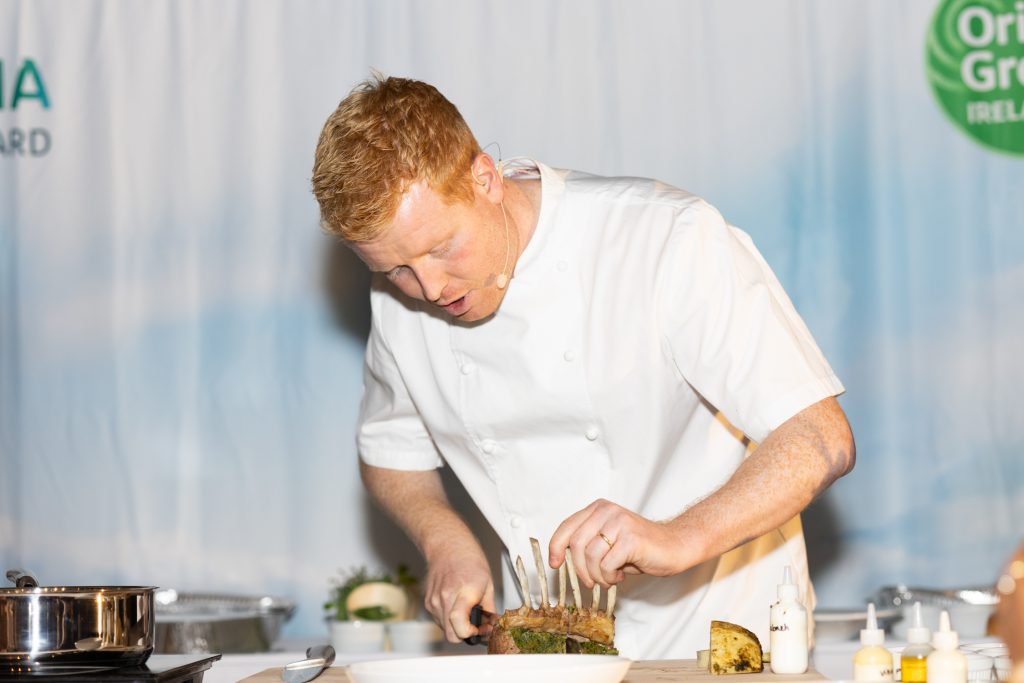
In the US, grass-fed can refer to animals reared on low-quality forage, which affects flavour and texture.
Part of our work is to educate buyers on Ireland’s pasture-based systems, nutrient-rich grass, and the premium eating quality it delivers.
One of the most exciting recent developments is the opening of the US market for Irish lamb.
The response has been extremely positive. At our New York launch event, chefs, distributors and media showed strong interest in Ireland’s grass-fed lamb and how it compares with imports from Australia and New Zealand.
Buyers see a clear gap in the market for a premium European option with strong sustainability credentials.
It is early days, but the momentum is very encouraging.
What are the opportunities and challenges in the market?
It is impossible to ignore the shift that has happened this year with President Trump being elected and the impact that has had on the US, Mexico, and Canada.
The tariff environment has changed, import costs have increased, and businesses across retail and foodservice - already dealing with tight margins - have become more cautious.
Distributors and importers are now more selective, emphasising value, certainty of supply and tariff exposure.
Despite these pressures, consumer demand for high-quality food remains robust.
Over the longer term, the outlook is unquestionably positive. North America has a huge consumer base with increasing interest in premium food and drink.
For Bord Bia, the priority is maintaining strong relationships, supporting our existing position in the US, and using that foundation to expand further into Canada and Mexico when conditions allow.
What do US importers look for from Irish suppliers?
When buyers source from Ireland, they expect a premium product, whether that’s beef, salmon or butter.
They want good eating quality, tight specifications and high technical standards. Value is important too and that does not automatically mean being the lowest price.
The US market moves incredibly fast, and importers need partners they can depend on.
They want consistent supply, consistent quality and clear communication.
They want suppliers who see the market as a long-term, who will support customer meetings, respond quickly to issues, and actively work with them to build demand.
Sponsored Article