Taking CAP payments off pensioners 'strictly rejected' in EP report


The proposal to take farm payments off pensioners will be "strictly rejected" in a key European Parliament report on the next Common Agricultural Policy (CAP).
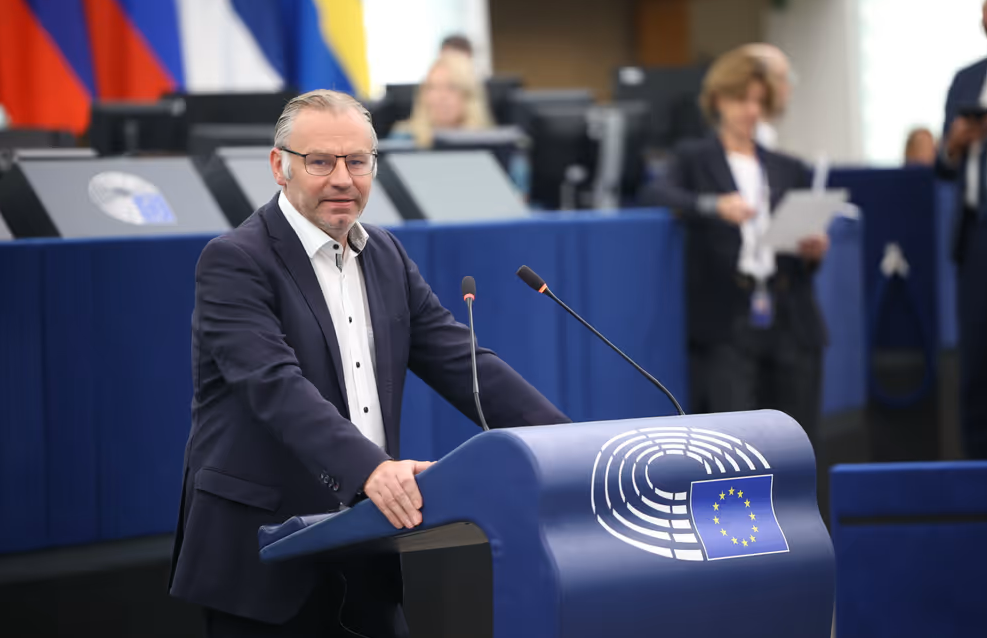
The report from German MEP Norbert Lins, the headline points of which were revealed this week, will serve as the official position on CAP for the parliament's agriculture committee, and therefore will be highly influential when the parliament as a whole adopts its opinion on CAP.
That parliament opinion will then be taken forward to negotiations with member states on the final form of the 2028-2034 CAP.
A summary of Lins' report says that linking agricultural payments to reaching the statutory retirement age is "strictly rejected".
"This passage must be deleted from the drafts. Farmers must be able to decide for themselves when to hand over the farm, without the business being deprived of its earned direct payments during a transition phase," it adds.
The proposal to take farm payments away from pensioners was just one of a range of controversial proposals put forward by the European Commission last summer.
Other proposals that received universal criticism from the farming sector included: ending the traditional two-pillar structure; placing agricultural funding into wider national-level funding pots called National and Regional Partnership Plans (NRPPs); and cutting the overall funding for agriculture by about 20% compared to the current CAP.
The summary of Lins' report is split into two parts: part one is on the format of the NRPPs; and part two is on reform of the CAP specifically.
Demands for the NRPPs
The report will call for a CAP budget "strictly in line" with the parliament's position on the long-term EU budget, which was adopted in April.
That official position on the budget called for ring-fenced CAP funding of some €433 billion, which would, by and large, match the funding of the current CAP and take account of the inflation that has happened since.
The report will also call for the the two-pillar format of CAP to be retained even within the wider NRPPs, as follows:
- Pillar I: "Pure EU funding" for income support and crisis-resilient basic support;
- Pillar II: Co-funded (by the EU and national exchequers) for development measures in rural areas (through agri-environment and on-farm investment schemes, similar to what is there already).
"A complete dilution of agricultural funds into lump-sum regional budgets must be prevented," the summary says.
As well as that, Lins is calling for sectoral funding programmes (such as fruit and vegetable schemes) and the LEADER rural programme to "remain strictly ring-fenced".
Demands for CAP reform
On the CAP reform, apart from deleting the proposal on pensioner farmers, the report will also call for a halt to any further degressivity of payments, as this "unfairly penalizes larger, well-established structures without automatically creating added value for smaller farms".
The report will call for a cap on payments of €500,000 for natural persons.
It will also call for a payment redistribution mechanism (i.e. the Complimentary Redistributive Income Support for Sustainability - CRISS) to be made made mandatory for all member states.
The report will demand a separate, dedicated intervention for young farmers, and a binding minimum budget of 8% of Pillar I money to support generational renewal.
According to the report summary, MEPs should demand "binding earmarking" of funds to specifically reward environmental, climate, and animal welfare services.
These funds must "specifically benefit those farmers who provide concrete additional services to society".
However, the report will not outline a fixed percentage for this, instead saying this should be decided after the EU's long-term budget for 2028-2034 is set.
The 'Farm Stewardship' model, which has been proposed by the European Commission as a method of governing on-farm environmental actions, needs to be defined precisely, with fixed and transparent measures, the report summary says.
Finally in the summary of Lins' report, it is demanded that effective measures for income and yield stabilisation are developed to protect against extreme weather events that impact productivity.
Such measures should include multi-peril insurance, mutual funds, and providing tax relief for farm risk reserves.