Sweden moves to roll out grading standard for sheep wool


Sweden has become the latest country in Europe to roll out a grading standard to measure the quality of sheep wool.
The country joins the likes of Norway and the UK in developing a system for grading sheep wool, with the aim that this will open market opportunities for the product and make it attractive to various industries.
Development of this standard was part of a wider project called the Swedish Wool Initiative, which has been underway for the last few years to turn sheep wool in Sweden from a discarded by-product to a viable farm output.
The initiative is a joint undertaking by the Axfoundation, a Sweden-based non-profit that works on sustainability initiatives, and Dalarna Science Park, which describes itself as a forum for businesses, academia, and research.
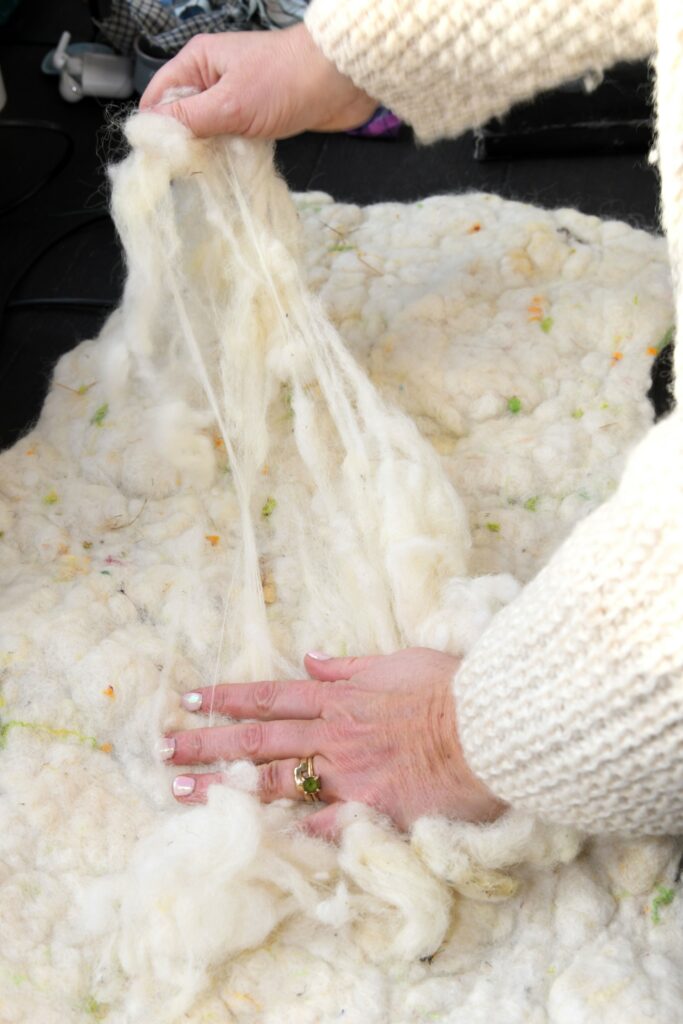
According to the Axfoundation, Sweden imports over 1,700t of wool annually, while more than half of Swedish wool is discarded.
Axfoundation called this a "huge waste of resources that could supply Swedish industries with regionally sourced, biobased and recyclable material".
The second phase of the Swedish Wool Initiative, which ran until this year, aimed to increase resource efficiency in the Swedish wool value chain and to create circular products in sectors such as construction, furniture, fashion, and home decor, among others.
Textile industry
In the fashion and clothes sector, the Axfoundation said that textile demand is projected to increase by 150% by 2050, but that current business models are based on overproduction, overconsumption, and low production costs.
The increasing demand can pose environmental challenges, as most textile fibres today are synthetic, or come from conventionally grown cotton which can be water-intensive and involve chemical inputs.
While wool could serve as a regionally sourced and biobased alternative, the majority of wool is currently discarded due to inadequate infrastructure for collection, and a lack of standardised quality assurance and classification.
When wool in imported into Sweden, the Axfoundation said, it is done with a higher environmental footprint and lower animal welfare standards than locally produced wool.
Johan Sidenmark, the project manager for future materials at the Axfoundation, said: "With the right market conditions, efficient collection stations, and innovative circular product development, there is potential to harnesss residuals from sheep farmers, making wool a valuable resource across industries from fashion to future manufacturing."
The Swedish Wool Initiative has a number of aims, including:
- Swedish Wool Standard - implementing new tools and processes in wool processing through a national classification system for Swedish wool;
- Collection points - developing infrastructure and logistics solutions for a regional collection point that can serve as a model for other locations;
- Product development - developing products based on circular design with Swedish wool as a raw material in the sectors of construction, furniture, fashion, outdoor, and home decor;
- Circular business models - developing circular business models and a value chain for Swedish wool;
- Sustainability analysis - conducting a sustainability analysis of Swedish wool based on data needed to create an environmental declaration for the product.
The learnings from the Swedish model has been brought to EU attention by a new focus group under the EU CAP Network.
EU focus group
The EU CAP Network is a forum through which national organisations, administrations, researchers, and entrepreneurs can share knowledge and information about agriculture and rural policy.
At the end of November, the network held the first meeting of a new focus group called 'Innovative and sustainable ways to strengthen the role of farmers in revitalising the wool value chain'.
Common EU specifications for trade was one of the themes of that meeting.
The creators of the Swedish Wool Initiative and the Swedish Wool Standard hope that their project can lead the way to an EU-wide standard for wool.
Roger Bush, a board member of Arena Swedish Wool, which oversees the standard in Sweden, said: "Swedish sheep farmers have faced the same challenges as farmers across Europe; how do you find a market for wool of different qualities and quantities?
"With a few adjustments, the Swedish classification system could scale across borders. This is how we build European volume from diverse local supply."
Kia Gabrielsson Beer, a Swedish wool classer and technical expert, said: "It works.
"The strength of the Swedish system is that it classifies how the fibre behaves and what it can become, not the breed.
"That's why is also can work in a European context.
"The system lets buyers specify exactly what they need and allows us to match supply from many farms," Beer added.