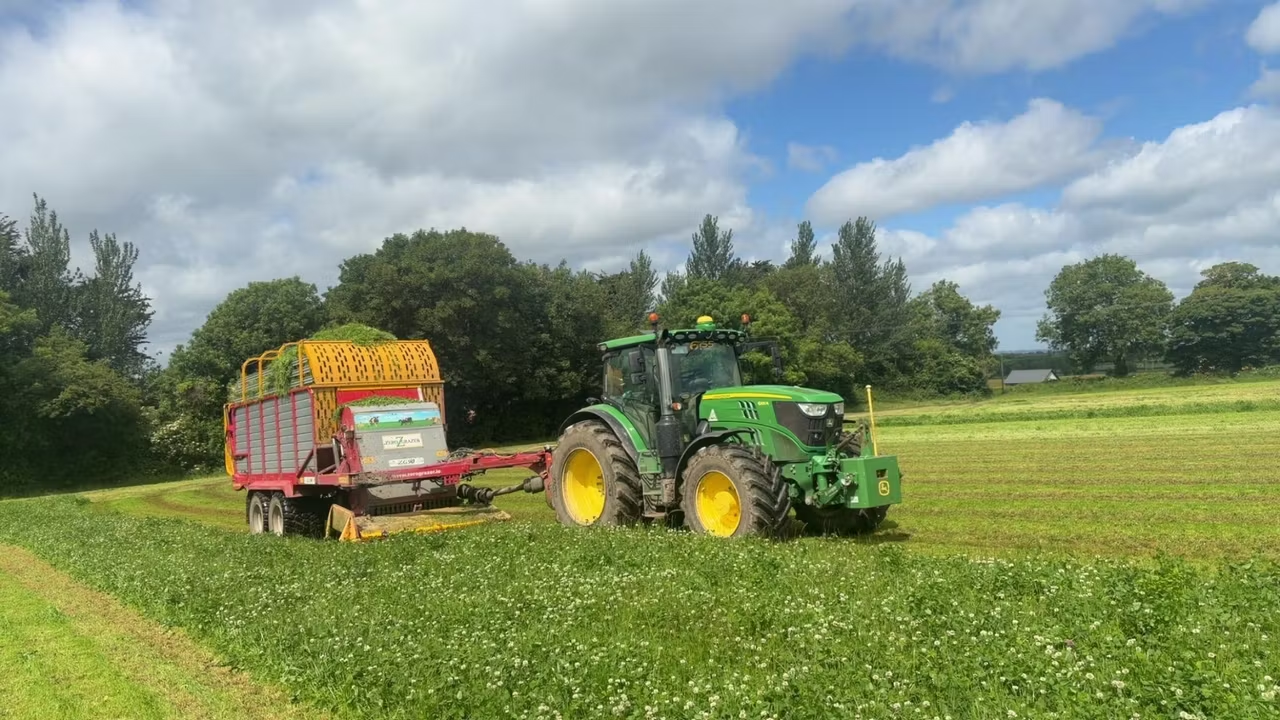
Preparing for droughts with summer silage contingency

The impact of this year's droughts means more farmers may need to consider a contingency of summer silage as part of their fodder budgets.
The prolonged warm and dry weather over the summer brought challenges to many farms, leading to issues with grass growth, water supplies or buffer feeding stock.
Michael O'Donovan, head of grassland science at Teagasc, spoke to Agriland about the importance of building resilience into farm systems to cope with future heatwaves and droughts.
"Resilience is a big word and it's like sustainability, it encompasses a lot of things.
"When you look at what's happening in Europe, Europe is definitely getting warmer. If you look at 2026 and if you look at 2018, there is a stepwise increase in temperatures.
"Fodder availability seems to be an issue in the middle of Europe, but from our perspective [in Ireland], the grass growth curve is no longer average. An average curve is just a composite of 5 or 10 years.
"We’re going to grow probably 12.5t [of grass], and some farms are going to grow beyond 12.5t this year, but the growth curve is not normal," he said.
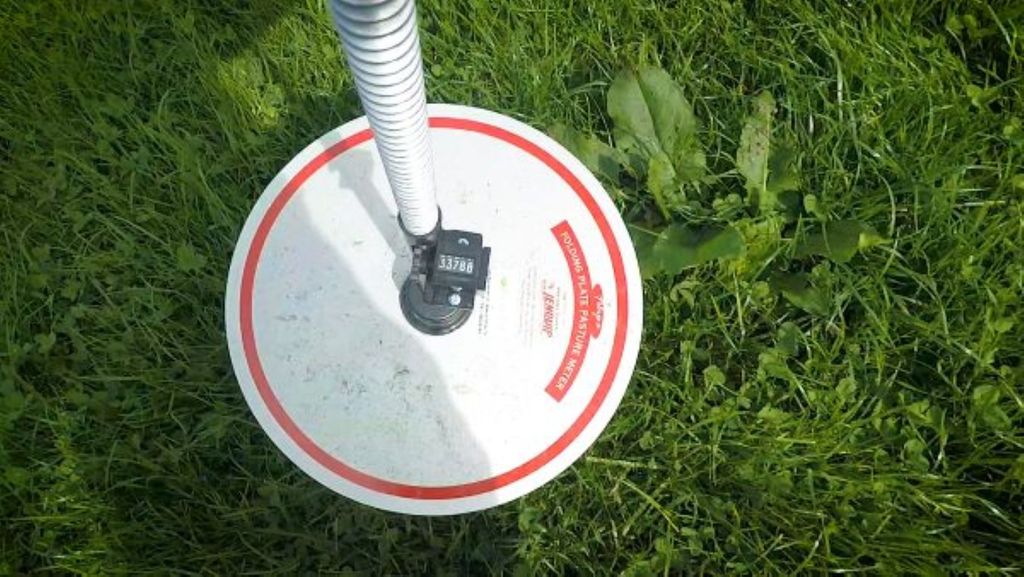
O’Donovan said many farmers, especially those in wetter areas, have always included a contingency of silage in their systems, “whether it comes wet in the start of the year or in the middle of the year”.
"Now it looks like now, especially on the eastern half of the country, that there is summer silage required.
"It might not be needed every year, but definitely there is a contingency that there's silage needed in the middle of summer. 2018 probably taught us that.
"It's probably coming back to making a contingency of silage available for livestock during that June, July period," he said.
The impact of warmer summer conditions have also been factored into the system at Teagasc’s Moorepark facility.
"It's one of the things we’re looking at more and more; we have to have silage available for the herd.
"It can be a short period, or it can be a long period. It was six weeks this year, it was two weeks in 2024.
"It is getting to the stage here where you have to have feed available for any of those dips in growth that can take place. Now it's beginning to be part of what we develop into the system,” O’Donovan said.
Summer silage
Teagasc recommends a summer silage contingency of 200-300kg of dry matter (DM) per livestock unit on the farm.
"The lessons from this drought and these droughts are when feed is in short supply, feed gets dear.
"It's obviously costly to make bales. They're costing between €45-50, full costs in. But if you don't have those bales, you're going out looking for feed, which gets very, very costly when you're in short supply.
"200-300kg in many respects of silage would have probably have got a lot of farmers out of that dip in grass growth this year, with some concentrate.
"That would alleviate the need for going for bought-in options. And that’s probably the resilience we want to build into the system," O'Donovan said.
"Ultimately, that silage has to come early in the year, unless it's carried over from the previous year.
"There’s no harm anymore in having silage at the end of the winter season. That's something that many farmers are already doing anyway.
"It's a contingency we have to go forward with from now on that, we have feed in the system that's just for dips in growth that take place," he added.
Timing
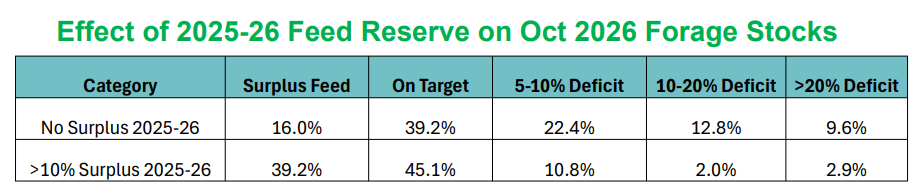
The National Fodder and Food Security Committee (NFFSC) recently heard how a strong recovery in grass growth since mid-September has resulted in a significant improvement in the national fodder supply situation.
The meeting was also told how the impact of the drought on winter fodder stocks was limited on farms with feed reserves from 2025/2026:
O'Donovan said the timing of first cut silage is very important when it comes to having a contingency.
"May is probably the month where you have peak growth, you have peak recovery, and that's probably the month that we need to focus on getting the first cut silage out.
"We had a peak growth curve of nearly 100kg DM/ha/day there in May. That's where you can get surpluses off and have it there for the summer.
"But these things are probably more about timing than anything, timing about nitrogen, timing about slurry and then timing about the cutting time," he said.
Reseeding
O'Donovan also said the consideration should also be given to the timing of reseeding, particularly on drier farms.
"Reseeding, in the winter areas, you'll get away with late May reseeds, because moisture in those soils.
"But in the drier areas, we definitely will be targeting for late April, early May reseeds to get the soil established better, and to get good growth production, from those reseeds in that first establishment year," he said.