Forestry stakeholders meet to discuss future of sector
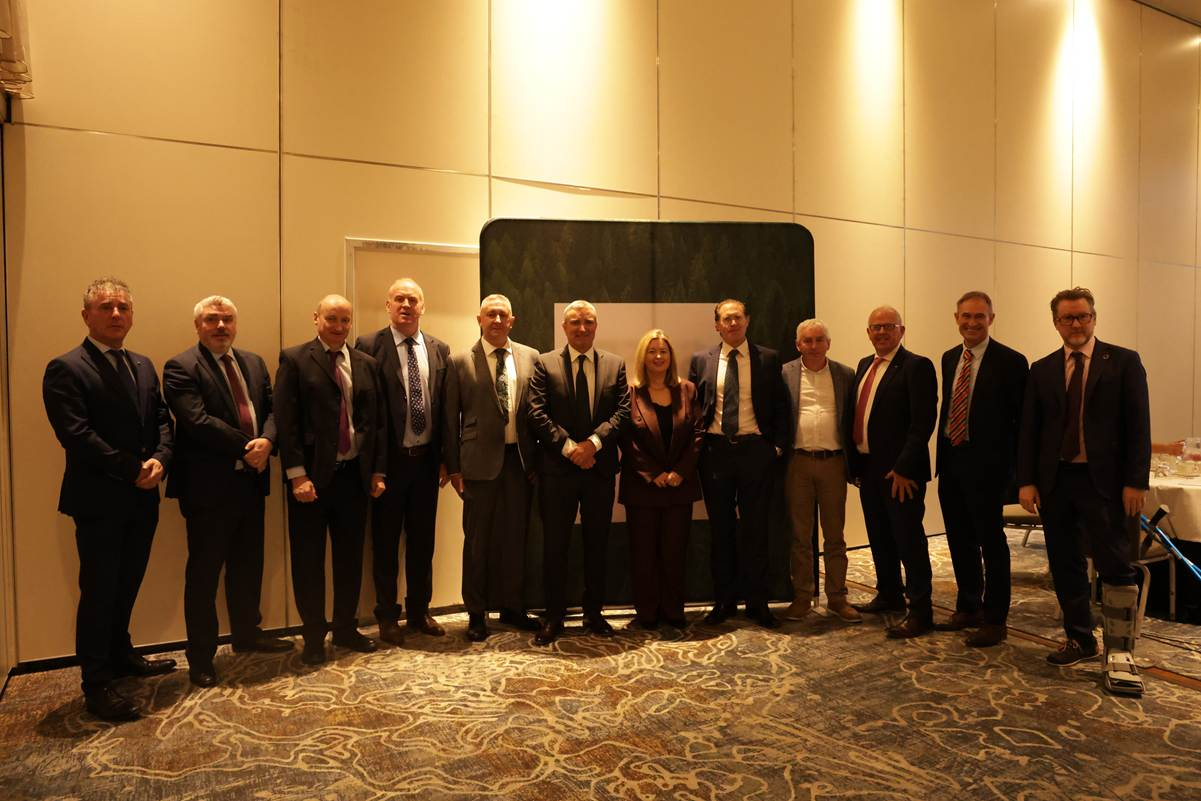
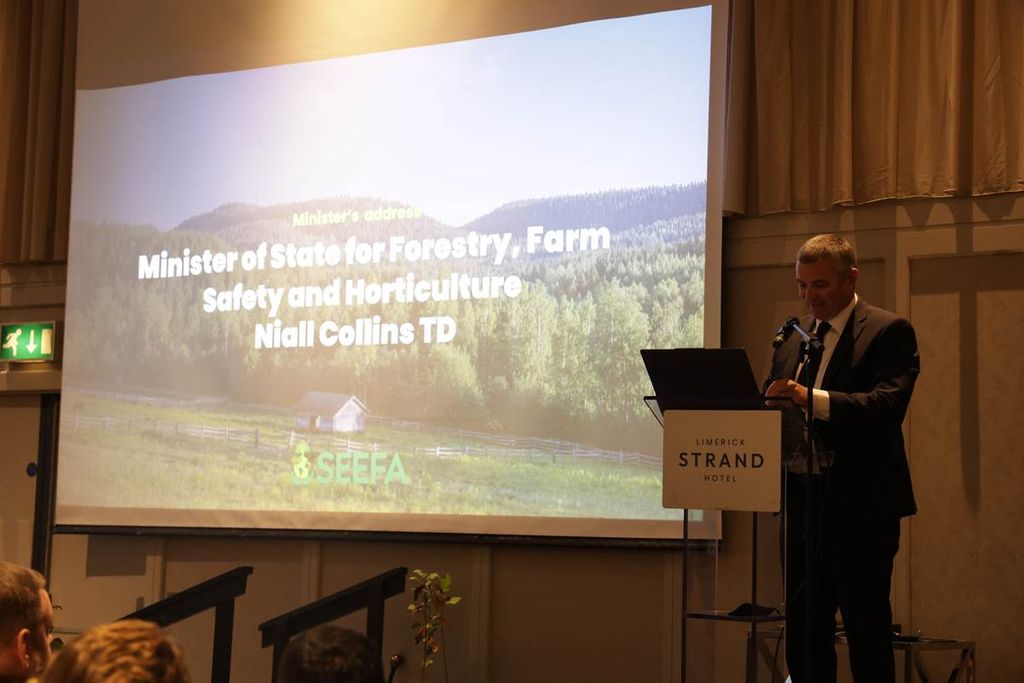
The Social Economic Environmental Forestry Association of Ireland (SEEFA) today (Friday, October 30) welcomed Minister of State Niall Collins, his department officials and a large gathering of stakeholders from across the forestry sector to its inaugural policy event as part of the association's Annual General Meeting at the Strand Hotel in Limerick.
Opening the event, SEEFA chairman Paddy Bruton welcomed the minister and the opportunity for direct engagement on the future of forestry, timber mobilisation and nature restoration in Ireland.
Bruton said: “This engagement builds on the positive and constructive relationship established with the department in recent years and reaffirmed SEEFA's commitment to working collaboratively with government to deliver forestry, climate and biodiversity objectives."
The event also provided an opportunity for those present to explore Ireland's Nature Restoration Plan, and how forestry and nature restoration can work together to deliver significant environmental, social and economic benefits.
Private forestry sector now larger than state sector
Addressing the large attendance, Paddy Bruton highlighted the growth of Ireland's private forestry sector, which has now surpassed the state sector in scale.
He stated: “This achievement has been made possible through decades of investment by both government and landowners, together with the expertise and dedication of nursery operators, foresters, forestry labourers, ecologists, archaeologists, harvesting contractors, machinery contractors and timber hauliers throughout the country.
"Forestry's success has been a collective effort involving thousands of people across rural Ireland," he added.
Vision for next Forestry Programme
SEEFA reiterated its commitment to helping shape the next Forestry Programme through a series of recent policy documents and submissions.
These included:
- Towards the Next Forestry Programme - Implementation Constraints and Opportunities for Refinement: A Policy Submission by SEEFA;
- UCD Capstone Report - Strengthening Ireland's Afforestation Delivery Model: An Economic Viability Study;
- Woodland Environmental Fund (WEF) submission;
- Common Agricultural Policy (CAP) submission;
- Updated Mid-Term Review submission.
The association is aiming to encourage at least 20,000 farmers participating in the next agri-environment scheme to plant land under the next Forestry Programme or take part in measures under Ireland's Nature Restoration Plan.
SEEFA has said that achieving this objective will require strong integration between the next Forestry Programme and the next CAP framework.
Response to Storm Éowyn
SEEFA also paid tribute to the industry's response to Storm Éowyn earlier this year, describing it as one of the private forestry sector's most significant operational challenges.
SEEFA chair, Paddy Bruton said that, working closely with the department, they addressed licensing and operational barriers, allowing unprecedented volumes of windblown timber from predominantly farmer-owned forests to reach domestic and international markets.
“Today, Irish timber is being exported through several major ports, while containerised timber is reaching customers in markets as far away as Asia," he said.
Timber mobilisation and certification
SEEFA highlighted timber mobilisation as a key strategic priority for the sector going forward.
The association warned that certification requirements could become one of the most significant challenges for private forest owners and timber mobilisation in the years ahead.
SEEFA has outlined that it is ready to work with the government and stakeholders to deliver a range of national objectives, including:
- Achieving Ireland's afforestation targets;
- Mobilising greater volumes of private sector timber;
- Supporting delivery of the Nature Restoration Law;
- Expanding carbon sequestration and climate action measures;
- Strengthening rural economies and employment opportunities.
Towards the end of today's event, the forest nursery sector gave a presentation outlining plans to ramp up the production of Native Provenance stock and outlined the many challenges involved.
The presentation also highlighted the dramatic decline of commercial timber-producing species being sold from nurseries over the last decade.
SEEFA representative, Teige Ryan said: “While we all welcome the expected increase in native provenance stock coming from Irish nurseries, government should be concerned with the drop-off in the commercial plantings which produce home-grown timber for housing and construction sectors."
Closing the event, SEEFA said that despite the challenges faced by the sector in recent years, Irish forestry is entering a period of significant opportunity," Bruton said.
"The private forestry sector has repeatedly demonstrated its resilience, adaptability and commitment."