Parasites cost farmers €181m per year

Parasite incur a cost of about €181 million on farmers every year an Oireachtas Committee has heard this evening (Wednesday, November 4).
A review of the Veterinary Medicinal Products, Medicated Feed and Fertilisers Regulation Act 2023 is being discussed at the Joint Oireachtas Committee on Agriculture, Food and the Marine.
In her opening statement to the committee, head of One Health, Veterinary Medicines, and Antimicrobial Resistance (AMR) Division at the Department of Agriculture, Food and the Marine (DAFM), Dr. Caroline Garvan said:
"The Veterinary Medicinal Products Act is part of a suite of national and European legislation aimed at modernising the regulation of the manufacture, supply and use of veterinary medicines, increasing the availability of veterinary medicines and tackling the global threat of antimicrobial resistance.
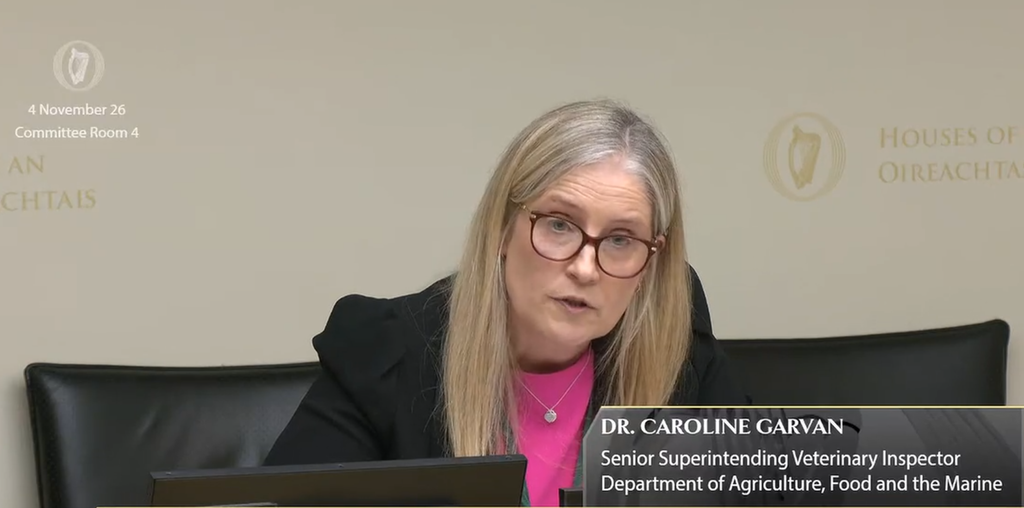
"The [agriculture] minister implemented these regulations, in part. However, national discretion was permitted in a limited number of areas to be determined by national law or procedures, and this was achieved through the Veterinary Medicinal Products, Medicated Feeds and Fertiliser Regulation Act."
Antiparasitic products became prescription only medicines (POM) on December 1, 2025, bringing Ireland into line with the rest of the EU.
DAFM has said that this change in route of supply was necessary due to the development and spread of antiparasitic resistance.
This is a significant challenge in the animal health sector in Ireland, adversely affecting animal health and welfare and impacting farm productivity and profitability.
Cost of parasites
It is estimated that parasites incur a cost of an estimated €181 million to Irish farmers every year through lost productivity, according to DAFM.
Increasing prevalence of resistance to treatments means thisproblem is becoming harder to manage and represents a threat to food security, the head of AMR at DAFM stated.
"Upregulation aims to ensure the prudent use of these important veterinary medicines and act to safeguard their efficacy into the future," Dr. Garvan said.
"To date, 175,000 prescribed products have been dispensed inrelation to antiparasitics with 89,000 of these being dispensed by licenced retailers.
"The department engaged with stakeholders throughout 2025 and 2026, and continues to do so, on all issues raised in relation to the impacts of the change in route of supply through letters, webinars and in person meetings."
DAFM said it has worked to address key concerns regarding potential changes in the supply chain, in particular the narrowing of the distribution chains and increased cost for farmers.
Routine department inspections of licenced retailers recommenced after June 1, 2026, following the six-month period allowing the rollout of the new systems across the industry.
"The focus of these inspections has been to positively engage with the licence holders and work to bring everyone into compliance with the requirements of the legislation," Dr. Garvan said.
DAFM acknowledged that changes in legislation change have been "challenging" for stakeholders.
"However, it is important to emphasise that this legislation is about protecting animal health and welfare and public health," she said.