MEP slams new CAP proposals as 'serious disappointment'

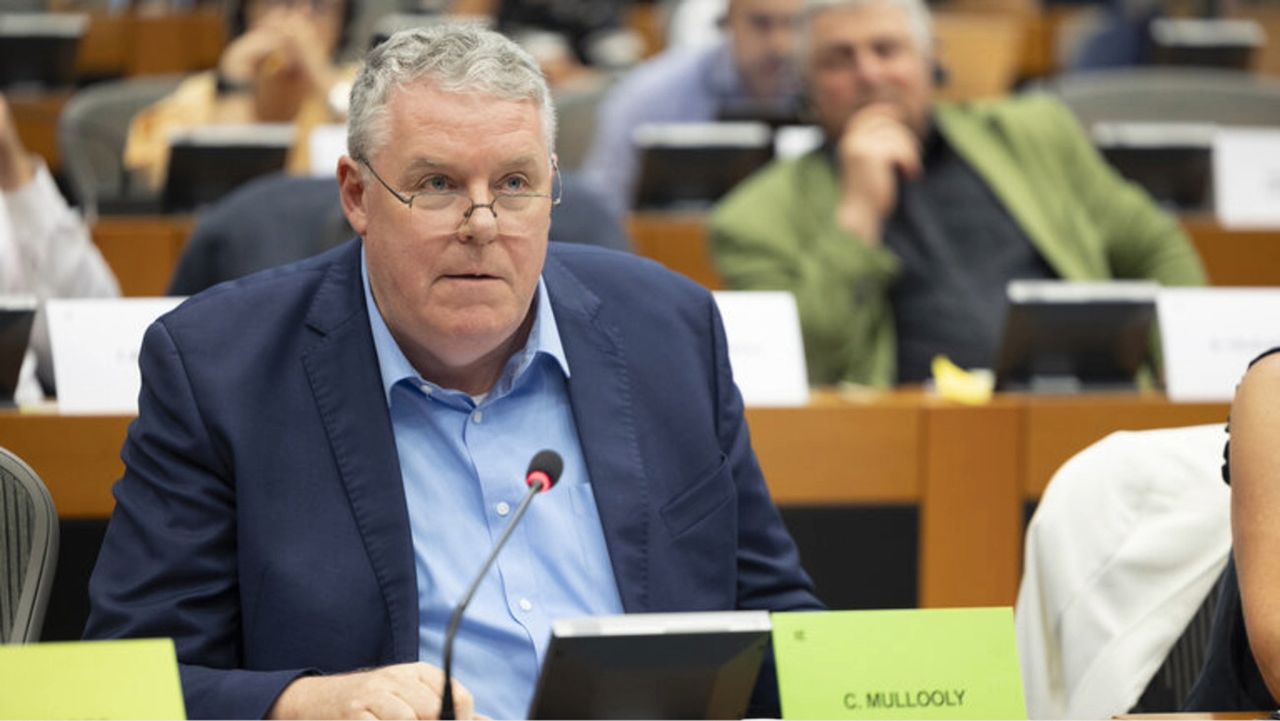
An Irish MEP has slammed the new proposals on the EU budget and the Common Agricultural Policy (CAP) as a "serious disappointment" for Irish farmers and rural communities.
Ciaran Mullooly was responding to proposals over the weekend from the Irish government on behalf of the Council of the EU (of which Ireland currently holds the rotating presidency) on the EU's long-term budget from 2028-2034 and the next CAP.
Under those plans, the budget for the CAP over that seven-year period would not be improved over what the European Commission proposed last year, meaning the next CAP would only have funding of a little over €290 billion, down over 20% on the allocation made for the current CAP.
Commenting on the plans put forward by the Irish government, Mullooly said the government "has chosen austerity over ambition".
According to the Independent Ireland MEP, the Irish proposal could ultimately slash the CAP budget by 25% compared to the current budget.
He claimed the government is "turning its back on a whole generation of young farmers by failing to properly fund a new accession scheme for farmers in its proposals for the new Common Agricultural Policy".
Mullooly said the Irish government had "failed abysmally to increase the agriculture budget at this most crucial stage in the negotiations".
"The Irish government and [its] MEPs talked up the whole generational renewal policy for months Dublin and Brussels but have now effectively killed it off by not successfully negotiating the cash needed," he claimed.
"This is a bitterly disappointing proposal from the Irish government. They’ve chosen austerity instead of ambition."
"These reductions are completely unacceptable and fail to protect our rural communities. On top of that, we now risk having the worst of both worlds: a budget well reduced in real terms, which sits within a structure with limited ringfenced money for our farmers and regions," the Midlands North-West MEP said.
"This is not a budget that protects rural Ireland. It is a budget that asks farmers, rural businesses and local communities to absorb the consequences of a smaller EU envelope," he added.