Could a new shipping option be on the horizon for Irish cattle exporters?

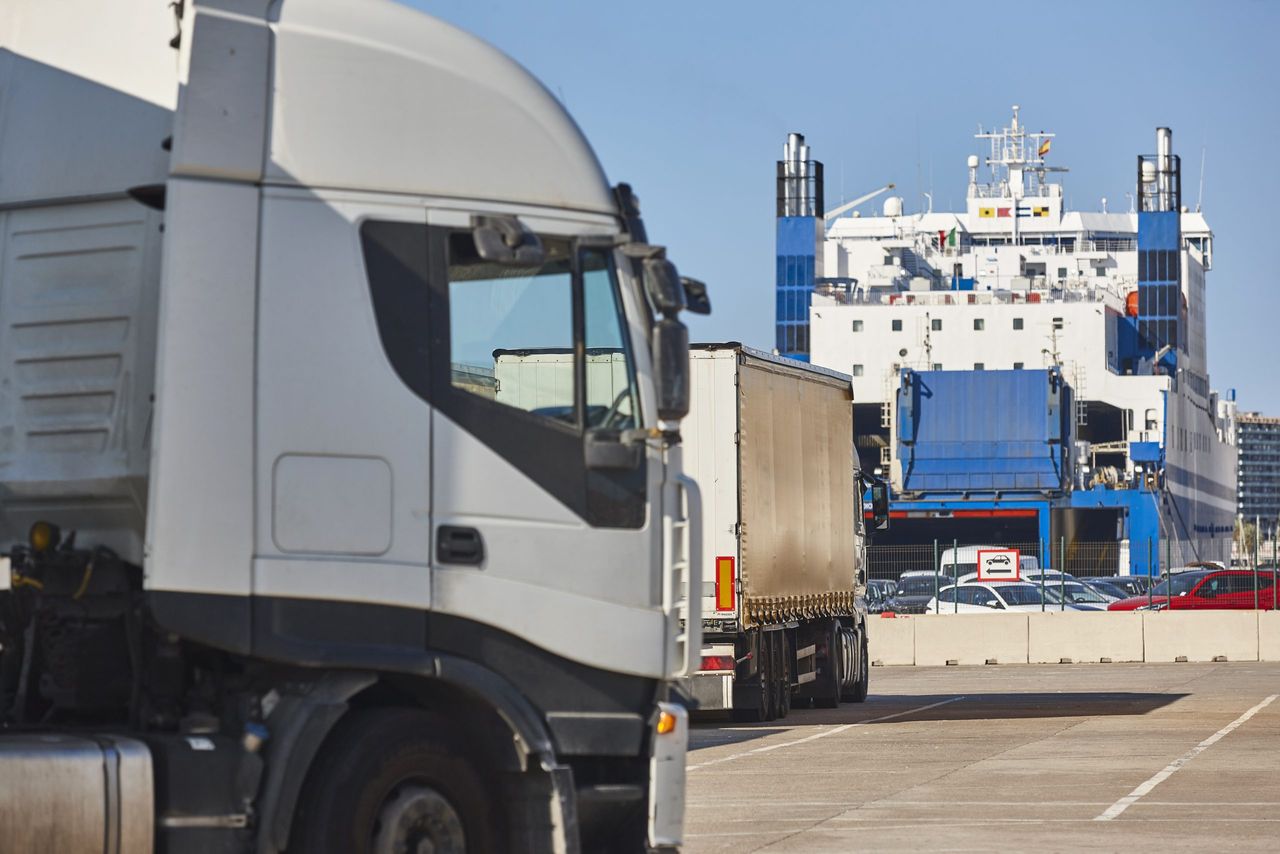
Industry stakeholders are watching developments closely as speculation grows around future services for shipping Irish cattle to overseas markets.
In August this year, Brittany Ferries confirmed to Agriland its plans to end its livestock transport services from Ireland to mainland Europe, leaving only one ferry company currently facilitating a cattle export service on this route.
The spring 2027 calving season is fast approaching and with that comes the peak Irish calf export season.
However, industry concerns are mounting at the current reduced export capacity for next year due to the reduced shipping services available for Irish calves.
There has been a significant level of discussion among Irish-based cattle exporters in recent days about a new roll-on/roll-off ferry that is set to be approved for exporting Irish cattle from a port in Munster.
Shipping options
Agriland was in contact with several key Irish-based cattle exporters who confirmed they were aware of a ferry travelling from Cork that could potentially be approved to transport livestock.
In a statement to Agriland the Department of Agriculture, Food and the Marine (DAFM) stated: "In order for roll-on/roll-off vessel (RoRo/ferry) to be allowed carry vehicles containing live animals out of Ireland, it must be approved by the Department of Agriculture, Food and the Marine in accordance with the provisions of Statutory Instrument (S.I.) No. 580/2007 - Diseases of Animals (Animal Transport) (Roll-on/Roll-off Vessels) Order 2007."
"Currently there is no RoRo vessel that operates out of the port of Cork, approved by the department."
DAFM also said that does not comment on applications received for approval under the above regulation.
It remains to be seen if an additional vessel will receive DAFM approval to transport livestock from Cork but current indications from Irish-based cattle exporters is that if approved, the ferry would not be bringing calves, only older cattle.
The intra-community trade and export of live animals to third countries from Ireland is a private commercial activity which is regulated by DAFM in accordance with EU and national regulations.