Irish-led study highlights potential for wetlands farming

A new Irish-led study has highlighted the potential for wetlands farming.
There is growing evidence that paludiculture, or farming on wet or rewetted peatlands, may offer a dual solution for preserving carbon and creating farming income.
This is the finding of the study from Palus Demos, a €10 million Horizon Europe large-scale paludiculture trial project, with farms in Ireland, the UK and the Netherlands.
The goal of the project is to turn rewetted bogs into profitable farms and to develop markets for wetlands crops.
Wetlands farming
The paper, 'Transitioning from Degraded Peat to Paludiculture: Evidence-Based Roadmap for Research and Practice', published this month in the journal Land, is led by Lisa Jessen and Dr. Florence Renou-Wilson of University College Dublin.
It has co authors from across the Palus Demos multi-state consortium including Liverpool John Moore's University, Manchester Metropolitan University, Lancashire Wildlife Trust, University of Galway and University of Amsterdam.
"Paludiculture, the sustainable productive use of wet and rewetted peat soils, offers a dual solution for preserving soil carbon and reducing greenhouse gas emissions whilst offering a form of income for landowners/farmers," the authors said.
"Despite paludiculture being in its infancy, it has demonstrated potential as a viable option for land managers to remain productive while maintaining important carbon, biodiversity and climate goals."
Path to mainstream practice
This major academic review sets out a "clear path to take paludiculture from small pilots to mainstream practice", calling for large‑scale, multi‑year field trials, specialised low‑impact harvesting equipment and functioning markets.
The authors find that most current evidence comes from short‑term, small‑scale sites, heavily concentrated in Germany and the Netherlands, making it hard to transfer results to other regions.
The way forward, according to the report's authors is "now well-defined; long‑term demonstrations that follow crops from planting through several harvests, alongside targeted investment in machinery for soft peat soils and coordinated market and supply‑chain development".
As part of the research, the team has produced a downloadable database of information sources relevant to paludiculture activities in temperate peatlands.
Project
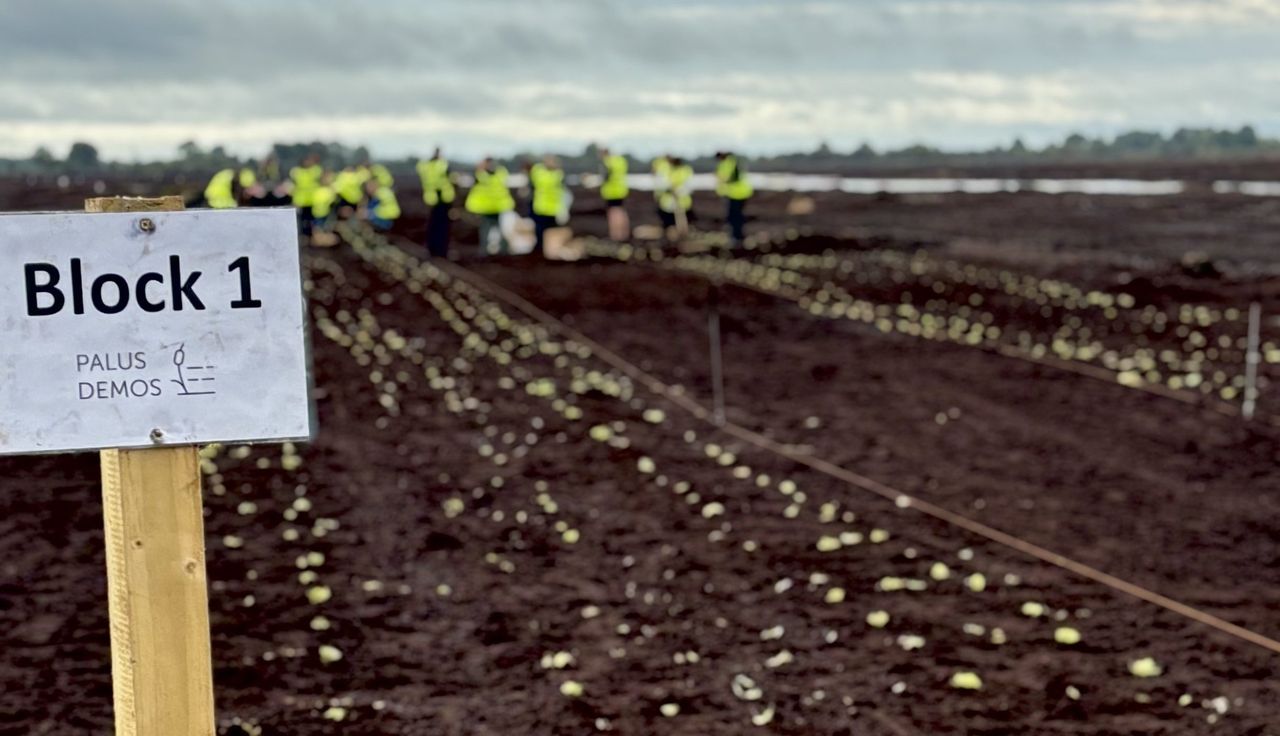
The €10m Horizon Europe Palus Demos project, led by the University of Galway, has large-scale demonstration sites in Offaly, Manchester and the Netherlands.
Researchers and practitioners across 26 partners are working together to run multi‑year trials from establishment to repeated harvests, testing low‑impact harvesting approaches on peat, and co‑developing markets for paludiculture products with partners.
Palus Demos project coordinator Niall Ó Brolcháin from the University of Galway congratulated the team on this contribution to paludiculture research in Europe.
"This research is the work of 26 partners across Europe, including soil and climate scientists, farming practitioners and conservation bodies," he said.
"It’s timely synthesis of the published knowledge on paludiculture at a time when we are under pressure to find and implement creative climate solutions that offer sustainable incomes from working farms."
Paludiculture crops in the trials include sphagnum moss as a growing medium for the horticulture sector, typha reed as biomass for the construction and textile sectors and food crops such as berries and vegetables.
The Palus Demos project is tracking these crops from planting through several years of harvests, working with partners to adapt harvesting equipment for wet peat soils and developing market pathways for the biomass produced.
The aim is to generate the real‑world data, practical solutions and commercial models needed to move paludiculture beyond pilots.
Other partners on the project include Peatland Finance Ireland, Forum Connemara and Growing Media Ireland.
Incentive
“Without large‑scale, long‑term demonstration sites that follow crops over multiple harvests, alongside targeted investment in machinery and market development, paludiculture will remain a niche option rather than a scalable climate and biodiversity solution,” the authors caution.
"Further investigations into the viability of wet pastures for grazing is needed, especially for regions with a strong history of livestock farming where a transition to crop-based paludiculture may be unpopular.
"Ultimately the success of transitioning to wet agriculture on peat soils will hinge on the establishment of appropriate incentive frameworks that provide clear operational procedures that deliver sustainable outcomes, supporting long-term environmental benefits."