Watch: The enthusiasts preserving the ancient art of loy digging

Loy digging is an art form with a history stretching back many decades, pre-dating the use of the plough within Irish agriculture.
Many believe that loy spades were brought to Ireland from South America: a technology to accompany the first imports of potatoes from that part of the world.
Long before the advent of ploughing, loys were used across the island of Ireland to prepare ground for the planting of crops.
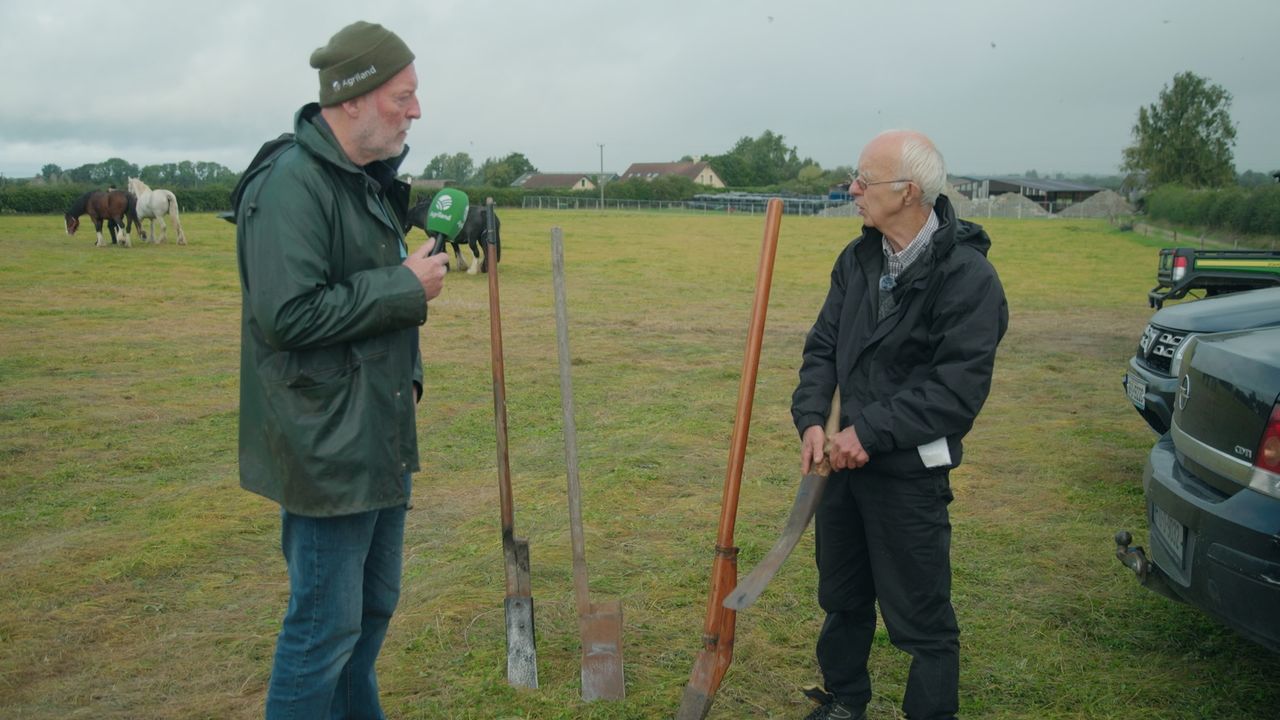
In essence, a loy is an early Irish spade with a long heavy handle made of ash, with a narrow steel plate on the face and a single footrest.
The practice of digging with loys had almost died out until a group of enthusiast revived what is a unique art form that reflects the very heart and soul of Ireland’s farming history.
It has been estimated that seven people can dig an acre of ground a day using loys.
A fervent enthusiast of loy digging is John White, from Moylough in Co Galway.
Prior to competing at this year's National Ploughing Championships at Screggan, he took time out to profile the history of this unique ‘sod turning’ technique for Agriland.
He said: “Most of the loys used in competition have their origin in the Longford/Leitrim area.
“This is because the people who started up the Loy Association come from that part of the world."
But as John also pointed out, great ingenuity was brought to bear as loys were developed to meet the soil conditions prevalent in a specific area.
“Loys can be easily adapted for those who work with either their left or right foot.
“In addition, the metal face of the loy can be broadened, again to reflect specific soil conditions.
“The brógín was a specific type of loy used in the Galway/Mayo region.
"It had a split shaft, which meant that it could be easily replaced in the event of a breakage taking place," he explained.
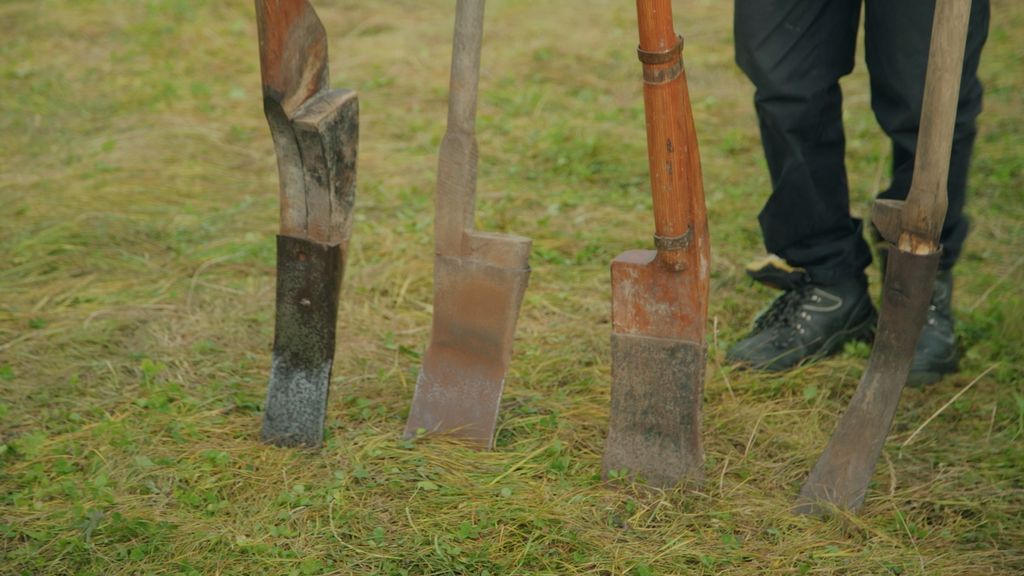
Loy digging had almost died in Ireland a number of years ago, only for it to be revived on the back of the efforts made by a relatively small number of enthusiasts - John White being one of them.
He added: “The Loy Association was established to ensure this unique art form would be retained for the benefit of future generations.
“Association members compete at ploughing matches held throughout the year. And we want to build on all of this for the future.”