How does your herd's milk compare to the average?

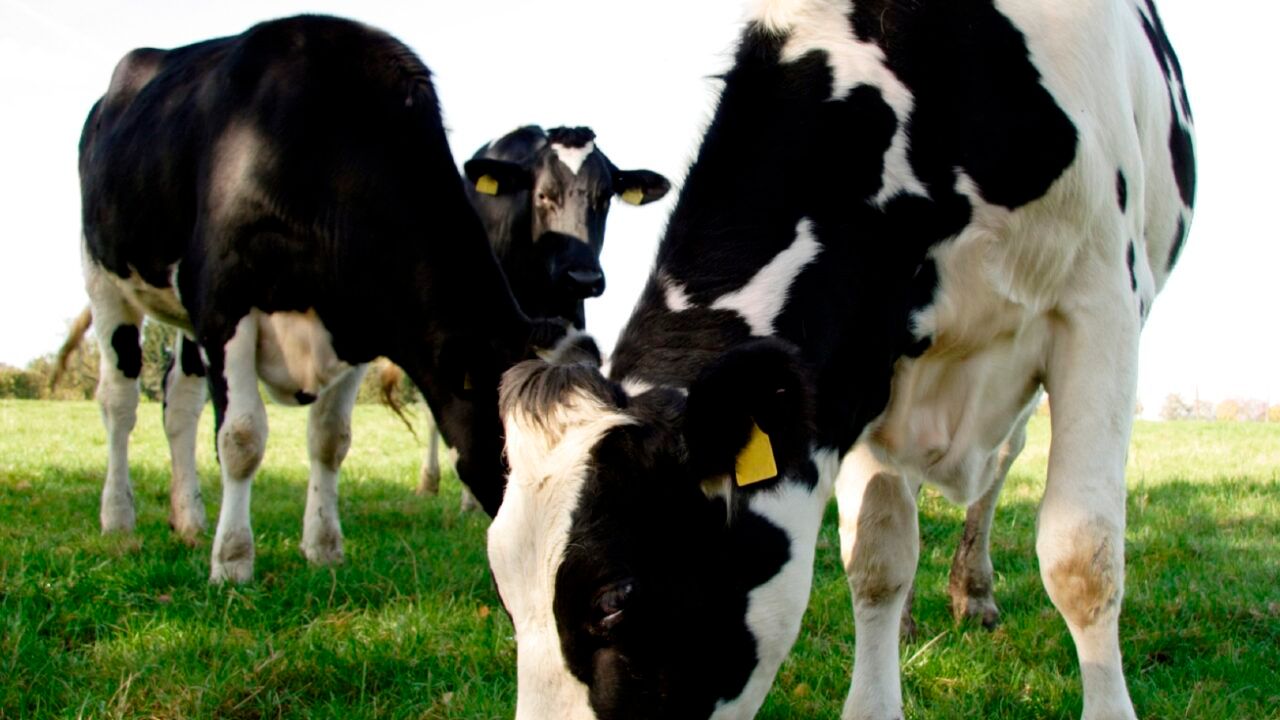
Now we have entered the autumn months, farms will be looking to keep milk production stable ahead of the expensive winter months.
But with the spring calving lactation in its final stages, what should milk production actually be looking like?
A handy way to benchmark your herd's milk production is to compare your figures to the national average, which is obtained by the Irish Cattle Breeding Federation's (ICBF) milk recording data.
Production
The latest data from the Irish Cattle Breeding Federation (ICBF) shows that 1,119,949 cows have been recorded so far in 2026.
This is a 0.8% reduction from the same period in 2025, where some 1,128,467 cows had been recorded.
Based on the data, 8,902 herds have completed a milk recording so far in 2026, down from the 9,069 herds which had been recorded by the week of the Ploughing Championships in 2025.
The number of herds that have recorded between September 8 and September 18 was 1,128, which consisted of 123,544 cows.
The herds that did record had an average herd size of 110 cows.
Average milk yield of these herds that recorded was 19.16kg/milk/cow with 4.61% fat and 3.86% protein.
This equates to an average of 1.62kg worth of milk solids/cow/day at the moment.
The average somatic cell count (SCC) for the herds recording in the past 10 days sits at 187,000 cells/ml.
This has been creeping up over the last few weeks and is something farmers should be wary of.
Milk recording
Recording your milk can quite often be seen as a costly action (about €12/cow/year), and can disrupt the milking routine at a time and labour may be short, but the benefits speak for themselves.
Regular recording will allow for constant tracking of SCC off each cow and identify repeat offenders.
It could also decrease your herd’s SCC and improve your milk price, as well as generating a farm summary on mastitis control and areas to be improved.
It is particularly useful to see what cows are performing and what cows are not, in terms of production and hygiene.
This can make breeding and culling decisions relatively easy and data driven.