How can good ventilation improve calf welfare?
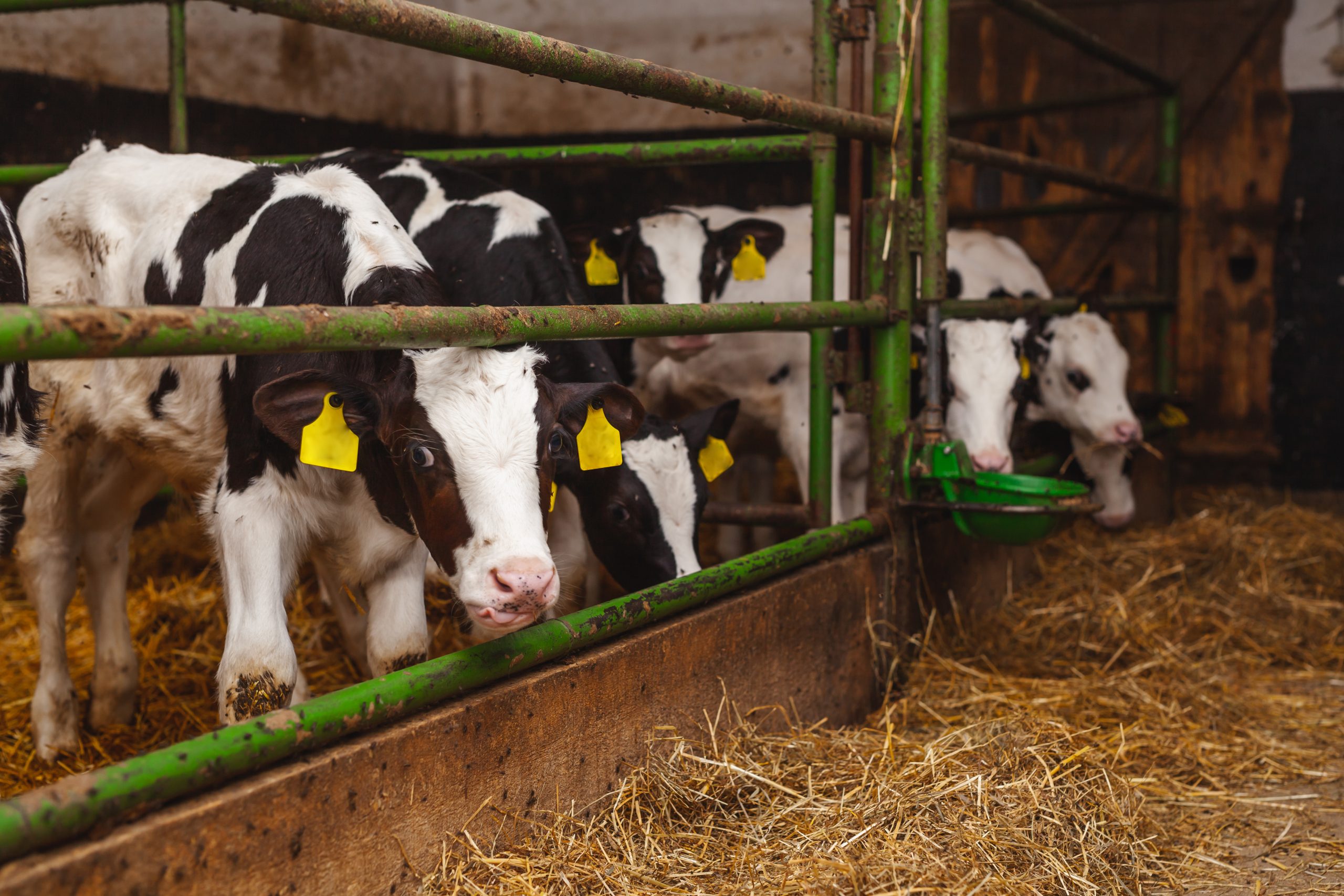
Ventilation will be key to calf health over the coming months according to Gareth Beacom, beef and sheep adviser with the College of Agriculture, Food and Rural Enterprise (CAFRE).
Beacom has said that with store calf prices rising by over 50% in the last 12 months, ensuring the health and welfare of these calves has arguably never been more crucial.
The beef and sheep adviser also said that regardless of whether calves have already been bought, are yet to be sold, or are being kept for grazing next year, their health over the winter months will directly impact physical performance – and farmers' bottom line.
Beacom is keen to highlight that fresh air is a natural disinfectant and improving air flow in sheds will provide multiple benefits for years to come.
Calf health
He added: “Ventilation is key to an animal’s health over the coming months.
"The two key components of ventilation are that there is sufficient outlet and inlet areas and that the inlet is above the head height of the animal for effective ventilation whilst not causing a draught to the animals."
CAFRE has advised farmers that the amount of outlet ventilation needed in a shed depends on two key factors: the stocking density and the distance between the air inlet and outlet.
It has highlighted that as a general rule of thumb - based on recommended stocking densities and a distance of 2m between the outlet and inlet - is that animals over 500kg require 0.1m2 per animal (as well as 0.04m2 for young calves).
CAFRE said that this would mean a five bay shed, for example approximately 23m long with a ridge gap of 0.2m (8in ) will have an outlet of 4.6m2.

This would be enough of an outlet for 46 cattle over 500kg, or 32 cows and calves.
It advises that the open ridge should be left open to not restrict any air flow.
However if it needs to be covered to prevent rain coming in, then the height of the cover should be 50% of the width of the ridge (i.e. if the ridge is 0.3m in width then the cover should be at least 0.15m clear from the roof).
CAFRE has also highlighted that angled uprights from the ridge gap offer a great alternative to traditional ridge covers.
If an open ridge is not an option, spaced sheeting can provide an effective outlet provided it is adequately spaced throughout the building.
Inlet ventilation
According to CAFRE, once the outlet area has been calculated then the inlet area can be worked out - this should be at least twice or preferably four times the outlet area (0.2-0.4m2 per animal over 500kg).
It should be positioned above the head height of the animals.
These can be created with spaced boarding or using Yorkshire boarding along the length of the building.
CAFRE has outlined that inlets along the sides of the building are usually sufficient unless a shed is excessively wide (over 25m in width).
This will then require inlets along the gable ends also.
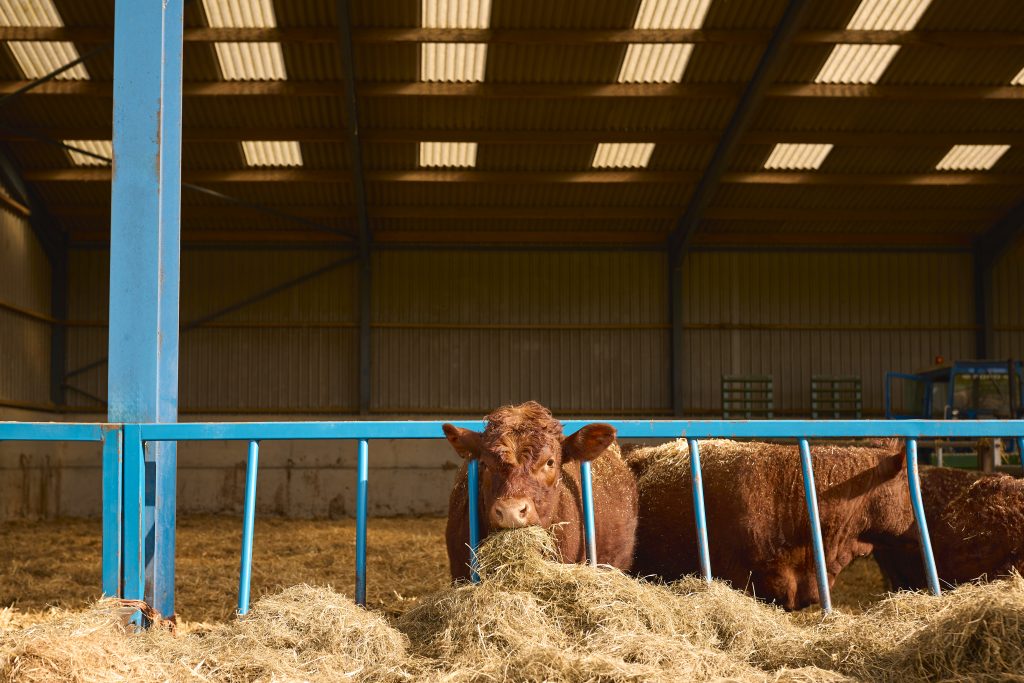
In comparison to spaced boarding and Yorkshire boarding, vented sheeting offers considerably less air flow and inlet for the building
In order to create spaced boarding, it is necessary to use a 100mm board with a 10mm gap in between.
Yorkshire boarding is usually constructed using 150mm boards with a 50mm gap between.
This, according to CAFRE, allows more air to enter via the larger spaces and with the overlapping rows blocking most of the rain also.
New shed
Farmers should be aware that the positioning of a shed is crucial to maximise airflow.
"To take advantage of prevailing winds, the shed should be orientated at a right angle to the wind direction and placed away from obstructions such as buildings and tall trees.
"This setup enhances airflow through designated inlets.
"However, if it is an open-sided building then the open side should be positioned wherever it gets the most protection from the prevailing wind whilst still allowing adequate airflow," CAFRE has detailed.
How to improve ventilation
If farmers believe there are ventilation problems in existing sheds there are modifications they can make.
CAFRE has highlighted that one solution is to increase the size or efficiency of the air inlets by replacing spaced boarding or solid side sheets with Yorkshire boarding, to allow better airflow.
"Windbreakers are a flexible option to enable controlled ventilation while preventing rain from getting in.
"Alternatively, the bottom edge of the side cladding or sheets can be angled outward from the wall, creating a clear gap between the wall and the cladding.
"This design channels incoming air upward as it enters, improving internal air circulation," it detailed.
But if farmers need to modify the outlet for ventilation this can be more challenging.
In this instance, CAFRE advises possibly raising one or two roof sheets per bay to create additional outlet space.
"These sheets can be replaced with wider ones to allow for overlapping, which helps prevent rain ingress," it added.
Or if the roof has a ridge cap, it may be possible to raise it or widen the existing gap to improve airflow.
Fans
One other option for farmers to consider is mechanical ventilation systems, particularly ventilation fans or extractor fans.
"Ventilation fans draw in fresh air from outside, hence a good outlet is essential.
"These are particularly useful in stuffy conditions when airflow is poor or when the sitting of a shed doesn’t allow for much natural ventilation.
"They can also be used where there isn’t enough of a stocking density in the building to create a ‘stack effect’ i.e. in calf sheds or understocked sheds," CAFRE has outlined.
But extractor fans can also help with the extraction of moist air from the ceiling areas of sheds with poor outlets, although they predominately work better in smaller confined areas.
Although there is an upfront cost associated with ventilation improvements, farmers have been advised that "the long-term benefits make it an extremely worthwhile investment".
CAFRE has stated that the health benefits from increased airflow can "lead to increased daily live weight gain, reduced reliance on medication, and in severe cases, lower mortality rates".
It has also stressed that the movement of fresh air through sheds is essential for maintaining animal health and overall productivity.