Global grain markets face uncertainty as export caps on staple crops grow


Economists point to national export restrictions on staple grains and oilseeds as having a detrimental impact on global free trade.
The crops in question are: wheat, rice, soyabeans, and maize.
However, according to a recent report from the Organisation for Economic Co-operation and Development (OECD), national export restriction practices are implemented on a sustained basis by a small number of countries.
Moreover, there is every prospect of these being maintained into the future.
Export restrictions
The most recent update of the OECD database on Export Restrictions on Staple Crops shows that between July 2025 and June 2026, export restrictions increased modestly.
This followed a sharp decline between mid‑2024 and early 2025.
Despite this increase, the total remained well below the exceptionally high levels recorded in 2024.
Wheat was the most targeted commodity, accounting for the largest share of newly introduced measures.
Export restrictions remained highly concentrated in a few countries, with Russia, India and Argentina accounting for around 75% of measures in force.
The composition of newly introduced restrictions shifted towards a combination of export taxes and export quotas.
Meanwhile, no new export prohibitions or minimum export prices (MEPs) were introduced and several existing MEPs were removed.
The OECD analysis also highlights the persistence of export restrictions across reporting periods.
A related issue is the prevalence of longer-lasting measures, particularly export prohibitions and MEPs, which were predominantly open-ended.
The OECD has tracked export restrictions on staple crops since January 2007 as part of its contribution to the Agricultural Market Information System (AMIS) initiative.
Export restrictions on staple foods are often introduced when food prices rise or when an increase in prices is expected.
The objective of introducing such measures is mostly to increase availability and to lower prices of staple foods on the domestic market, as well as to insulate domestic markets from price surges and volatility on the international market.
Past experiences show that these policies can be detrimental to domestic and global markets.
Their effectiveness in stabilising domestic prices and increasing domestic food availability and access is unclear, with studies showing mixed results depending on the study, country, and commodity.
Staple crops
Staple crops are often the primary target of export restrictions and these measures contributed to price increases during the 2007‑2008 food price crisis.
Restrictions on staple crop exports also emerged early in the COVID-19 pandemic.
Approximately 75% of export restrictions in force during the reporting period were implemented by three countries: Russia, India and Argentina.
Russia has the highest number of active export restrictions on staple crops amongst all AMIS members, followed by India, Argentina, and Ukraine.
The duration of export restrictions is another important characteristic of these measures. While some restrictions are introduced with a specified end date, others remain in force without a clear indication of when they will be lifted.
Maize
The most recent report from OECD confirms that from July 1 2025 to June 30 2026, four countries had export restrictions on maize: Argentina, China, Russia and Ukraine.
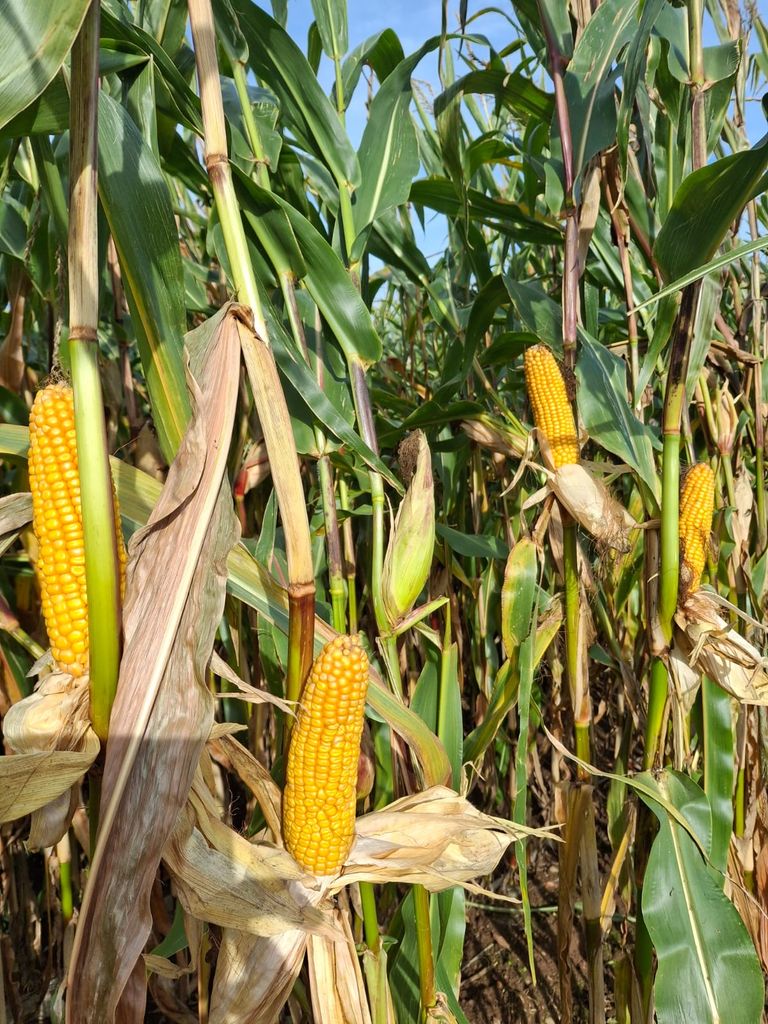
This period was characterised by significant policy adjustments in Argentina, including temporary suspensions and subsequent reductions of export taxes, and by the introduction of Russian export quota measures.
Export taxes remained in place in Argentina and Russia, while China and Ukraine maintained export licensing requirements. Ukraine also maintained an MEP introduced in 2024.
Wheat
Five countries had export restrictions on wheat: Argentina, China, India, Russia, and Ukraine.
Argentina had an export tax in place throughout this period. China had a licensing requirement in place during this entire period, and India had an export prohibition, an export quota, and a licensing requirement in place.
Russia introduced a new export quota in 2025 and had an export tax in place throughout this period. Ukraine had a licensing requirement and MEP in place during this period.
Rice
Where rice is concerned, the OECD report highlighted the use of export restrictions by six countries: China, Egypt, India, Indonesia, Russia, and Vietnam.
Egypt maintained its export prohibition while China, India, Indonesia, and Vietnam maintained export licensing requirements.
India introduced additional licensing requirements with exemptions for Bhutan and a quota for exports to the Maldives.
Meanwhile, Russia removed its remaining rice export prohibitions but introduced export taxes and quotas.
Argentina had no rice-related export restrictions in place following the removal of its export tax in January 2025.
Soyabeans
The OECD report indicates that it shows that from July 1, 2025 to June 30, 2026, only three countries had export restrictions on soybeans.
Argentina had an export tax in place throughout the entire period, with a temporary three-day relaxation in September 2025.
Ukraine added an export tax at the end of 2025 and maintained its MEP introduced in 2024.
Russia maintained its export tax and added an export quota from the beginning of 2026.