First quarter of 2026 could see 'above average rainfall overall'

March currently has "the highest likelihood of above average rainfall" in the first three months of 2026 according to latest seasonal forecasts.
The Copernicus Climate Change Service (C3S) seasonal models for Ireland for the months of January, February and March 2026 suggests there may also be "above average temperatures".
"Rainfall amounts are less certain with the potential for wetter than average conditions overall," according to the C35 seasonal models.
The general outlook is that there is the "potential for wetter and drier spells" within the first quarter of next year.
2026
According to Dr. Pádraig Flattery, senior climatologist in Met Éireann's Climate Services Division, over the last few decades Ireland has become a warmer country and this trend will continue in 2026.
"The fact that we are a warmer country means we're also a wetter country.
"The atmosphere for every one degree of warming that we have can hold around 7% more moisture.
"So that means when rain does come across the Atlantic that atmosphere can then hold more of that moisture and it means when rainfall falls then there's more rain to fall essentially and the rainfall tends to fall heavier," Dr. Flattery warned.
He said climatologists study the longer period of time and track climate over 30 year periods and research shows that the length of the growing season in Ireland is increasing at the majority of Met Éireann's stations due to the warming climate.
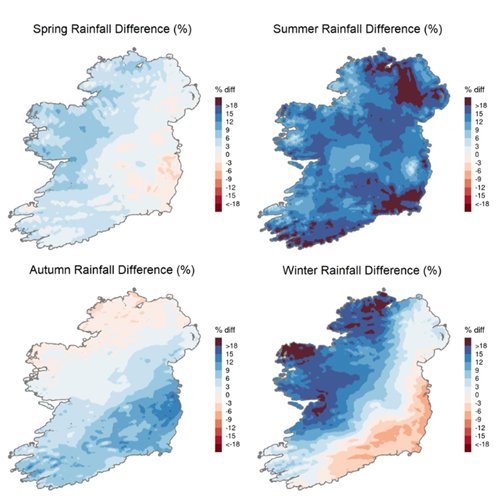
"The latest 30 year period is 1991 to 2020 and if we compare it to 1961 to 1990 - so over that 60 year period - we have gotten 7% wetter on average and 0.7 degrees warmer - which may not seem like a lot but in the grand scheme of things is a huge increase in that short period of time.
"We have a longer growing season now because Ireland is just warmer than we used to be, winters aren't as cold and Spring tends to start earlier.
"The growing season is increasing which may sound like a good thing - it will mean grass will grow for longer, crops can be sown earlier but it also co-incides with this wetter weather that we are getting as well.
"That means that we're also seeing increased heavy rain fall events which means that crops will be washed out of the soil or farmers cannot get into plant them and soils are not as trafficable as they used to be for cattle to graze at certain times of the year," Dr. Flattery added.
According to Dr. Flattery there have always been spells of "extreme weather" but climatologists can now "look into the links between climate change and the extreme weather".
"There really is a finger print there because we're now in a warmer weather world, we do see these increased extreme weather impacts," he added.