Sponsored Article
Nutrition key for ewes in late pregnancy to improve lamb output
Sponsored Article
The plane of nutrition in late pregnancy has a major influence on lamb birth weight, lamb vigour and survival, colostrum production and ewe body reserves, all of which influence subsequent lamb weaning rate and weaning weight.
This is according to Maurice O’Connell of Teagasc. He added that consequently, appropriate nutrition and management during late pregnancy is one of the keys to profitable mid-season lamb production.
He explained: “Each 1 kg. increase in lamb birth weight increases subsequent weaning weight by 3.2 kgs. As concentrates are costly, it is essential to feed optimum level which is dependent on forage quality and expected litter size.
“Grass silage feed value, as determined by digestibility and intake characteristics, is the major factor affecting ewe performance and subsequently efficiency of production, during the housing period. Reducing silage chop length increases ewe and subsequent lamb performance. Much of the silage made in 2013 is of moderate quality and needs to be supplemented with meals.”
O’Connell outlined the effect of a silage system on ewe and subsequent lamb performance.
Silage Harvest System
Precision Chop Big Bale
Concentrate (kgs. in last six weeks of pregnancy) 18 27 18 27
Ewe conditions at lambing 4.1 4.1 4.0 4.1
Lamb – birth weight (kg) 4.7 4.9 4.5 4.9
– Weaning weight (kg) 33.7 34.8 32.1 32.9
Ration Ingredients %Protein
1 35% barley, 14% citrus pulp, 20% soya bull, 28% soya bean 19% 2.5% mins/vits
2 20% Barley, 17% maize meal, 20% citrus pulp, 10% soya hulls 19.5% 30% soya 2.5% mins/vits
3. 28% Barley, 18% maize meal, 20% soya hulls, 19% soya bean 19% 12% rapeseed meal, 2.5% mins/vits
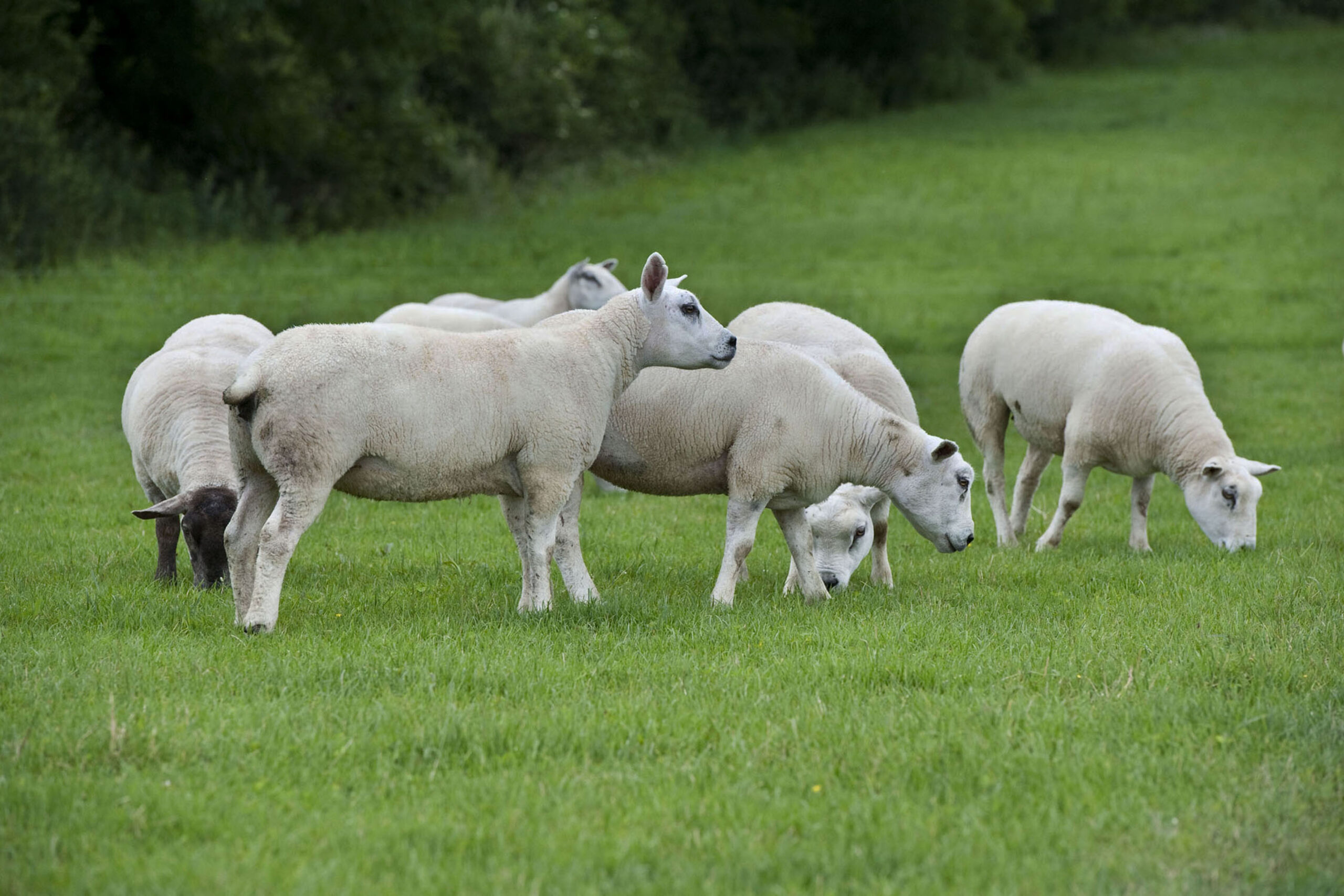
Pictured ewes on grass. Photo O’Gorman Photography.
Sponsored Article