Drought highlights regenerative farming strengths in Ireland

This summer’s prolonged dry weather provided an unexpected real-world stress test for regenerative farming practices.
Farmers taking part in the Regen Ireland project have reported noticeable differences in how some fields responded as drought conditions intensified.
Regen Ireland is a European Innovation Partnership (EIP) co-funded by the EU and the Department of Agriculture, Food and the Marine.
The farmer-led initiative is working over a period of four and a half years with 20 dairy, beef, sheep and tillage farms across Ireland.
It is exploring how regenerative farming practices perform under Irish conditions, supported by long-term monitoring, international expertise and farmer-to-farmer learning.
Regenerative farming is an approach focused on reducing reliance on costly inputs, improving soil health, increasing biodiversity and strengthening the natural resilience of farming systems.
Drought conditions
While the project is still at an early stage and Regen Ireland is not drawing scientific conclusions from one summer, participating farmers have reported noticeable differences in how some fields responded as drought conditions intensified.
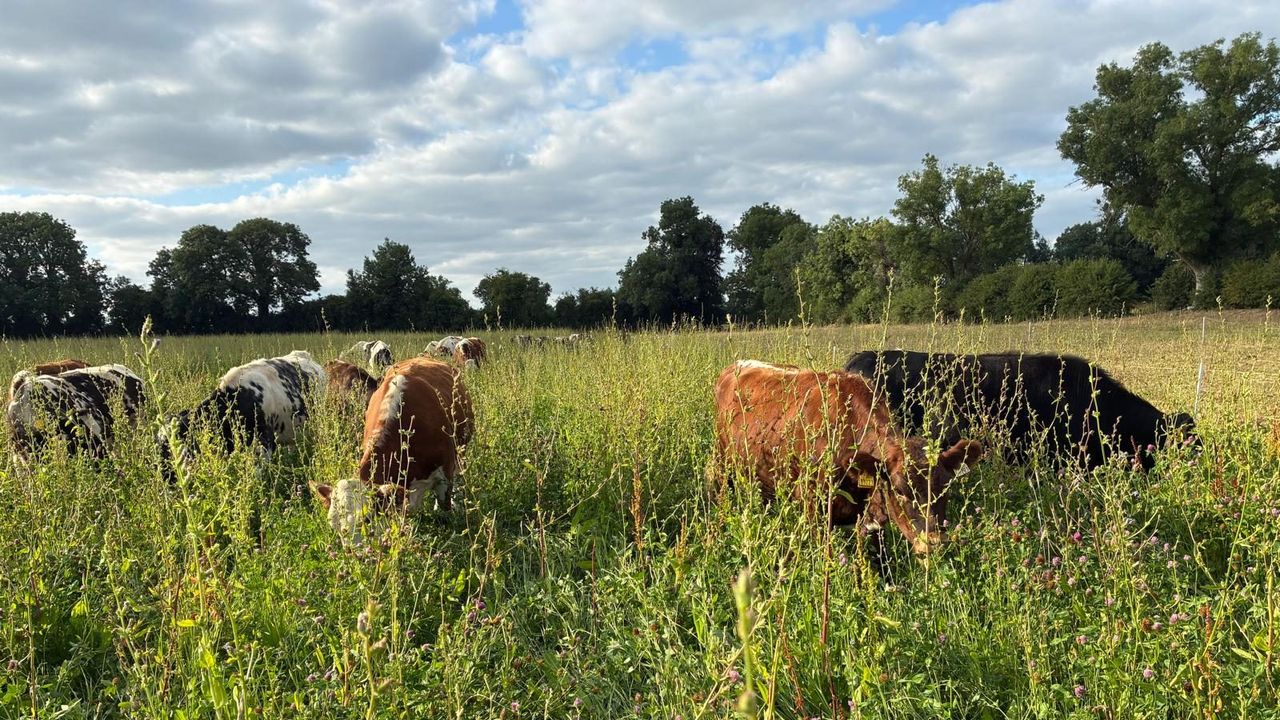
Farmers pointed to factors including deeper rooting, multi-species swards, maintaining soil cover, longer recovery periods between grazing and changes to grazing management as potentially contributing to some fields remaining productive for longer.
Rather than suggesting that any farming system can be drought-proof, Regen Ireland said the experience has highlighted the importance of building resilience by giving farmers more time and options when conditions become difficult.
Grass availability
One of the farmers taking part in the project is Kevin O’Hanlon in Co. Wexford, who has been farming regeneratively for around five years and has an organic dairy system.
Despite the prolonged dry period, O'Hanlon reported that grass remained available throughout the summer.
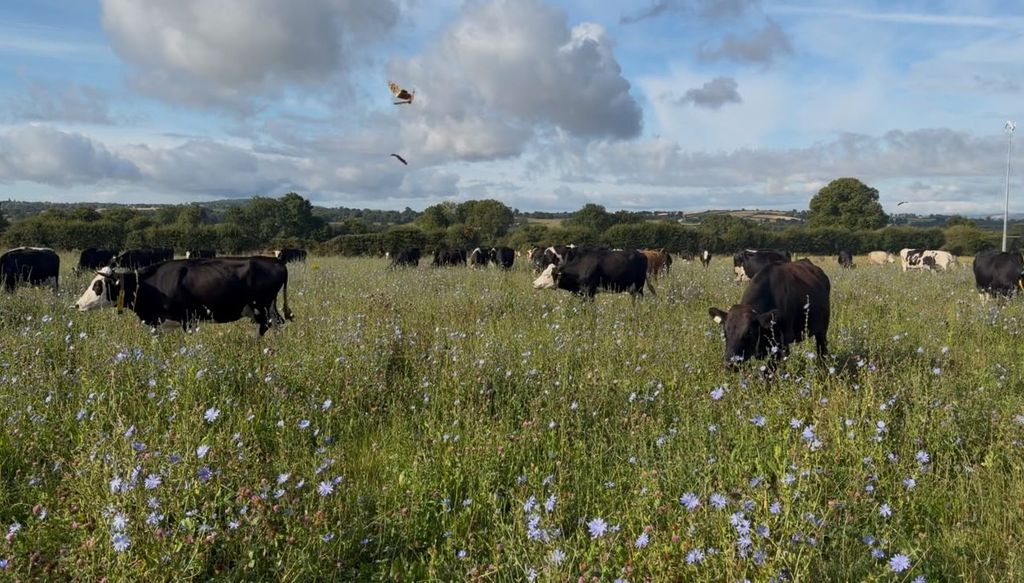
As conditions became more challenging, he supplemented grazing for his 120 cows with approximately 40 bales of silage over a three-week period, as well as homegrown peas, oats and barley.
He said the experience reinforced the "importance of looking at the farm as a whole system rather than relying on any single intervention".
“The drought put everything under pressure, but what stood out to me was that we still had grass available when conditions became very difficult," O'Hanlon said.
"That doesn’t mean we were unaffected.
"We still had to adapt and feed 40 bales of silage over a three-week period, but it gave us more time and more options.
"We still have a good bank of grass ahead of us for the autumn and winter."
Another participating farmer, Pat Ahern near Cork Airport, experienced particularly challenging conditions on his south-facing farm.
Management changes introduced on the farm have included reseeding and the use of a 'back fence' grazing system, which prevents cows returning immediately to recently grazed areas and gives plants additional time to begin recovering.
His experience is one of a number being examined by Regen Ireland as participating farmers compare what happened across different farms, soils and farming systems during an unusually difficult growing season.

Sean Butler, a member of the Regen Ireland operational group and farm mentor, explained: "We didn’t set out to run a drought experiment.
"The drought arrived and effectively stress-tested practices farmers were already putting in place.
"What is interesting is not that some farms or fields were unaffected, because they weren’t.
"It is that farmers could see differences in how quickly fields came under pressure and, in some cases, felt that the way they were managing their soils, plants and grazing helped them buy time."
Butler said for the project, resilience is not about "claiming that a farm can somehow become drought-proof".
"It is about reducing vulnerability and retaining options when conditions turn against you."
Regen Ireland said the experience also underlines why the project is focused on longer-term monitoring rather than trying to draw conclusions from individual observations.
The project was established to help build a stronger evidence base around regenerative agriculture in Irish conditions, where there is currently limited long-term data.
Its participating farms are being monitored over several years to better understand potential impacts on soil health, biodiversity, water infiltration, farm resilience and long-term farm economics and sustainability.
Rainfall returned
Regen Ireland is now examining what happened once rainfall returned, including whether differences emerged in how quickly individual fields recovered, returned to growth or required further intervention.
Commenting on this, Butler said: "The next question is what happened when the rain came back.
"Some farmers felt certain fields held on for longer during the drought.
"We now want to understand whether there were also differences in how those fields recovered.
"That is exactly why this project is based around observation and monitoring over several years.
"One difficult summer can provide useful insights and questions, but the evidence has to be built over time."