Calls for 'fair' flat rate scheme as Budget 2027 approaches

The flat rate scheme "must remain simple, fair and fit for purpose", the Irish Co-operative Organisation Society (ICOS) has said.
ICOS has told an Oireachtas Joint Committee on Agriculture and Food that this is a priority in the current inflationary climate, which is "burdening rural communities with additionally excessive costs".
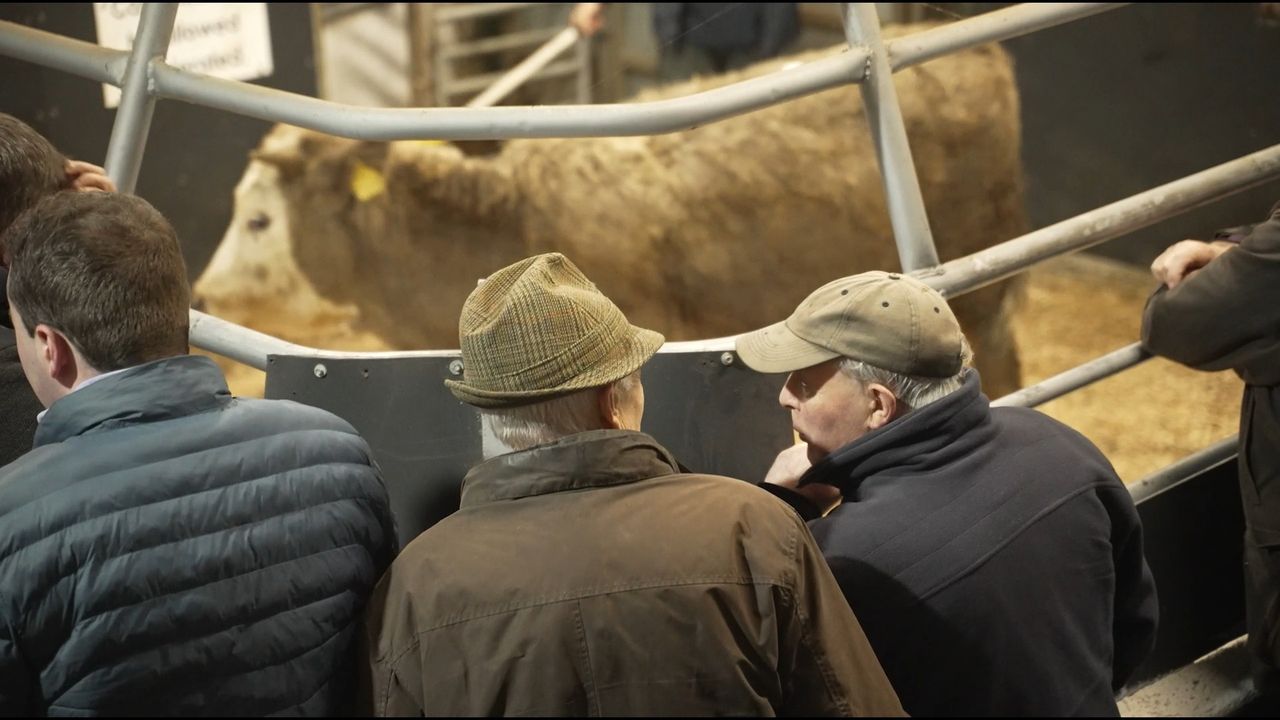
ICOS has said Budget 2026 created a negative anomaly regarding non-VAT registered farmers selling their livestock in the marts which doesn’t occur if the transaction is completed privately between two unregistered parties.
Many farmers are not VAT registered, and when they sell their livestock through the mart, these farmers are being deducted 0.3% in VAT which is the difference between the livestock VAT rate of 4.8% and the flat-rate addition VAT rate of 4.5%.
ICOS is seeking this "anomaly" to be rectified through the upcoming Budget 2027.
It has proposed that the VAT rate addition is never set higher than the livestock rate for any individual year.
ICOS told the committee that this is one of the contributing factors to a drop in throughput of animals through marts this year.
Flat rate farmers
Department of Finance principal officer Niall O'Sullivan could not confirm to the committee what changes may occur to the flat rate addition or the livestock rate in Budget 2027.
"The farmers' flat rate scheme is a simplification arrangement, specifically permitted under the EU VAT Directive," he told the committee.
"It's designed to reduce the administrative burden for farmers by allowing unregistered farmers to be compensated on an overall basis for VAT on their inputs, by remaining outside of the VAT system, thereby avoiding the burdens associated with registration and filing."
He said the department understands that over 85% of farmers avail of the flat rate scheme.
He said under EU law, the level of the flat rate addition is reviewed annually in order to ensure that the scheme continues to allow for the unregistered farmers to be fully compensated on an overall basis for the VAT incurred.
"In any given year, the review may result in an upward or downward change to the flat rate edition, or it may leave the rate unchanged," he said.
"The flat rate addition itself is calculated using a statistical formula, and must be based on macroeconomic data, as set out under the directive.
"The technical exercise of calculating the flat rate addition is undertaken by the Revenue Commissioners, and Revenue advises the department of the outcome of this technical exercise, so that any change in the rate can be included in the budget."
Following the reduction of the farmer flat rate addition to 4.5%, "it is now the case that it is lower than the long-standing 4.8% flat rate applied to livestock", O'Sullivan said.
He told the committee there is no direct alignment between theflat rate compensation and any particular VAT rate, including the livestock rate.
Unfairness
"The fact that the flat rate is currently set at a level which is below the livestock rate, does not create any unfairness in the tax system, or mean that farmers are disadvantaged; in the same way as farmers were not advantaged for the many years when the flat rate was set at levels which were above the livestock rate," he said.
"It is the case, however, that due to the business model operated by livestock auction marts and the current differential between the flat rate and the livestock rate, that some farmers may now prefer to engage in direct sales to other farmers or sales to meat processors.
"While the individual difference in any one sale is marginal, where a farmer is making multiple sales, there may be a sufficient difference to incentivise sales to channels other than marts."
O'Sullivan said there is scope to reduce the livestock rate to match the flat rate payment, if it's the case that the addition for 2027 is below 4.8%.
"It should be noted that the flat rate is calculated based on the estimated liability for farmers over three years, including that applied to livestock," he added.
He said any changes to the farmer flat rate addition are determined by the requirements of EU VAT law, which "does not permit the minister of the day to change the manner in which it is calculated".